 Plan Your Trip
Langtang Valley Trek 13 Days
Trip Overview

Trek Region
Langtang

Difficulty Level
Easy

Trek Starts at
Kathmandu

Transport
Road

Trek Ends at
Kathmandu

Total Trip Duration
13 Days

Max Elevation
5,033m
Trip Highlights
- Walk through Langtang National Park — Nepal’s first Himalayan national park and one of its most biodiverse
- Summit Tserko Ri (5,033m) for a sweeping panorama of over 20 Himalayan peaks including Langtang Lirung, Ganesh Himal, Dorje Lakpa, and the Annapurna and Manaslu ranges
- Hike to Kyanjin Ri (4,773m) for a close, dramatic view of Langtang Lirung and the Kyanjin Glacier
- Explore Kyanjin Gompa (3,870m) — a centuries-old Buddhist monastery in a stunning high alpine setting
- Visit the famous Kyanjin Cheese Factory, one of the highest operating cheese factories in the world
- Walk through authentic Tamang and Tibetan-influenced villages largely untouched by mass tourism
- Spot wildlife including red panda, Himalayan black bear, musk deer, and Himalayan thar in their natural habitat
- Cross suspension bridges and walk beside the roaring Langtang Khola River through lush, forested gorges
- See the emotional, painstakingly rebuilt Langtang Village — a deeply moving tribute to the community lost in the 2015 earthquake
- Enjoy a quieter, more intimate trek with far fewer crowds than the Everest or Annapurna regions
Trip Summary
Nepal has three major trekking regions the Everest region, the Annapurna region, and the Langtang region. The Langtang Valley is the closest of the three to Kathmandu, the least crowded of the three, and arguably the most underrated of the three. Locals and longtime Nepal trekkers have quietly known this for years.
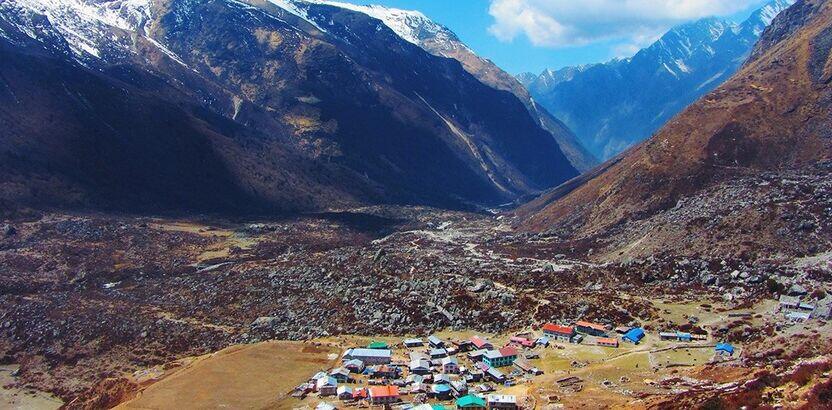
The Langtang Valley Trek takes you into the heart of Langtang National Park, Nepal’s first Himalayan national park, through dense rhododendron and bamboo forests, past ancient mani walls and spinning prayer wheels, and into a high alpine valley framed by some of the most dramatic mountain scenery in the country. The trail follows the Langtang Khola River eastward, climbing gradually through Tamang villages rich in Tibetan Buddhist culture, all the way to Kyanjin Gompa (3,870m), the spiritual and cultural heart of the upper valley.
This 13-day itinerary goes deeper than the standard version. It includes both the hike to Kyanjin Ri (4,773m) and the more demanding summit of Tserko Ri (5,033m) — the highest viewpoint of the entire trek, along with proper acclimatization, comfortable pacing, a buffer day in Kathmandu, and enough time to genuinely absorb the landscapes and people of this extraordinary valley.
When To Visit
The Langtang Valley has one important advantage over the Everest and Annapurna regions because much of the valley lies in a partial rain shadow behind the main Himalayan range, it remains more accessible than most Nepal treks even during parts of the monsoon season. That said, the two main trekking seasons still offer the best overall experience.
- Spring (March to May) is one of the finest times to trek the Langtang Valley. The lower forests are at their most spectacular when rhododendrons in full bloom paint the hillsides in red, pink, and white all the way from Syabrubesi to Lama Hotel. March and April offer warm days, stable weather, and clear mountain views. Late May brings some early monsoon moisture, but the valley is still very walkable.
- Autumn (September to November) is the peak trekking season and arguably the best window for mountain clarity. The monsoon clears the air of all haze and dust, and October in particular delivers sharp blue skies and crystalline views from Tserko Ri and Kyanjin Ri. Temperatures are comfortable at lower elevations and manageable at altitude. The forests take on beautiful autumn color in November as the season closes.
- Winter (December to February) is cold but possible. The lower forest trails are clear and snow-free most of the time, and teahouses remain open. The upper valley around Kyanjin Gompa sees significant snowfall, and the hike to Tserko Ri becomes challenging or impossible in deep winter. Ideal for experienced cold-weather trekkers who want complete solitude on the trail.
- Monsoon (June to August) is not commonly recommended but the Langtang’s partial rain shadow means it is one of the more viable monsoon treks in Nepal. Lower trails can be leechy and slippery, but the upper valley often clears by afternoon and the landscape is intensely green and lush.
Itinerary
Welcome to Nepal. Our team meets you at Tribhuvan International Airport and transfers you to your hotel in Kathmandu. In the evening, your trekking guide sits down with you for a thorough pre-trek briefing covering the full route, daily distances, altitude awareness, permit requirements, gear checks, and what to expect from the road journey to Syabrubesi the next morning.
If you arrive with time and energy, a walk through the lanes of Thamel gives you an immediate and vivid introduction to Nepal’s color, noise, warmth, and charm. Overnight in Kathmandu.
The journey to the trail begins with a long but genuinely scenic road drive from Kathmandu to Syabrubesi, the gateway village of the Langtang Valley. The road heads northwest out of the Kathmandu Valley through the rolling hills of Nuwakot district, past terraced rice paddies, villages draped in prayer flags, and along the edge of the churning Trishuli River.
The drive takes 7–8 hours depending on road conditions and traffic. The final section of road descends steeply into the Bhote Koshi gorge before arriving at Syabrubesi a lively border-region town with teahouses, small shops, and the distinct energy of a place that sits at the crossroads of Nepal and Tibet. Overnight in Syabrubesi.
The first day on the trail and one of the most lush, immersive walking days of the entire trek. From Syabrubesi, the trail enters the forest immediately bamboo groves, rhododendron corridors, and stands of oak and maple that filter the light into long green shadows. The Langtang Khola River roars below throughout the morning, and the sound of rushing water stays with you for much of the day.
The trail climbs steadily, crossing suspension bridges and passing through small Tamang settlements where residents carry loads, tend animals, and go about their mountain lives with a calm self-sufficiency that is quietly inspiring to witness. Bamboo village is a popular lunch stop a small collection of teahouses named perfectly for the dense stands of bamboo that surround it. The trail continues up through the forest to Lama Hotel, a loose cluster of teahouses at the edge of the tree line. Walking time: 5–6 hours.
Today the valley opens up and the mountains arrive. The trail climbs steadily from Lama Hotel through thinning forest rhododendron giving way to pine and fir, and the first proper views of the Langtang Himalayan range begin to appear above the treeline. The scale of what surrounds you becomes clear as the valley widens and the peaks come fully into view.
You pass through Ghoda Tabela (3,030m), which translates to “horse stable” a wide, grassy flat that served historically as a grazing area. The national park checkpoint is here and the landscape from this point becomes increasingly dramatic. Rocky ridges, yak pastures, mani walls carved with Buddhist prayers, and chortens mark the way forward.
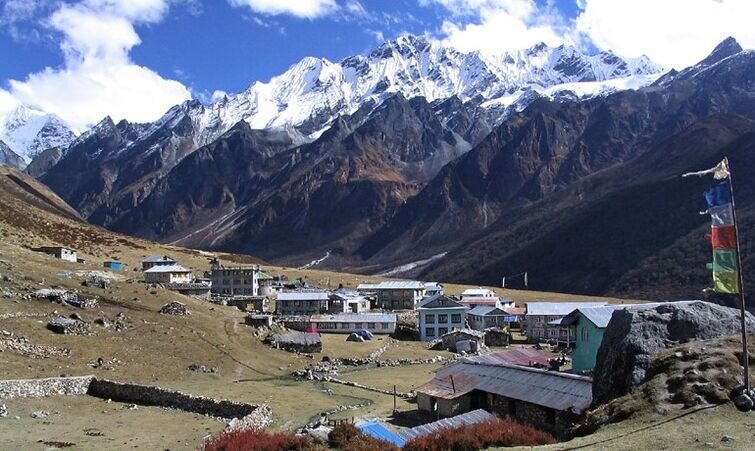
The final approach to Langtang Village (3,430m) is one of the most quietly powerful moments of the entire trek. The village was almost entirely destroyed in the catastrophic avalanche triggered by the 2015 earthquake, which killed over 350 residents and visitors in a matter of seconds. The community has rebuilt with extraordinary resilience the new teahouses and homes stand as a testament to the strength of the Tamang people who refused to abandon the valley their families have called home for generations. Walking into this rebuilt village carries a weight and a meaning that no other trekking destination in Nepal quite matches. Walking time: 6–7 hours.
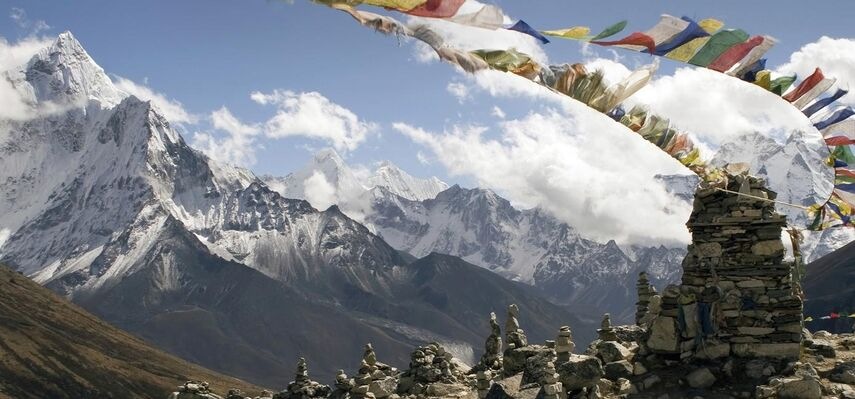
A shorter walking day that rewards every step. The trail from Langtang Village to Kyanjin Gompa winds through a wide, open upper valley that feels completely different from the forested lower gorge. Ancient mani walls stretch along the path long rows of carved prayer stones that have guided travelers and pilgrims through this valley for centuries. A large water-powered prayer wheel spins continuously beside the trail, one of the most beautiful small details of the entire route.
Yak herds graze across the broad alpine meadows, and the peaks that form the northern wall of the valley Langtang Lirung (7,227m), Langtang II, Kimshung, and Yansa Tsenji rise directly ahead with an immediacy that takes your breath away. Kyanjin Gompa is the main settlement of the upper valley, a cluster of teahouses, a centuries-old monastery, a government cheese factory, and a handful of permanent residents who live at nearly 4,000m year-round. Spend the afternoon exploring the monastery, watching the yaks come in from the pastures, and resting well before the climbs ahead. Walking time: 3–4 hours.
Your first of two high-altitude hikes from Kyanjin Gompa, and the perfect acclimatization day before the more demanding Tserko Ri summit tomorrow.
Kyanjin Ri (4,773m) rises directly above the village to the south and can be reached in about 2 hours from the gompa. The climb is steep but well-worn, and the views from the top are some of the most dramatic and personal on the entire trek. You stand face-to-face with the sheer southern face of Langtang Lirung (7,227m), massive, close, and deeply impressive in a way that photographs never quite capture. The Kyanjin Glacier stretches below and the entire upper valley fans out beneath you in a stunning wide panorama.
Descend to Kyanjin Gompa for lunch and spend the afternoon visiting the Kyanjin Monastery decorated with ancient thangka paintings, butter lamp offerings, and the smell of juniper incense and the famous Kyanjin Cheese Factory, where local yak milk is still turned into rounds of cheese using a production method introduced by Swiss development workers in the 1950s. The cheese is excellent. Hike time: 4–5 hours return.
The hardest day of the trek and the most rewarding viewpoint. Wake early before sunrise, if possible, eat a good breakfast with packed lunch, fill your water, and head out. The trail to Tserko Ri (5,033m) begins with a steady climb through yak pastures above Kyanjin Gompa and then steepens significantly as it gains the rocky upper ridge. Depending on the season, you may encounter snow on the upper section.
The climb takes 4–5 hours from the village. At the summit, standing at just over 5,000m, the panorama opens up in a full 360-degree sweep that stops every trekker completely silent for a moment. You can see more than 20 Himalayan peaks from Tserko Ri, Langtang Lirung (7,227m), Langtang II, Dorje Lakpa (6,990m), Ganesh Himal (7,429m), Manaslu (8,163m), and even the distant Annapurna range on a clear day. The entire Langtang Valley stretches below you like a topographic map come to life, and the upper valley’s glaciers glint white against the blue sky.
Spend time at the top, take in every angle of this extraordinary viewpoint, and then descend the upper section carefully, which requires attention on the way down. Return to Kyanjin Gompa for a well-earned dinner. Total hike time: 7–8 hours.
Leaving Kyanjin Gompa always carries a quiet sadness the upper valley has a stillness and a beauty that is genuinely hard to leave. The trail retraces the route westward, descending back through the wide open yak pastures, past the mani walls and chortens, through Langtang Village, and then steeply down into the forest below Ghoda Tabela.
What took two days to climb takes one long day to descend. The drop of almost 1,500m in altitude means your legs work hard on the way down, but the lush forest closing back around you and the thickening air are immediately and physically noticeable. By the time you reach Lama Hotel, your breathing is easier and your appetite is strong. Walking time: 5–6 hours.
The final trekking day. From Lama Hotel, the trail continues westward and descends back through the bamboo and rhododendron forests of the lower Langtang gorge, across the familiar suspension bridges and river crossings, and back down to Syabrubesi. The trail that felt steep and challenging on Day 3 now flows easily beneath your feet a satisfying reminder of how much your body has adapted over the past week.
Arrive in Syabrubesi, check into your teahouse, and spend the evening with your guide and porter over a warm meal. The road journey back to Kathmandu begins tomorrow. Walking time: 4–5 hours.
An early morning departure for the long drive back to Kathmandu. The road journey through Nuwakot district is scenic and the views of terraced hillsides, river gorges, and small roadside villages are a pleasant way to decompress after a week in the mountains. The drive takes 7–8 hours depending on road and traffic conditions.
Back in Kathmandu, transfer to your hotel, enjoy a proper hot shower, and spend the evening as you please. A good meal, a cold drink, and the particular satisfaction of having walked somewhere genuinely beautiful.
A full free day in Kathmandu to recover, explore, and absorb the city before your departure. The Kathmandu Valley is home to seven UNESCO World Heritage Sites and enough cultural richness to fill several days on its own.
Pashupatinath Temple on the banks of the Bagmati River is one of the most sacred Hindu shrines in Asia, a place of cremation ceremonies, wandering sadhus, and deep spiritual atmosphere that no visitor forgets. Boudhanath Stupa, the great white dome ringed by butter lamp-lit monasteries and circled constantly by monks and pilgrims, is one of the finest Buddhist monuments in the world. The medieval square of Patan Durbar Square in Lalitpur showcases Newari craftsmanship at its finest. Or simply spend the day in Thamel eating, shopping for souvenirs, and watching the great river of travelers and locals flow past the cafes.
This day is built into the itinerary as a practical buffer for any unexpected road delays or weather events that might affect the return journey from Syabrubesi. Road conditions in the hills of Nepal can be unpredictable, particularly during the shoulder seasons when landslides occasionally block routes.
If the return journey went smoothly, you have a second free day in Kathmandu. Use it for a day trip to Bhaktapur, a UNESCO-listed medieval city 13 km east of Kathmandu that has preserved its ancient Newari architecture and culture better than almost anywhere in the valley. Or visit Nagarkot on the valley rim for sunrise views of the Himalayan range stretching from Dhaulagiri to Kanchenjunga on a clear morning.
Your 13-day Langtang Valley Trek comes to an end. Our team transfers you to Tribhuvan International Airport for your departure flight. You leave Nepal having walked through a valley that very few international travelers know well with a deeper understanding of Tamang culture, a genuine experience of the Himalayan wilderness, and the particular quiet confidence that comes from standing at 5,000m under your own power.
Trek Difficulty & Physical Demands
The Langtang Valley Trek is rated moderate, making it one of the most accessible Himalayan treks for people who are reasonably fit but may not have prior high-altitude trekking experience.
- Altitude: The main trek reaches 3,870m at Kyanjin Gompa, which is well within the range manageable by most healthy adults with proper acclimatization. The summit hike to Tserko Ri reaches 5,033m, which is the one section that requires more care and fitness.
- Terrain: The trail is well-defined throughout. The lower section through the forest involves some steep climbing and rocky sections. The upper valley is gentler and more open. Tserko Ri has a steep, rocky upper section that can have snow in colder months.
- Daily walking: Expect 4–7 hours of walking per day, with the Tserko Ri summit day being the longest at 7–8 hours round trip from Kyanjin Gompa.
- Physical fitness: A good base of cardiovascular fitness, regular walking, hiking, or cycling, for 4–8 weeks before the trek is more than sufficient preparation for most trekkers. The Langtang trek is an excellent first Himalayan experience precisely because the altitude gain is gradual, the trails are clear, and the distances are manageable.
- Tserko Ri: This is the one genuinely demanding section of the entire trek. The climb to 5,033m on Day 7 requires an early start, good acclimatization from the previous day’s Kyanjin Ri hike, and steady physical effort for 4–5 hours of climbing. It is optional but strongly recommended for anyone with the fitness and desire to reach the finest viewpoint of the entire Langtang region.
Best Time to Trek: Seasonal Comparison
| Season | Months | Weather | Trail Conditions | Views | Recommended |
|---|---|---|---|---|---|
| Spring | Mar–May | Warm & Stable | Excellent | Excellent | Best |
| Monsoon | Jun–Aug | Wet / Partial Rain Shadow | Slippery in parts | Partially good | Possible |
| Autumn | Sep–Nov | Cool & Clear | Excellent | Excellent | Best |
| Winter | Dec–Feb | Cold & Dry | Snow on upper trail | Good | Experienced Only |
Pro tip: For the absolute best combination of clear mountain views, comfortable temperatures, and full Tserko Ri accessibility, aim for October or early April. These are the two windows when the weather is most consistently reliable and the peak panoramas from the upper viewpoints are at their clearest.
Booking Your Langtang Valley Trek 13 Days
Getting booked on the Langtang Valley Trek is straightforward and we take care of everything so you can focus on getting trail-ready.
Step 1 — Contact us. Reach out via our website, email, or WhatsApp with your preferred travel dates and group size. We reply within 24 hours with a full itinerary and detailed cost breakdown.
Step 2 — Confirm your booking. A 20% deposit secures your dates. We arrange permits, transport, guide assignment, and all logistics as soon as your deposit is confirmed.
Step 3 — Prepare. We send you a complete pre-departure guide covering fitness training, gear lists, altitude awareness specific to the Langtang route, cultural notes on Tamang communities, and a day-by-day expectations guide.
Step 4 — Arrive in Kathmandu. We collect you from the airport, brief you fully on the trek, and assist with any last-minute gear sourcing in Thamel if needed. The road journey to Syabrubesi departs early the following morning.
Step 5 — Trek. Your licensed guide leads you through every day of the route, supported by our porters and full logistical backup.
Step 6 — Pay the balance. The remaining 80% is due on arrival in Kathmandu before departing for Syabrubesi.
Cancellation Policy:
- 30+ days before departure: Full deposit refunded minus bank transfer charges
- 15–29 days before: 50% refund of deposit
- Less than 15 days before: Deposit forfeited, no refund
Important: Travel insurance covering emergency helicopter evacuation is mandatory. While the Langtang is a moderate trek, the Tserko Ri summit reaches over 5,000m, and the valley is remote. An emergency helicopter from the upper Langtang Valley costs USD 3,000–5,000 or more. Ensure your policy specifically covers high-altitude activities.
Cost Details
Cost Includes
- Airport pick-up and drop-off in Kathmandu
- Kathmandu–Syabrubesi–Kathmandu ground transportation (private jeep or tourist bus)
- 2 nights’ hotel accommodation in Kathmandu (bed & breakfast, 3-star)
- All teahouse accommodation during the trek (7 nights)
- All meals during the trek — breakfast, lunch, and dinner
- Experienced, English-speaking, government-licensed trekking guide
- One porter for every two trekkers (max 15 kg per porter load)
- All required trekking permits:
- Langtang National Park Entry Permit
- TIMS Card (Trekkers’ Information Management System)
- Guide and porter wages, meals, accommodation, and insurance
- All government taxes and local charges
- Sleeping bag and duffel bag rental (if needed)
- First Aid Kit carried by guide throughout the trek
- Emergency evacuation arrangement (evacuation cost covered by your travel insurance)
Cost Excludes
- Nepal entry visa fee (approx. USD 50 for 30 days — obtainable on arrival at Kathmandu airport)
- International flights to and from Kathmandu
- Travel insurance with emergency helicopter evacuation coverage (mandatory)
- Meals in Kathmandu beyond breakfast
- Hot showers, Wi-Fi, and device charging along the trek (charged at teahouses)
- Personal snacks, bottled water, energy drinks, and alcoholic beverages
- Tips and gratuity for guide and porter (recommended and appreciated)
- Personal trekking gear and clothing
- Extra nights in Kathmandu beyond the planned itinerary
- Helicopter rescue costs (must be covered by your personal travel insurance)
- Personal expenses — laundry, souvenirs, phone calls, and incidentals
Trip Gallery
Trek Essentials
- Thermal base layer top and bottom 2 sets
- Mid-layer fleece or softshell jacket
- Down jacket or insulated puffy (essential at Kyanjin Gompa and above)
- Waterproof, windproof hardshell jacket and trousers
- Trekking trousers — 2 to 3 pairs
- Warm trekking socks, wool or synthetic — 4 to 5 pairs
- Light gloves for the lower trail and warm gloves for the upper valley
- Warm beanie or wool hat
- Sun hat or cap with brim for daytime
- Neck gaiter or buff
- Waterproof, ankle-support trekking boots broken in properly before the trek. Do not arrive with new boots.
- Lightweight sandals or flip-flops for teahouse evenings
- Gaiters (useful for Tserko Ri summit in snowy conditions)
- Trekking poles strongly recommended, particularly useful on the steep Tserko Ri descent
- Daypack (20–25 liters) for daily essentials on the trail
- Duffel bag (60 liters) for your porter
- Sleeping bag rated to -10°C to -15°C (Kyanjin Gompa nights are cold)
- Headlamp with extra batteries
- Sunglasses with UV400 protection
- Water bottle (1–2 liters) or hydration bladder
- Water purification tablets or personal filter
- Diamox (acetazolamide) for altitude sickness prevention consult your doctor, particularly relevant for the Tserko Ri summit day at 5,033m
- Personal first aid kit blister pads, ibuprofen, bandages, antiseptic cream
- Sunscreen SPF 50+ and SPF lip balm UV radiation increases significantly above 3,000m
- Hand sanitizer and biodegradable wet wipes
- Insect repellent for the lower forest trail sections
- Diarrhea medication and oral rehydration salts
- All personal prescription medications for the full trip duration
- Valid passport with at least 6 months remaining validity
- Nepal visa (obtainable on arrival at Kathmandu airport)
- Printed travel insurance policy with emergency evacuation details
- 2 passport-sized photos for permit processing
- Emergency contact card on your person throughout
Final Thoughts:
The Langtang Valley Trek does not shout for attention the way the Everest region does. It does not have the global fame or the Instagram saturation of the Annapurna Circuit. What it has instead is something rarer genuine quiet, genuine culture, and a genuine encounter with a mountain community that has been through one of the most devastating events in Himalayan trekking history and chosen to stay, rebuild, and welcome visitors back with open arms.
Walking into the rebuilt Langtang Village, visiting the ancient gompa at Kyanjin, standing on Tserko Ri at dawn with 20 peaks glowing in the early light, watching a yak herd cross the upper valley at golden hour, these are not manufactured experiences. They are the real thing, in a valley that most of the trekking world has not yet fully discovered.
For first-time Himalayan trekkers looking for an authentic introduction to Nepal’s mountains and culture, this is one of the finest routes in the country. For experienced trekkers wanting a change from the crowded Khumbu trails, it is a genuinely refreshing alternative. And for anyone who simply wants to walk somewhere beautiful, quiet, and meaningful, the Langtang Valley is waiting, just a few hours north of Kathmandu.
Your Adventure to Annapurna Base Camp Trek Starts Here
Start your journey with trusted local experts and discover the beauty, culture, and adventure waiting in the Himalayas and beyond.
Frequently Asked Questions
Everything you need to know about the AASRA ECO TREK
Yes it is one of the best Himalayan treks for fit beginners. The altitude gain is gradual, the trails are well-defined, the distances per day are manageable, and the teahouse infrastructure is reliable throughout. The Tserko Ri summit on Day 7 is the most demanding section and is optional for those who prefer a gentler experience at altitude.
The Langtang trek is shorter, closer to Kathmandu, significantly less crowded, and more affordable than either the Everest or Annapurna routes. It reaches a lower maximum altitude than EBC (5,033m vs 5,545m at Kala Patthar) but offers a deeply authentic cultural experience and spectacular mountain scenery with far fewer other trekkers on the trail. It is the best-kept secret in Nepal trekking.
You need the Langtang National Park Entry Permit (approx. USD 34 for foreigners) and a TIMS Card (approx. USD 10–20). Both are included in the package and arranged on your behalf.
On April 25, 2015, the earthquake that struck Nepal triggered a catastrophic avalanche and debris flow that buried much of Langtang Village, killing over 350 people. The village has since been rebuilt and the trails fully restored. Visiting today is not only safe but deeply meaningful. The rebuilt village and the community that rebuilt it are a powerful and moving part of the trekking experience. Many teahouse owners and guides are survivors of the disaster and welcome the opportunity to share their stories.
The main trek to Kyanjin Gompa at 3,870m carries a moderate risk of mild altitude sickness symptoms for some trekkers. The acclimatization structure of this itinerary, with a dedicated rest-and-hike day at Kyanjin before the Tserko Ri summit, significantly reduces this risk. Consult your doctor about Diamox if you have any prior altitude sickness history. Always tell your guide immediately if you experience persistent headaches, nausea, or loss of appetite.
Yes, travel insurance with emergency helicopter evacuation coverage is mandatory. While the Langtang is moderate and well-traveled, the upper valley is remote and emergency medical care is unavailable above Syabrubesi. An evacuation helicopter from near Kyanjin Gompa typically costs USD 3,000–5,000.
The drive from Kathmandu takes 7–8 hours on a road that winds through spectacular mountain scenery but can be rough and slow in sections, particularly above Dhunche. A private jeep is more comfortable and faster than the tourist bus option. Road conditions can be affected by landslides during the monsoon season. Your trek operator will advise on any current disruptions.
Red pandas do live in Langtang National Park primarily in the lower forest sections of the trail between Syabrubesi and Lama Hotel, in bamboo and rhododendron habitat. Sightings are possible but not guaranteed. Dawn and dusk are the best times to look. Your guide will know the areas where red pandas are most commonly spotted.
Teahouses along the Langtang route offer a solid and satisfying range of food: dal bhat, noodle soups, pasta, porridge, eggs, momo, Tibetan bread, pancakes, and more. Three full meals per day are included in the package. Do not miss the yak cheese at Kyanjin Gompa, made at the local cheese factory, it is one of the genuine food highlights of any trek in Nepal.
Absolutely. We can add or remove days, adjust overnight stops, or extend the trek to include the Ganja La Pass crossing (5,122m) for experienced trekkers who want a more challenging and remote high-altitude experience. We can also combine the Langtang Valley with the Gosaikunda Lake Trek for a longer and more comprehensive exploration of the Langtang region. Contact us and we will design the right version for your schedule and fitness level.