 Plan Your Trip
Everest Base Camp Trek — 18 Days
Trip Overview

Trek Region
Everest

Difficulty Level
Hard

Trek Starts at
Lukla

Transport
Flight
Mountain Accommodation
10 Nights at Tea House

Trek Ends at
Lukla

Total Trip Duration
18 Days

Tented Accommodation
2 Nights at Tent

Max Elevation
5,364 m

Trekking Duration
12 Days 11 Nights

Meals
B-City / BLD-Mountain
Trip Highlights
- Stand at 5,364 meters at the foot of Mount Everest (8,849m), the world’s highest mountain, surrounded by the Himalayas’ most iconic peaks including Lhotse (8,516m), Nuptse (7,861m), and Ama Dablam (6,812m).
- Fly into Lukla, one of the world’s most dramatic mountain airports, perched at 2,860 meters on a mountainside with a runway so steep that aircraft require specialized techniques to land safely.
- Walk through Sherpa villages where Buddhist culture remains deeply embedded in daily life, visit ancient monasteries adorned with prayer flags and Buddhist artifacts, and experience the warmth of Sherpa hospitality in their mountain communities.
- Cross the Khumbu Glacier, a dramatic river of ice that shifts and moves seasonally, revealing crevasses and ice formations that remind you of the raw power of high-altitude mountaineering terrain.
- Experience multiple mountain passes including Namche Bazaar (3,440m), the gateway to the Everest region, and witness the dramatic elevation gain from lush rhododendron forests to barren alpine tundra.
- Witness sunrise from Kala Patthar (5,645m), a non-technical viewpoint that offers the most iconic photograph of Mount Everest framed against the sky, with Everest’s distinctive pyramid visible in stunning clarity.
- Stay in authentic Sherpa teahouses where families have welcomed trekkers for decades, share meals cooked over open fires, and experience mountain hospitality that transforms you during your highest-altitude nights.
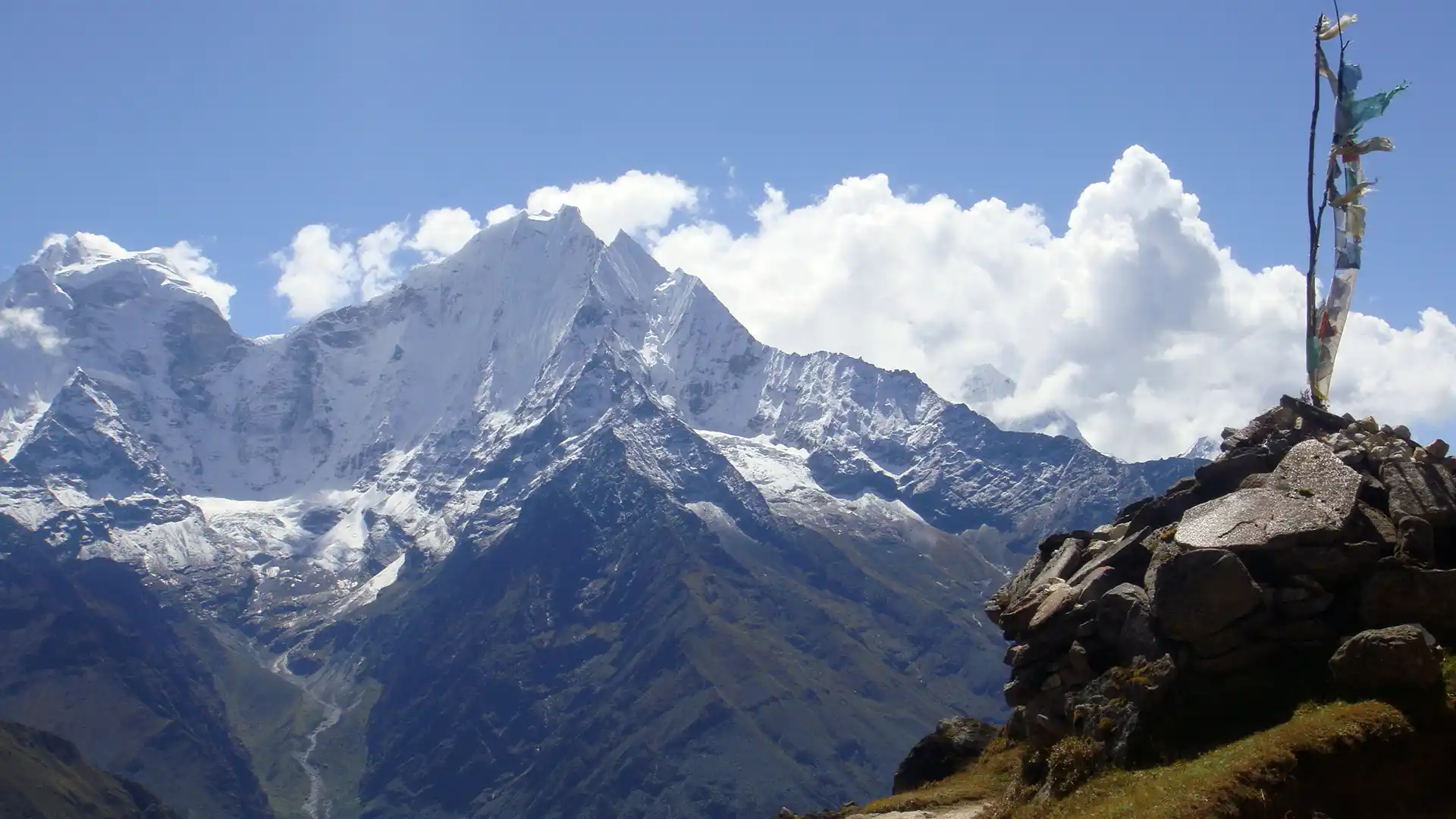
- See prayer flags fluttering in the thin high-altitude air, visit sacred Buddhist monasteries including Tengboche, Pangboche, and the Everest Region monasteries, connecting with the spiritual dimension of the mountains.
- Trek during the clearest visibility windows when the weather cooperates to reveal the full majesty of the Everest massif and surrounding peaks in their full glory.
Trip Summary
Why Choose the Everest Base Camp Trek
The Everest Base Camp trek is one of the world’s most iconic mountain experiences. This 12-14 day adventure takes you to 5,364 meters, where you stand at the actual base camp used by climbers attempting Mount Everest, the world’s highest mountain. The Everest Base Camp trek isn’t just another hike—it’s a pilgrimage to the planet’s highest point, a test of human endurance, and a deeply transformative experience.
Unlike lower-altitude treks, the Everest Base Camp trek demands serious preparation and fitness. You’re reaching genuine extreme altitude where the air contains only 50% of the oxygen available at sea level. Yet for trekkers with proper training and realistic expectations, it’s achievable without mountaineering skills. The physical challenge is significant, but the mental and spiritual rewards are extraordinary.
You’ll witness Mount Everest from multiple angles throughout your trek. You’ll see it first as a distant pyramid from Namche Bazaar, watch it grow larger as you ascend, stand beneath it at base camp, and witness its magnificent profile from Kala Patthar at sunrise. You’ll meet Sherpa guides and porters whose ancestors have lived in these mountains for generations. You’ll sleep in teahouses where local families prepare meals in kitchens warmed by yak dung fires. You’ll experience mountain culture at its most authentic.
The Everest Base Camp trek is positioned as the ultimate high-altitude trekking challenge in Nepal. It’s more difficult than the Annapurna Base Camp trek (4,130m) due to extreme altitude, longer duration, and the psychological weight of summiting Everest’s base camp. It’s achievable for fit trekkers but requires honest assessment of your fitness level and commitment to proper acclimatization.
What Makes the Everest Base Camp Trek Special:
- The world’s highest mountain experience without mountaineering
- Extreme altitude (5,364m) accessible to fit trekkers
- Authentic Sherpa culture and Buddhist monasteries
- Multiple dramatic mountain viewpoints
- Well-established infrastructure and experienced guides
- The psychological triumph of reaching the base camp of the world’s highest mountain
- Multiple acclimatization days to prevent altitude sickness
- Views of numerous peaks over 6,000 and 7,000 meters
- Iconic sunrise from Kala Patthar
- Deep connection with mountain spirituality and culture
When To Visit
The Everest Base Camp trek can be trekked year-round, but timing significantly affects visibility, weather, and crowding. Spring and fall offer the best conditions for first-time trekkers.
Itinerary
Your Everest Base Camp trek begins in Kathmandu, Nepal’s vibrant capital city. If you’re arriving by international flight, you’ll land at Tribhuvan International Airport. Upon arrival, transfer to your hotel and rest from jet lag and travel fatigue.
Kathmandu is a chaotic, fascinating city where ancient temples stand beside modern buildings. The afternoon is free to adjust to local time and explore at a leisurely pace. Many hotels offer airport transfer services. Use this time to visit a local restaurant, walk around your hotel area, and begin acclimatizing to Nepal’s culture and altitude (Kathmandu sits at 1,400 meters).
This day is crucial for preparing mentally and logistically for your trek. Confirm final trek details with your guide, ensure all equipment is assembled, and get adequate rest before the journey ahead.
Elevation: 1,400m | Walking: None (Travel only) | Accommodation: Hotel | Meals: Dinner
Spend a full day exploring Kathmandu’s cultural landmarks. This acclimatization day allows you to adjust to Nepal’s time zone, test your gear, and mentally prepare for the trek ahead.
Morning Activity: Visit Pashupatinath Temple, one of Hinduism’s holiest temples, located on the banks of the Bagmati River. The temple complex is dramatic and culturally significant, offering insight into Nepal’s religious diversity.
Late Morning Activity: Explore Boudhanath Stupa, one of the world’s largest Buddhist stupas. The mandala-shaped structure is adorned with prayer wheels and surrounded by monasteries. Walking clockwise around the stupa is a meditation practice for Buddhists and visitors alike.
Afternoon Activity: Visit Swayambhunath Stupa (Monkey Temple), perched on a hilltop overlooking the Kathmandu Valley. The temple complex dates back centuries and offers panoramic views of the valley, ancient monasteries, and resident monkeys.
Evening Activity: Rest at your hotel, have a traditional Nepali dinner, and prepare your trek bag with your guide’s assistance. Ensure your hiking boots are broken in and all equipment is tested.
This day helps your body begin adjusting to altitude and allows you to experience Kathmandu’s spiritual dimensions before focusing entirely on mountain trekking.
Elevation: 1,400m | Walking: 3-4 hours of sightseeing | Accommodation: Hotel | Meals: BLD
Today is your first taste of mountain life. You’ll fly from Kathmandu to Lukla, one of the world’s most dramatic mountain airports, then begin your Everest Base Camp trek.
The flight from Kathmandu to Lukla (30 minutes) is an adventure in itself. Small twin-engine aircraft navigate through the Himalayan foothills, descending toward an airstrip so steep and short that it seems impossible yet experienced Himalayan pilots land it routinely. The runway is 527 meters long on a 12% slope, with a 600-meter cliff at the downhill end. Landings are thrilling; takeoffs are equally dramatic.
Upon arrival in Lukla (2,860m), you’ll immediately feel the altitude change. The air is thinner, the temperature cooler, and the landscape completely transformed from Kathmandu. Lukla is a bustling mountain town where trekkers, climbers, Sherpas, yaks, and mules create organized chaos. The town sits on a steep hillside with narrow streets and countless teahouses, shops, and lodges.
From Lukla, you trek to Phakding (2,610m), a relatively easy first day of 3-4 hours. The trail descends slightly from Lukla, passing through forests and crossing suspension bridges over mountain rivers. You’ll notice the immediate change in environment—lush forests, mountain streams, and your first real views of mountain peaks.
Phakding is a small village with several teahouses. It’s an ideal first-night location because it’s close enough to Lukla to be manageable but allows acclimatization before higher elevations. Your teahouse in Phakding will be basic but welcoming—your first experience with mountain hospitality.
Elevation: 2,610m | Walking: 3-4 hours | Accommodation: Teahouse | Meals: B-City / BLD-Mountain
Today is a longer, more challenging trek of 5-6 hours, gaining significant elevation as you approach Namche Bazaar (3,440m), the gateway to the Everest region.
The trek from Phakding follows the Dudh Koshi River upward through mixed forests. The trail is well-established but involves constant climbing. You’ll cross numerous suspension bridges over rushing mountain streams, each offering views of dramatic gorges and waterfalls.
As you climb, the vegetation gradually transitions. Lower-elevation subtropical forests give way to mixed forests with rhododendrons and conifers. The temperature cools noticeably. You’ll begin experiencing altitude effects—shortness of breath, slightly slower pace, increased heart rate during climbs.
The final approach to Namche involves steep switchbacks climbing 600 meters in the final 2 kilometers. This section is challenging but manageable. Many trekkers experience their first real taste of altitude here, noticing their breathing becomes labored despite the relatively moderate elevation.
Namche Bazaar is dramatically perched on a horseshoe-shaped hillside at 3,440 meters. The town is the commercial and cultural hub of the Everest region. Countless teahouses, shops, restaurants, and lodges cater to trekkers. The main bazaar street winds upward with steep steps connecting different levels of the town.
Namche is where you first encounter Sherpa culture authentically. You’ll see prayer flags, meet Sherpa families, and witness the infrastructure that supports mountaineering in the Everest region. The town is more developed than lower-elevation villages, with relatively good food options, internet access, and other services.
Elevation: 3,440m | Walking: 5-6 hours | Accommodation: Teahouse | Meals: BLD
At 3,440 meters, your first scheduled acclimatization day is crucial. At this elevation, your body is beginning to experience genuine altitude effects. A rest day allows acclimatization without adding further elevation gain.
Morning Activity: Optional hike to Syangboche (3,750m) or Khumjung (3,680m), nearby settlements with excellent Everest views. Both hikes involve 2-3 hours of moderate climbing and descending, practicing the mountaineering principle of “climb high, sleep low.”
Alternative Morning Activity: Visit the Everest View Hotel viewpoint (3,880m) for panoramic mountain views including Mount Everest, Ama Dablam, and surrounding peaks.
Afternoon Activity: Explore Namche Bazaar itself. Visit the Sherpa Culture Museum to learn about Sherpa history, mountaineering expeditions, and the culture of the Everest region. Browse the main bazaar, shop for supplies, or visit local teahouses.
Evening Activity: Rest at your teahouse, hydrate thoroughly, and eat well. This is your last chance to access restaurants with diverse food options before higher-altitude teahouses have limited menus. Many trekkers report that acclimatization days are when altitude sickness symptoms often appear—tell your guide if you experience headaches, nausea, or unusual fatigue.
This acclimatization day significantly reduces altitude sickness risk during higher-altitude sections. Don’t underestimate its importance.
Elevation: 3,440m | Walking: 2-4 hours optional hiking | Accommodation: Teahouse | Meals: BLD
Today’s trek (5-6 hours) takes you from Namche to Tengboche (3,867m), passing through Khumjung village and ascending through rhododendron forests.
From Namche, you ascend steeply to Khumjung (3,680m), a traditional Sherpa village with stone houses, prayer flags, and a famous monastery containing a “yeti scalp” (actually a serow hide, though some trekkers prefer the mystery). Khumjung offers excellent views and a more authentic village feel than the commercialized Namche.
From Khumjung, you continue to Tengboche, descending slightly before climbing again. This up-and-down pattern is typical of Everest region trekking—you rarely gain elevation consistently, instead crossing valleys and ridges.
Tengboche is famous for its ancient Buddhist monastery, one of the oldest and most significant in the Everest region. The monastery sits on a ridge with stunning views of Mount Everest, Ama Dablam, and surrounding peaks. Prayer flags frame the monastery, creating one of the region’s most photographed locations.
Tengboche is a natural stopping point for trekkers and the location of the main monastery complex. The village has several good teahouses and maintains a peaceful atmosphere despite being on the main trekking route. Many trekkers report sleeping well in Tengboche—the combination of altitude and physical activity promotes deep sleep.
Elevation: 3,867m | Walking: 5-6 hours | Accommodation: Teahouse | Meals: BLD
Today’s trek (4-5 hours) takes you from Tengboche through Pangboche to Dingboche (4,410m), gaining significant elevation and approaching high-altitude terrain.
From Tengboche, you descend to cross the Imja Khola river before climbing steeply to Pangboche (3,985m), a traditional Sherpa village with another ancient monastery. Pangboche sits on a hillside surrounded by forests and offers beautiful mountain views.
From Pangboche, the trek continues upward through increasingly sparse forest. The vegetation gradually transitions from dense forest to scattered trees to alpine meadows. The temperature noticeably cools. Your breathing becomes more labored as you gain elevation.
Dingboche (4,410m) sits in a high alpine valley surrounded by mountains. The village is the highest permanent settlement before base camp and sits at genuine high altitude. You’ll notice the significantly thinner air—activity that was manageable at 3,000 meters feels noticeably harder here.
At Dingboche, you’re entering the realm of serious altitude. The next days involve significant elevation gains to even higher locations. Dingboche serves as an important acclimatization base. The village has several teahouses and is a popular stopping point.
Elevation: 4,410m | Walking: 4-5 hours | Accommodation: Teahouse | Meals: BLD
At 4,410 meters, another acclimatization day is essential before attempting higher elevations. This day allows your body to adapt to genuine high altitude.
Morning Activity: Optional hike to Chukung (4,730m), a small settlement offering dramatic views of Island Peak (6,189m) and surrounding mountains. This hike involves 3-4 hours of climbing and descending, practicing “climb high, sleep low.”
Alternative Activity: Hike to a nearby ridge or viewpoint offering mountain vistas without extreme elevation gain.
Afternoon Activity: Rest at your teahouse, hydrate aggressively, and eat well. At this elevation, appetite often decreases—eat anyway, as your body needs fuel.
Evening Activity: Some trekkers report difficulty sleeping at this elevation due to the thin air and altitude effects. This is normal. Your guide will monitor how you’re feeling and adjust pacing if needed. Report any concerning symptoms immediately.
This acclimatization day is critical for preventing altitude sickness on higher sections. Many experienced trekkers swear by strict adherence to acclimatization schedules.
Elevation: 4,410m | Walking: 2-4 hours optional hiking | Accommodation: Teahouse | Meals: BLD
Today’s trek (4-5 hours) takes you from Dingboche to Lobuche East (4,940m), gaining over 500 meters of elevation and entering the realm of extreme altitude.
The trek from Dingboche passes through increasingly barren alpine terrain. The landscape becomes stark—rocky, sparse vegetation, and distant mountain peaks dominating the view. The Imja Glacier becomes visible, a frozen river of ice that’s a constant feature of the high Everest region.
As you climb toward Lobuche, the terrain becomes more dramatic. You’re on a ridge with views of glaciers, high peaks, and the deep valleys you’ve climbed through. The air is noticeably thinner—even trekkers in excellent fitness notice their pace slowing significantly.
Lobuche East (4,940m) is a small settlement with basic teahouses. At this elevation, the accommodations are more spartan—fewer amenities, colder buildings, and the reality of extreme altitude becomes undeniable. Yet the location offers stunning views of Everest, Nuptse, Lhotse, and the surrounding massif.
At Lobuche, you’re close enough to Everest Base Camp (one more day away) to see it approaching. The landscape is entirely lunar—no trees, sparse vegetation, mostly rock and ice. The temperature is significantly colder. You’re entering the realm of mountaineering rather than casual trekking.
Elevation: 4,940m | Walking: 4-5 hours | Accommodation: Teahouse | Meals: BLD
Today is the pinnacle day. You’ll trek from Lobuche to Everest Base Camp (5,364m)—the actual base camp where climbers stage their summit attempts on Mount Everest. Then you’ll return to Gorak Shep (5,140m) for overnight accommodation.
The trek from Lobuche to Everest Base Camp (5-6 hours) is deceptively difficult. The elevation gain is modest compared to previous days, but you’re at extreme altitude where the air contains only 50% of sea-level oxygen. Your body will feel the effects acutely fatigue, shortness of breath, and mental fog are common.
The route passes through increasingly barren terrain. The Khumbu Glacier appears ahead a massive river of ice with visible crevasses and ice formations. You’ll cross sections of the glacier, walking on compacted snow and ice. Prayer flags become more frequent, marking the sacred nature of this approach.
Everest Base Camp itself is underwhelming in some ways—it’s a working mountaineering camp with stone shelters, prayer flags, and basic infrastructure. Yet standing at 5,364 meters at the foot of Mount Everest, the world’s highest mountain, creates an overwhelming emotional response for most trekkers. You’re at the point where climbers begin their summit attempt, where climbers have died pursuing Everest, where human ambition meets extreme mountain environment.
The base camp lies on the Khumbu Glacier. Everest dominates the view, though from base camp it appears somewhat less dramatic than from other viewpoints—you’re too close to see its full pyramid shape. Yet the experience of standing there, breathing thin air, surrounded by the world’s highest mountains, is profoundly humbling.
After reaching base camp and spending time absorbing the experience, you return to Gorak Shep (5,140m) for overnight accommodation. Gorak Shep is a small settlement with a few teahouses, more accessible than base camp for sleeping.
Elevation: 5,364m (base camp) / 5,140m (overnight) | Walking: 5-6 hours | Accommodation: Teahouse | Meals: BLD
Today offers the most iconic view of Mount Everest. You’ll wake before dawn, climb to Kala Patthar (5,645m) for sunrise, then descend significantly to Pheriche (4,240m) for overnight rest.
Kala Patthar isn’t technically the highest point on your trek, but it offers the most dramatic Everest photograph. The viewpoint sits on a ridge overlooking Everest, with the mountain’s distinctive pyramid clearly visible against the sky. From Kala Patthar, Everest appears in its full majesty, the world’s highest mountain dominating the landscape.
Starting before dawn (around 4:00 AM), you’ll climb by headlamp to Kala Patthar in darkness. The climb takes 1-2 hours of steep ascent on rocky, bare terrain. As sunrise approaches, the sky begins changing first deep purples, then oranges and pinks—until the sun breaks the horizon. In those moments, Mount Everest slowly illuminates. First the summit catches light, then gradually the entire mountain reveals itself. The experience is simultaneously thrilling and humbling.
Many trekkers report that sunrise from Kala Patthar is a life-changing moment. You’re standing at 5,645 meters on the highest trek in Nepal, watching the world’s highest mountain emerge from darkness at sunrise. The combination of extreme altitude, extreme beauty, and extreme effort creates profound emotional impact.
After sunrise and breakfast, you’ll descend significantly to Pheriche (4,240m), a lower-altitude settlement where you can rest, hydrate, and recover from the previous days’ extreme altitude. The descent is long but mostly downhill, allowing your body to recover oxygen levels more rapidly.
Pheriche is notably lower than Lobuche, Gorak Shep, and Everest Base Camp. The air at 4,240m feels noticeably richer in oxygen. You may sleep better, breathe easier, and begin recovering from altitude stress.
Elevation: 5,645m (Kala Patthar) / 4,240m (overnight) | Walking: 3-4 hours ascent + 4-5 hours descent | Accommodation: Teahouse | Meals: BLD
Today’s trek (4-5 hours) involves descending from Pheriche back to Tengboche (3,867m), losing over 370 meters of elevation. The descent gives your body a chance to recover from extreme altitude stress.
The descent through the Imja Valley is relatively straightforward—mostly downhill with spectacular views. You pass through alpine meadows and sparse forests, noticing vegetation gradually becoming denser as you descend.
By the time you reach Tengboche, the air feels noticeably richer in oxygen. You’ll notice your breathing eases, your fatigue decreases, and your appetite improves. Many trekkers sleep significantly better at Tengboche after days at extreme altitude.
Tengboche Monastery is beautiful in the afternoon light. If you wish, visit the monastery again to experience it differently than during your ascent. The spiritual atmosphere may feel different after reaching Everest Base Camp.
Elevation: 3,867m | Walking: 4-5 hours descent | Accommodation: Teahouse | Meals: BLD
Today’s trek (4-5 hours) retraces part of your upward journey, descending from Tengboche back to Namche Bazaar (3,440m).
The descent follows the same trail you climbed earlier but offers new perspectives. You’ll see the landscape from different angles, notice details you missed during the upward climb, and realize how much you’ve changed during your trek.
By the time you reach Namche, your body has recovered significantly from extreme altitude. The air feels almost comfortable compared to base camp altitude. You can move faster, breathe easier, and think more clearly.
Use the afternoon in Namche to rest, take showers (hot water is available for a small fee), wash clothes, and enjoy teahouse food. Many trekkers report that Namche’s restaurants taste incredible after weeks of basic mountain food.
Elevation: 3,440m | Walking: 4-5 hours descent | Accommodation: Teahouse | Meals: BLD
Today’s trek (4-5 hours) descends significantly from Namche to Phakding (2,610m), dropping over 830 meters of elevation.
The descent is mostly downhill but involves steep switchbacks and rocky terrain that can be tough on knees and ankles. Trekking poles become essential to reduce impact on joints. Many trekkers’ knees feel the cumulative effects of 2 weeks of descent by this point.
As you descend, the vegetation becomes noticeably denser and greener. You re-enter rhododendron forests and mixed forest zones. The air becomes noticeably warmer and richer in oxygen.
By Phakding, you’re back at the elevation where you started trekking 11 days ago. The contrast is dramatic, the air feels thick and warm, vegetation is lush, and your body has recovered significantly from extreme altitude stress.
Elevation: 2,610m | Walking: 4-5 hours descent | Accommodation: Teahouse | Meals: BLD
Today’s short trek (3-4 hours) takes you from Phakding back to Lukla (2,860m), completing your Everest Base Camp trek.
The trek retraces your first day’s route but feels entirely different. On Day 3, this section was challenging as your body adjusted to altitude and mountain trekking. Now, after 2 weeks of trekking including extreme altitude, this section feels relatively easy.
You’ll recognize landmarks from your first day—the same rivers, forests, and villages. But your perspective has been transformed by your experience at Everest Base Camp.
Arriving in Lukla marks the official completion of your Everest Base Camp trek. You’ve successfully trekked to 5,364 meters at the foot of the world’s highest mountain. The achievement will feel real as you settle into a Lukla teahouse for your final night before flying back to Kathmandu.
Use the evening in Lukla to rest, eat well, and process your experience. Many trekkers feel a mix of emotions—accomplishment at completing the trek, sadness that it’s ending, relief that the physical demands are behind them, and anticipation of returning to lower altitude.
Elevation: 2,860m | Walking: 3-4 hours | Accommodation: Teahouse | Meals: BLD
Today you’ll fly from Lukla back to Kathmandu, reversing the flight that started your trek 13 days ago.
The flight from Lukla to Kathmandu (30 minutes) offers spectacular views of the mountains you’ve trekked through. If weather cooperates and you sit on the correct side of the aircraft, you may see Mount Everest from the air—a different perspective on the mountain you’ve just been trekking around.
Upon arrival in Kathmandu, transfer to your hotel and rest. The contrast between Lukla’s thin mountain air and Kathmandu’s lower elevation and thick urban atmosphere is striking. Many trekkers feel disoriented by the change—the air feels heavy, noises seem loud, and the transition from mountain silence to city chaos can be jarring.
Use the afternoon to rest, shower, and begin recovering from your trek. Your legs may be sore, your body fatigued, and your mind processing the intensity of your experience.
Elevation: 1,400m (Kathmandu) | Walking: None (Travel only) | Accommodation: Hotel | Meals: B-City / BLD
Use this day to recover from your trek and explore Kathmandu more thoroughly than on your arrival day.
Morning Activity: Rest at your hotel, get a traditional Nepali massage (your muscles will appreciate it after weeks of trekking), or visit a spa.
Afternoon Activity: Visit museums or cultural sites you missed on Day 2. The National Museum offers context about Nepali culture and history. The Kathmandu Durbar Square features ancient temples and palaces.
Evening Activity: Enjoy a celebratory dinner, explore Kathmandu’s restaurants and shops, or simply rest. Many trekkers report that they’re emotionally and physically drained after completing the Everest Base Camp trek—rest is appropriate.
This recovery day allows your body to rest before your final travel day and gives you time to process your transformative experience.
Elevation: 1,400m | Walking: 2-3 hours optional exploration | Accommodation: Hotel | Meals: BLD
Today marks the end of your Everest Base Camp trek. Depending on your flight departure time, you’ll transfer to Tribhuvan International Airport and fly home.
The trek is complete. You’ve stood at 5,364 meters at the foot of Mount Everest. You’ve experienced extreme altitude, Sherpa culture, Buddhist monasteries, and high-altitude mountain beauty. You’ve tested yourself physically and mentally. You’ve changed in ways that will continue revealing themselves long after you return home.
The Everest Base Camp trek experience doesn’t end when you fly home—it becomes part of your life story, your perspective on human capability, and your understanding of mountain beauty and the Sherpa people who call the Himalayas home.
Elevation: 1,400m (Kathmandu) | Walking: None (Travel only) | Accommodation: Hotel | Meals: Breakfast
Trek Difficulty & Physical Demands
The Everest Base Camp trek is classified as hard to very hard. It’s more challenging than the Annapurna Base Camp trek due to extreme altitude (5,364m vs 4,130m), longer trekking duration, and significant physical demands. It’s achievable for trekkers with excellent fitness but requires honest assessment of your capabilities.
Elevation Profile
- Starting elevation: 1,400m (Kathmandu) / 2,610m (Phakding)
- Highest elevation: 5,645m (Kala Patthar)
- Total elevation gain: Approximately 6,000+ meters (over the full trek)
- Elevation loss: Approximately 6,000+ meters (returning)
Daily Challenges
- Most trekking days: 4-6 hours of hiking
- Elevation gain days: 300-600 meters typical, up to 1,625 meters on difficult days
- Terrain variety: Forests, alpine meadows, glaciers, high-altitude rocky terrain
- Altitude effects: Noticeable at 3,440m, significant at 4,410m+, extreme at 5,364m+
- Final sections: Most challenging due to cumulative altitude and extreme oxygen scarcity
Altitude Impact
- Extreme altitude threshold: 5,000-8,000 meters (Everest Base Camp reaches 5,364m)
- Oxygen availability: Only 50% of sea-level oxygen at base camp
- Altitude sickness risk: 30-50% of trekkers experience some symptoms (mild to moderate)
- Acclimatization strategy: Multiple acclimatization days built into itinerary
- Physical effects: Headache, nausea, fatigue, difficulty sleeping, reduced appetite common
- Serious altitude sickness: Rare with proper acclimatization but possible—immediate descent is treatment
Physical Fitness Requirements
- Walking capacity: Must comfortably walk 5-7 hours on consecutive days
- Elevation gain: Capable of climbing 500-1,000+ meters daily
- Leg strength: Essential for steep descents (hardest on knees)
- Cardiovascular fitness: Excellent aerobic fitness required
- Mental toughness: Extreme altitude is as much mental challenge as physical
- No mountaineering skills required: This is trekking, not technical climbing
Who Should Trek Everest Base Camp
- Very fit individuals with regular exercise habits
- Experienced trekkers with prior high-altitude experience
- People comfortable with 2+ weeks in remote mountain locations
- Those willing to invest 4-6 months in serious training
- Trekkers comfortable pushing through discomfort and altitude effects
- Adventurers with realistic expectations about extreme altitude challenges
Pre-Trek Training (Minimum 4-6 Months)
- Walk 15-20+ kilometers on consecutive days on varied terrain
- Include hill/mountain walks with 1,000+ meter elevation gains
- Practice with weighted backpack (12-15kg)
- Intensive cardio: running, cycling, swimming, elliptical
- Serious leg strengthening: squats, lunges, step-ups, calf raises
- Practice on actual mountains if possible
- Consider altitude training or high-altitude simulation if available
- Test all gear on multi-day practice treks
Best Time to Trek: Seasonal Comparison
Spring (March to May)
Rating: Excellent – Peak season with good reason. Weather is stable, visibility exceptional, and rhododendrons bloom (March-April). Days are long (sunrise ~6:00 AM, sunset ~6:30 PM). Temperatures: daytime 10-15°C at higher elevations, nighttime -15 to -10°C at base camp.
Advantages:
- Best visibility and clearest skies
- Most stable weather
- Rhododendron flowers create beautiful scenery
- Long daylight hours
- Most teahouses fully staffed
- Ideal for photography
Disadvantages:
- Peak crowding on trails
- Highest prices of the year
- Must book weeks/months in advance
- More trekkers means less solitude
Summer/Monsoon (June to August)
Rating: Average to Poor – Monsoon brings rain, clouds, and significantly reduced visibility. Lower elevations receive heavy rainfall. High-altitude sections (above 4,000m) often have clearer weather. Fewer trekkers create quiet trails and lower prices.
Advantages:
- Lowest prices
- Fewest trekkers (quieter experience)
- Occasional clear days with spectacular views
- Lush green landscapes
Disadvantages:
- Frequent rain and persistent clouds
- Limited mountain visibility
- Muddy, slippery trails in lower areas
- Unpredictable weather
- Some teahouses may have reduced services
- Higher risk of landslides on steep sections
Fall/Autumn (September to November)
Rating: Excellent – Many consider fall the best season overall. Post-monsoon clear skies offer exceptional visibility. Days are sunny and comfortable (8-15°C), nights cool but manageable (-15 to -10°C at base camp). Air clarity is extraordinary.
Advantages:
- Exceptional mountain visibility
- Stable, predictable weather
- Comfortable temperatures
- Fewer crowds than spring
- Lower prices than spring
- Perfect for photography
- Clear nights with stunning starscapes
Disadvantages:
- Still relatively busy (still peak season)
- Popular dates book quickly
- Early snow possible at highest elevations in November
- Some teahouses may be busier than winter
Winter (December to February)
Rating: Challenging – Cold temperatures and possible snow, especially at extreme elevations. Lower elevations (below 3,500m) can offer pleasant weather. Extreme clarity and minimal crowds appeal to hardy trekkers.
Advantages:
- Minimal crowds (near solitude possible)
- Lowest prices
- Extreme clarity and visibility
- Unique snow-covered landscape views
- Outstanding starscapes
- Peaceful mountain atmosphere
Disadvantages:
- Extreme cold (-20°C to -30°C+ possible at altitude)
- Possible snow and ice on high sections
- Shorter daylight hours
- Some high-altitude teahouses may close
- Weather delays possible
- Challenging for trekkers uncomfortable with extreme cold
Recommendation: Spring or fall for first-time trekkers. Fall slightly better for weather stability and fewer crowds. Spring offers longest days and most consistent weather. Winter only for hardy adventurers seeking solitude and extreme conditions. Summer not recommended for visibility-dependent experiences.
Booking Your Everest Base Camp Trek — 18 Days
How to Book
Step 1: Choose Your Trek Operator
- Research reputable Everest Base Camp trek companies
- Check reviews on TripAdvisor, Google, and trekking forums
- Verify company credentials and guide certifications
- Choose local Nepal-based companies for better value and authenticity
Step 2: Confirm Dates & Group Size
- Peak season (spring/fall) books 2-3 months in advance
- Off-season (summer/winter) can book closer to travel
- Decide between private trek (1-5 people) or group trek (8-15 people)
- Private treks cost more but offer flexibility; group treks offer lower per-person cost and social experience
Step 3: Review Inclusions & Exclusions
- Confirm what’s included (accommodations, meals, permits, guides)
- Clarify what you need to arrange (flights, travel insurance, visas)
- Understand payment terms and cancellation policy
Step 4: Book Early
- Pay 30-50% deposit to secure your dates
- Complete payment typically required 2-4 weeks before trek
- Request flight confirmations, guide assignments, and final itinerary details
Step 5: Prepare Your Documentation
- Ensure passport has 6+ months validity
- Arrange travel insurance (must cover high-altitude trekking above 4,000m)
- Arrange Nepal visa (US$30-100, available on arrival)
- Obtain trekking permits (usually arranged by trek company)
Step 6: Pre-Trek Communication
- Contact your trek company 2-4 weeks before departure
- Confirm guide name and contact details
- Clarify meeting points and times
- Ask questions about gear, fitness expectations, altitude concerns
- Request detailed pre-trek information packet
What to Confirm with Your Trek Operator
- Guide qualifications and experience
- Porter arrangements (typically 1 porter per 2 trekkers)
- Emergency procedures and evacuation insurance
- Altitude sickness management protocols
- Acclimatization schedule details
- Teahouse quality and bathroom facilities
- Meal options and dietary accommodations
- Communication options during trek
- Pre-trek briefing details and timing
- Post-trek celebration dinner arrangements
Travel Insurance Requirements
- High-altitude trekking insurance (covering 4,000m+)
- Rescue and evacuation insurance (strongly recommended for 5,000m+)
- Medical coverage for altitude-related illness
- Trip cancellation protection
- Lost luggage and personal effects coverage
Cost Details
Cost Includes
- International flights
- Travel insurance (required)
- Visa fee (US$30-100 on arrival)
- Gratuities for guide and porter (recommend 10-15% + daily tips)
- Personal expenses (phone, laundry, souvenirs, hot showers)
- Alcoholic beverages
- Meals in Kathmandu outside package
- Optional activities or side trips
- Rescue/evacuation insurance (highly recommended)
- Oxygen (if needed for altitude sickness)
Cost Excludes
- Trek in low season (summer or winter) for 20-40% savings
- Join larger group treks for per-person discounts
- Book directly with local companies instead of international agencies
- Use basic teahouses rather than premium lodges
- Avoid alcohol and non-essential purchases
- Bring snacks from home
- Skip expensive tourist meals in Kathmandu
- Book flights early for better rates
Trip Gallery
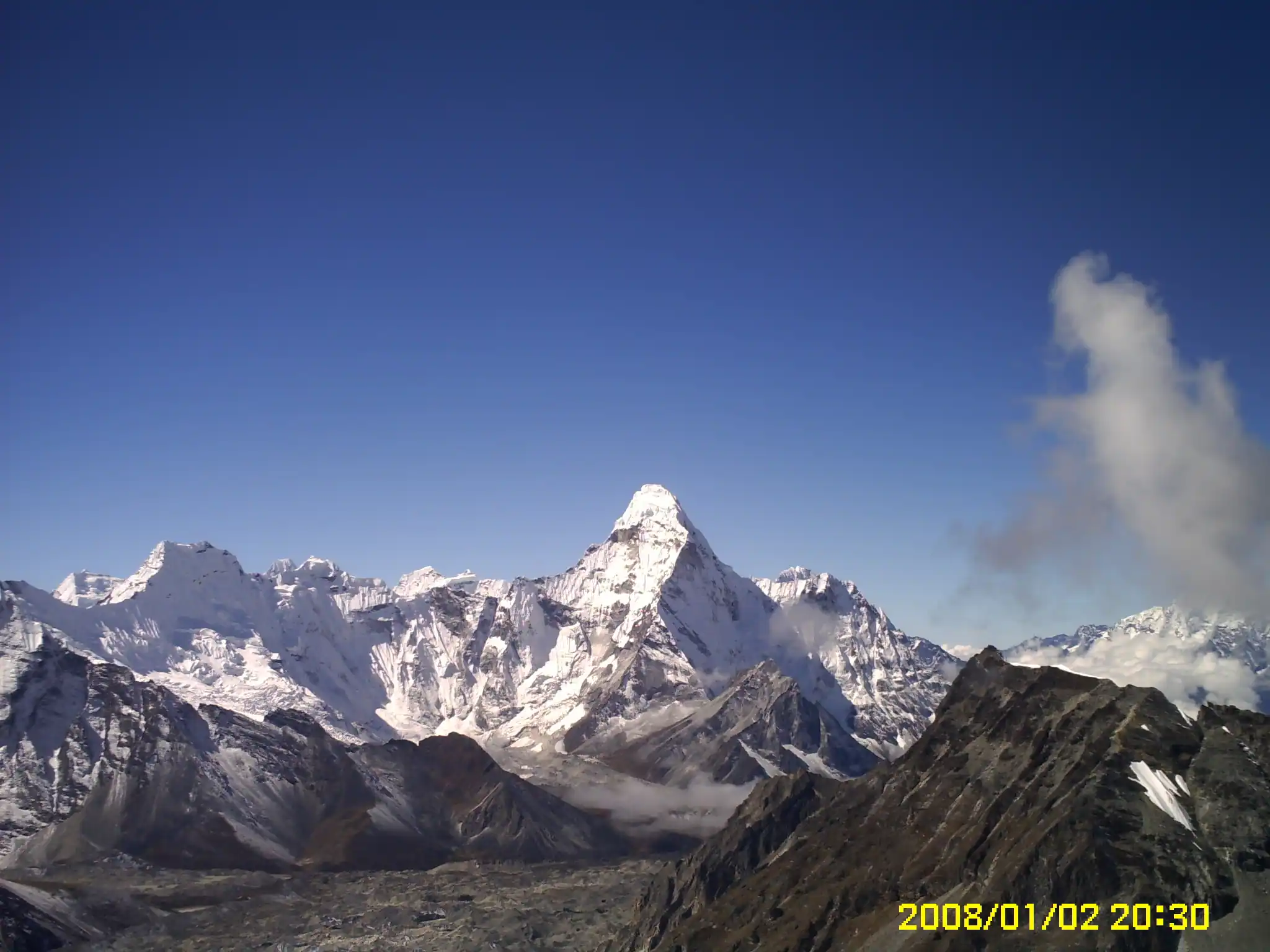
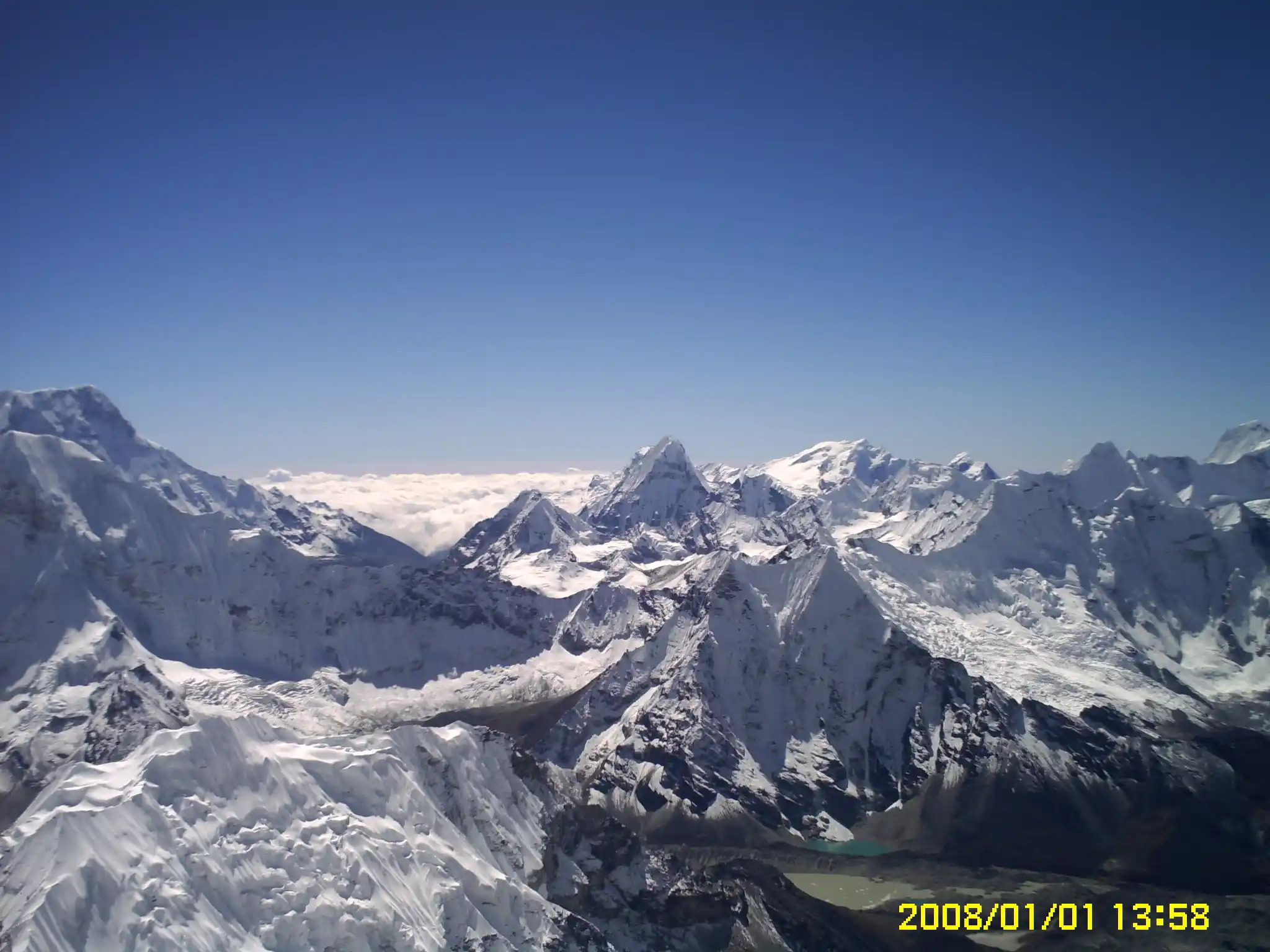
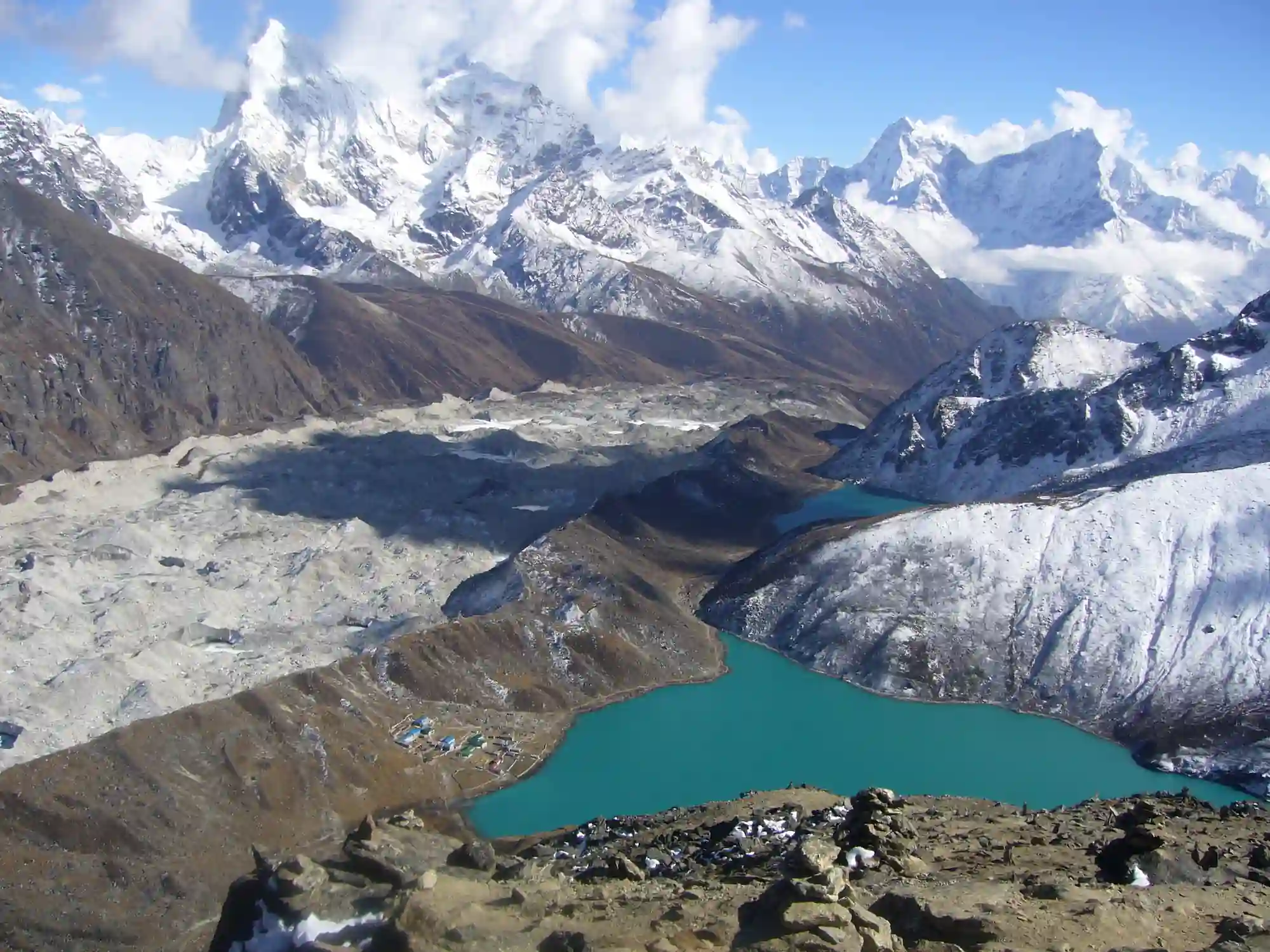
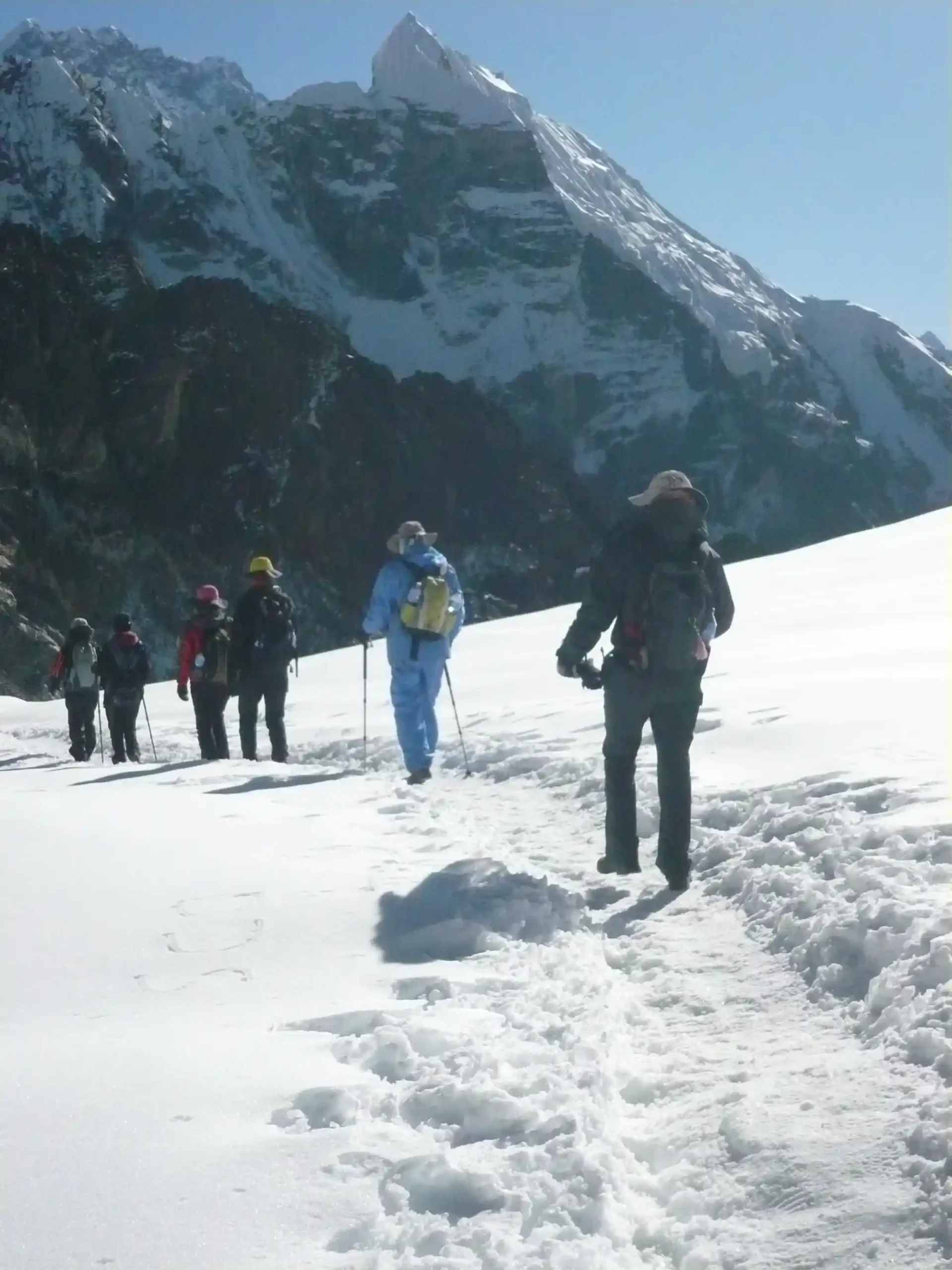
Trek Essentials
Packing appropriately makes the difference between enjoying and suffering through your trek. Each item serves specific purposes in extreme altitude conditions.
- 2 long-sleeve thermal tops (merino wool or synthetic)
- 2 thermal leggings/pants
- Avoid cotton (absorbs sweat and dries slowly)
- Lightweight fleece jacket
- Heavy fleece or wool sweater (crucial for extreme altitude)
- Down vest or jacket (essential at extreme altitude)
- Waterproof jacket
- Waterproof pants
- Wind-resistant pants
- Broken-in hiking boots (test extensively before trek)
- 4-5 pairs merino wool socks
- Gaiters (protect ankles and pants from mud/snow)
- Camp shoes/sandals for evenings
- Sun hat with wide brim
- Warm hat/beanie (essential at altitude)
- Gloves or mittens (mittens warmer than gloves)
- Buff or neck gaiter
- Balaclava or face mask (optional but appreciated at extreme altitude)
- Daypack (25-30 liters)
- Trekking poles (essential for descent joint protection)
- Sleeping bag rated for -10°C to -20°C (provide your own or rent)
- Insulated water bottle or thermos
- Headlamp with extra batteries
- Camera/smartphone with extra batteries
- Sunscreen SPF 50+ (extreme UV at altitude)
- Lip balm with SPF
- Sunglasses (UV protected, essential)
- Moisturizer (skin dries severely at altitude)
- Toothbrush and biodegradable toothpaste
- Biodegradable soap
- Altitude sickness medication (consult doctor about Diamox)
- Pain reliever (ibuprofen or paracetamol)
- Antacid (altitude affects digestion)
- Antibiotic ointment
- Blister treatment supplies
- Anti-diarrhea medication
- Feminine hygiene products if needed
- Ear plugs
- Sleep mask
- Passport (6+ months validity)
- Travel insurance documents
- Trek confirmation letter
- Cash in Nepali Rupees (ATMs in Kathmandu and Namche)
- Credit card as backup
- Portable power bank (for charging phones/cameras)
- Notebook and pen
- Earplugs (teahouses can be noisy)
- Sleep mask (for early morning starts)
- Prayer flags or small offering
- Ziploc bags (for organizing and waterproofing)
- Duct tape or repairs tape
- Cotton clothing
- Heavy jeans
- Excessive jewelry
- Heavy books
- Too many shoes
- Perfume or strong deodorants
- More than 12-15kg total weight in backpack
- Expensive items that could be lost/stolen
Final Thoughts:
The Everest Base Camp trek is one of the world’s most remarkable human experiences. It’s not just a hiking trip—it’s a pilgrimage to the foot of the world’s highest mountain, a test of your physical and mental capabilities, and a profound immersion in Sherpa culture and mountain spirituality.
Standing at 5,364 meters at the foot of Mount Everest, breathing thin air, surrounded by the world’s highest mountains, you’ll understand why people dedicate their lives to mountaineering. You’ll comprehend the immensity of human ambition and the power of mountains to humble and transform us.
The Everest Base Camp trek is challenging. You’ll experience altitude effects, physical fatigue, and mental challenges. Yet the rewards are extraordinary. You’ll witness sunrise from Kala Patthar, meet Sherpa families whose hospitality is genuine, visit ancient Buddhist monasteries, and achieve something genuinely difficult.
The trek will change you. The memories will stay with you. The friendships made on the trail will connect you to people from around the world who’ve shared an intense, transformative experience. The perspective on human capability and mountain beauty will influence your life’s trajectory.
Whether this is your first extreme-altitude trek or you’re an experienced mountaineer, the Everest Base Camp trek offers something special. It’s achievable with proper preparation and realistic expectations. It’s transformative in ways that only mountain experiences can be.
Ready to trek to Everest Base Camp? Start your training now. The mountains are waiting. Your adventure begins.
Your Adventure to Annapurna Base Camp Trek Starts Here
Start your journey with trusted local experts and discover the beauty, culture, and adventure waiting in the Himalayas and beyond.
Frequently Asked Questions
Everything you need to know about the AASRA ECO TREK
The Everest Base Camp trek is difficult but achievable with proper training. If you can comfortably walk 6-7 hours on consecutive days, climb 500+ meters daily, and have excellent cardiovascular fitness, you can likely succeed. Start training 4-6 months before. Consider your altitude experience—prior high-altitude treks significantly increase success likelihood. If in doubt, consult your doctor and be honest about your fitness level.
Altitude sickness (acute mountain sickness or AMS) occurs when your body struggles with thin air. Symptoms include headache, nausea, fatigue, dizziness, sleep difficulties. At 5,364m, 30-50% of trekkers experience some symptoms (mild to moderate). Prevention through slow ascent (the itinerary includes proper acclimatization), staying hydrated, eating well, and avoiding alcohol reduces risk significantly. Tell your guide immediately if symptoms appear. Mild symptoms often resolve with rest and hydration. Severe symptoms require descent.
Mild altitude sickness responds to rest, hydration, and time for acclimatization. Your guide monitors your symptoms and can adjust pacing. Medication (Diamox) can be taken preventatively with doctor approval. If symptoms worsen despite rest, immediate descent is the treatment. Don’t push through worsening altitude sickness—it’s a serious condition that requires descent. Your safety is the priority.
Most days involve 4-6 hours of trekking. Some days are shorter (3-4 hours), others longer (6+ hours). Daily trekking times vary based on pace, terrain, and your fitness level. Acclimatization days typically involve 1-3 hours of optional hiking.
Teahouse food is generally safe. Water is boiled at all reputable teahouses. Avoid tap water and drink only boiled or bottled water. Your stomach may need adjustment to new cuisine, but serious illness is rare with proper precautions. Many trekkers take probiotics and digestive enzymes to support their system. Tell your guide about dietary restrictions or sensitivities.
Always trek with a qualified guide—never trek solo. Your guide provides safety, route knowledge, cultural interpretation, and emergency assistance. Beyond guides, decide between private treks (1-5 people, more expensive, more flexible) and group treks (8-15 people, lower cost, more social). Either way, a qualified guide is essential.
You should be exceptionally fit—better fitness than Annapurna Base Camp trek requires. Ideally: comfortably walk 6-7+ hours daily, climb 1,000+ meter elevation gains, have excellent cardiovascular fitness, and strong legs (descent is hardest on knees). Prior mountaineering or high-altitude trekking experience is advantageous. Start serious training 4-6 months before your trek.
Everest Base Camp: 12-14 trekking days, reaches 5,364m (extremely high), longest total trek (18 days including Kathmandu), most challenging, most famous, involves extreme altitude effects.
Annapurna Base Camp: 7-10 trekking days, reaches 4,130m (high but less extreme), shorter total trek (14 days), moderate difficulty, more accessible to less-fit trekkers, less crowded, equally beautiful scenery.
Everest is for fit, experienced trekkers; Annapurna better for first-time high-altitude trekkers or those with less training time.
Book 2-3 months in advance for spring/fall peak season. Summer/winter can be booked closer to travel (4-8 weeks). Most companies require 30-50% deposit with final payment 2-4 weeks before trek. Early booking gets better guide assignments and preferred teahouse accommodations.
Travel insurance is absolutely essential. Your insurance must cover: high-altitude trekking (5,000m+), rescue and evacuation (strongly recommended), medical coverage for altitude-related illness, trip cancellation protection. Many standard travel insurance policies exclude activities above 4,000m—verify your policy covers high-altitude trekking before purchasing.
Cellular service is limited and unreliable above 2,500m. Internet is available at some teahouses but is slow and unreliable. Expect to be largely disconnected during your trek. This is often appreciated as a digital detox, allowing you to focus entirely on your experience.
Guides typically receive 10-15% of trek cost as tip (e.g., $150-270 for $1,500 trek). Porters receive US$5-10 per day (e.g., $60-120 for 14-day trek). These aren’t legally required but are important for supporting people who enable your trek. Generous tipping is appreciated and customary in Nepal’s culture. Many trekkers give additional daily tips for exceptional service.
Age isn’t necessarily limiting—fitness and acclimatization matter more than age. Many trekkers in their 60s and beyond successfully complete the Everest Base Camp trek. However, ensure you’re exceptionally fit, have good cardiovascular health, and have medical clearance. Consult your doctor, especially if you have existing health conditions. Start training seriously several months before your trek.
Your guide will arrange immediate descent if necessary. Rescue helicopters are available (expensive, $5,000-10,000+) for serious emergencies. Standard procedure is trekking down to lower elevations where symptoms usually resolve. Your trek company’s insurance should cover emergency evacuation. Your guide prioritizes your safety over completing the itinerary—listen to your guide if descent is recommended.