 Plan Your Trip
Helambu Circuit Trek 14 Days
Trip Overview

Trek Region
Langtang

Difficulty Level
Hard

Trek Starts at
Kathmandu

Transport
By Road

Trek Ends at
Kathmandu

Total Trip Duration
14 Days

Max Elevation
3,690m
Trip Highlights
- Trek through Shivapuri Nagarjun National Park — a lush, wildlife-rich protected area on the northern rim of the Kathmandu Valley
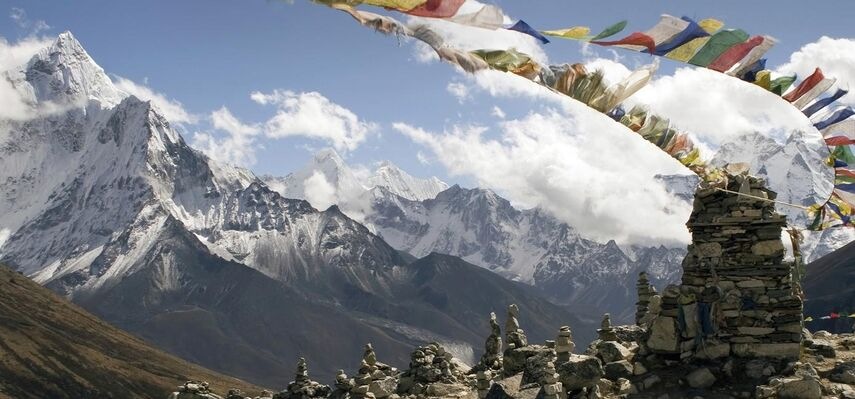
- Enjoy sweeping panoramic views of Langtang Lirung, Ganesh Himal, Dorje Lakpa, Manaslu, Jugal Himal, and even Mount Everest on clear days — all from a relatively low and accessible maximum altitude
- Stand at Tharepati (3,690m) — the high point of the circuit and the junction where the Helambu, Gosaikunda, and Langtang trails converge
- Explore the historic Tarkeghyang village — one of the most beautiful and culturally significant Sherpa (Hyolmo) settlements in Nepal
- Visit ancient Buddhist monasteries dating back centuries, decorated with thangka paintings, butter lamps, and the sounds of chanting monks
- Walk through the sacred Melamchi Ghyang village, steeped in Hyolmo heritage and home to one of the region’s most revered monasteries
- Discover Sermathang — a charming hilltop village surrounded by apple orchards and traditional Hyolmo homes
- Traverse dense corridors of rhododendron, oak, pine, and bamboo forest alive with birdsong and — if you are fortunate — glimpses of red panda and Himalayan wildlife
- Experience the Helambu region’s famous apple production and taste fresh local produce at village teahouses
- Complete a genuine circuit trek — starting at Sundarijal, circling through the ridge and the valley, and finishing at Melamchi Bazaar — never retracing your steps
Trip Summary
Just 25 kilometers northeast of Kathmandu, beyond the rim of the valley, lies a world that most visitors to Nepal never discover. The Helambu Circuit Trek, also known as the Yolmo Heritage Trek, takes you through one of Nepal’s most culturally rich and scenically beautiful trekking regions without requiring a flight, weeks of preparation, or high-altitude mountaineering experience.
The Helambu region is the ancestral homeland of the Hyolmo people (also called Helambu Sherpa, a Tibetan-influenced Buddhist community whose ancient monasteries, apple orchards, carved mani walls, and traditional village architecture define the character of this trek in a way that no other short route near Kathmandu quite matches. The trail circuits through Shivapuri Nagarjun National Park, climbs to the ridgeline at Tharepati (3,690m), descends into the heart of the Helambu valley past monasteries and Sherpa villages, and returns to Kathmandu through Melamchi Bazaar.
This 14-day itinerary is the most complete and unhurried version of the Helambu Circuit with generous pacing, proper rest stops, full cultural exploration time in key villages, a comfortable buffer in Kathmandu, and enough days to genuinely absorb the forests, ridgelines, and communities that make this one of Nepal’s most rewarding yet underrated treks.
When To Visit
The Helambu Circuit has one of the widest seasonal windows of any trek in Nepal. Its relatively modest maximum altitude of 3,690m and its location in a partial rain shadow make it walkable for more of the year than higher-altitude routes.
- Spring (March to May) is one of the finest windows for the Helambu Circuit. The forests below Tharepati are at their most spectacular rhododendron trees in full bloom paint the hillsides in shades of red, pink, crimson, and white for weeks at a stretch. March and April bring the best combination of blooming forests, stable weather, and good mountain visibility. Late May becomes warmer and slightly hazier, but the trail is still very enjoyable.
- Autumn (September to November) is the peak trekking season and offers the clearest mountain views of the year. After the monsoon clears, the air is washed clean and the Himalayan panoramas from Chisapani and Tharepati are at their sharpest and most dramatic. October is the gold-standard month comfortable temperatures, full teahouse availability, and excellent visibility. November brings cooler temperatures and slightly fewer crowds.
- Winter (December to February) is quieter and colder but entirely possible for most of the route. The section around Tharepati can see snowfall that makes the trail slippery and the teahouses basic, but the lower Helambu valley stays accessible and the trails are largely clear. This is an excellent winter option for trekkers who want a Himalayan experience without the high-altitude cold of the Khumbu or Langtang.
- Monsoon (June to August) is manageable here more than on most Nepal treks, thanks to the partial rain shadow effect. Lower sections are wet, leechy, and slippery, but the landscape is intensely green and the upper ridge is often clear by afternoon. Not the most comfortable season but possible for determined trekkers with the right gear.
Itinerary
Welcome to Nepal. Our team meets you at Tribhuvan International Airport and transfers you to your hotel in the heart of Kathmandu. In the evening, your trekking guide sits with you for a comprehensive pre-trek briefing the full route day by day, daily distances and altitude profiles, cultural notes on the Hyolmo and Tamang communities you will visit, permit requirements, gear checks, and the logistics of the road journey to Sundarijal the next morning.
Kathmandu itself is worth exploring whenever time and energy allow. The lanes of Thamel buzz with travelers, the smell of incense drifts from every second shop, and the distant ring of temple bells gives the city a rhythm entirely its own. If you arrive in the afternoon, a short walk to the nearby Boudhanath Stupa or through the local neighborhood sets the tone for the cultural richness ahead. Overnight in Kathmandu.
The trek begins with a short drive of roughly 12 kilometers from central Kathmandu to Sundarijal (1,460m) a small, pleasant settlement on the northern edge of the Kathmandu Valley, home to a reservoir, a waterworks facility, and the southern entrance to Shivapuri Nagarjun National Park. The drive itself takes only about an hour and offers your first views of the forested ridgelines that form the northern wall of the valley.
From Sundarijal, the trail rises immediately and steeply into the national park. The forest closes around you within minutes of leaving the road, dense, cool, and surprisingly wild for a trail that begins so close to one of Asia’s most chaotic cities. The path climbs through stands of pine, oak, and rhododendron, passing a medieval-looking stone reservoir and then ascending to the ridge at Burlang Bhanjyang (2,430m) a small pass with the first proper Himalayan views of the day.
From the pass, the trail drops slightly and contours to Chisapani (2,165m) a small ridgeline settlement famous for one of the finest sunset and sunrise viewpoints anywhere near Kathmandu. On a clear evening, the entire sweep of the Central Himalayan range is laid out in front of you Langtang Lirung, Ganesh Himal, Jugal Himal, Manaslu, and on exceptionally clear days the distant profile of Everest itself. It is a view that stops almost every first-time visitor in their tracks, largely because no one expects to see something this dramatic this quickly and this close to the capital. Walking time: 4–5 hours.
From Chisapani, the trail continues north and eastward along the main ridge, entering the transition zone between the national park and the lower Helambu hills. The walking is varied and genuinely beautiful, climbing through rhododendron forest, dropping into small saddles, crossing seasonal streams, and passing through the scattered village of Gul Bhanjyang (2,130m) where a few teahouses make a natural lunch stop.
Beyond Gul Bhanjyang, the trail climbs again through increasingly lush forest oak trees draped in moss and lichen, bamboo stands, and the first of the many carved mani walls and chortens that will accompany you throughout the Helambu region. Each mani wall is a line of flat stones carved with the Tibetan Buddhist prayer Om Mani Padme Hum, following the local tradition and always pass to the left.
Kutumsang (2,470m) is a welcoming, friendly village spread across a broad ridge with excellent views of the Langtang range to the north. The village is home to a mix of Tamang and Brahmin families and has a handful of well-kept teahouses that make it a comfortable overnight stop. In spring, the surrounding hillsides are terraced with mustard fields that glow bright yellow against the green of the forests. Walking time: 6–7 hours.
This is one of the most distinctive walking days of the entire circuit, a steady, sustained climb from the settled farmland around Kutumsang into the high alpine world of the ridgeline above. The trail gains significant altitude throughout the day, and the landscape shifts noticeably as you climb the oak and rhododendron forest thins, the air cools, and the views that open up on both sides of the ridge become increasingly expansive.
Above Kutumsang, the trail passes through the small hamlet of Gopte before continuing to climb through open scrubland and grassland to Magne Goth (3,285m), a remote seasonal settlement used primarily by herders bringing their animals to the high pastures in summer. There is a small cluster of basic teahouses here. The isolation and the altitude give Magne Goth a wild, windswept character that feels very different from the villages lower down. The mountain views from the ridge above the settlement are outstanding. Langtang Lirung, Dorje Lakpa, and Ganesh Himal dominate the northern skyline. Walking time: 5–6 hours.
A shorter walking day that takes you to the highest point of the entire circuit. The trail climbs gradually from Magne Goth along the main ridgeline, passing through scattered juniper and fir trees that become more sparse as altitude increases. The path is wide and clear, and the mountain panorama to the north stays with you the entire way.
Tharepati (3,690m) is one of the most significant junctions in the entire Langtang trekking region. Three trails converge here the Helambu Circuit from the west, the Gosaikunda Lake Trail from the northwest, and the descent into the Helambu valley to the east. A cluster of teahouses and lodges serves trekkers passing through in all seasons.
The views from Tharepati on a clear day are genuinely extraordinary for the altitude. The full sweep of the Langtang Himalayan range, Ganesh Himal, Jugal Himal, Dorje Lakpa (6,990m), and on the clearest autumn and spring days even the distant pyramid of Mount Everest (8,848m) to the east are all visible from the ridge. Spend the afternoon at the teahouse, explore the ridgeline, and watch the late afternoon light roll across the mountains. Walking time: 3–4 hours.
The descent from Tharepati into the Helambu valley is one of the most satisfying transitions of the entire trek. The trail drops steeply at first down a rocky ravine with views into the deep valley below, and the vegetation quickly changes as altitude is lost. Fir trees give way to oaks and then to rhododendrons. The forest becomes denser and greener with every 100 meters of descent.
After crossing a clear mountain stream on a wooden bridge, the trail climbs briefly to reach Melamchi Ghyang (2,530m), a beautiful and deeply spiritual Hyolmo village built around one of the most revered monasteries in the entire Helambu region. The Melamchi Ghyang Monastery is ancient, richly decorated, and deeply active you may hear the sounds of chanting and drums drifting across the village in the early morning or at dusk.
The village is a genuinely lovely place to spend an evening. Walk through the stone-paved lanes, observe the intricate wood carvings on the monastery facade, spin the large prayer wheel at the village entrance, and sit with locals in the teahouse over a bowl of thick vegetable soup. This is exactly the kind of cultural encounter that makes the Helambu Circuit a deeply rewarding human experience, not just a scenic walk. Walking time: 4–5 hours.
The trail from Melamchi Ghyang drops steeply through the forest to the Melamchi Khola River at the bottom of the valley, a powerful, clear mountain river that you cross on a suspension bridge before climbing back up the opposite hillside to Tarkeghyang (2,740m). This descent-and-climb pattern is characteristic of the Helambu valley the trails move constantly up and down across the ridges and river valleys, and the variation keeps the walking interesting and the scenery constantly changing.
Tarkeghyang, whose name translates as “100 horses” and derives from a remarkable local legend involving a Lama summoned by the King of Kathmandu in the 18th century to stop an epidemic is one of the finest villages on the entire circuit and one of the most culturally significant Sherpa settlements in the Helambu region. The village monastery, originally established in 1727 and rebuilt in 1969 in a distinctive Bhutanese architectural style, is a highlight that rewards a long and unhurried visit.
The village itself is prosperous, well-maintained, and genuinely charming apple orchards surround the traditional stone houses, prayer flags flutter from every rooftop, and the warm welcome of the Hyolmo community here is immediately and tangibly felt. Settle into your teahouse and explore the lanes of the village as the afternoon light deepens. Walking time: 4–5 hours.
A full day dedicated to exploring one of the Helambu region’s most interesting cultural stops — unhurried, with no bags to carry and nowhere to be until tomorrow.
Begin the morning with a proper visit to the Tarkeghyang Monastery sit inside the prayer hall, observe the elaborate thangka paintings that cover the walls, and watch the morning rituals if monks are present. Your guide can translate the stories depicted in the murals and explain the history of the Lama who established this gompa three centuries ago.
The area above Tarkeghyang offers excellent short hiking for those who want more mountain views the ridge above the village provides panoramic outlooks toward the Jugal Himal to the north and the rolling green hills of the Helambu valley to the south. The Helambu region is renowned in Nepal for its apple production, and depending on the season, you may be able to taste freshly harvested apples or apple products directly from village households.
In the afternoon, walk through the surrounding apple orchards, interact with local families, visit the smaller chortens and mani walls on the outskirts of the village, and simply absorb the peaceful rhythm of highland life in the Himalayas. This kind of unscripted time in a genuine mountain community is increasingly rare on Nepal’s trekking trails and is one of the defining features of the Helambu Circuit.
Leaving Tarkeghyang, the trail heads southward through the Helambu valley a pleasant, rolling walk through forest and past scattered homesteads that gradually leads to the final significant overnight village of the circuit. The route passes through the small hamlets of Chumik and Ghangyul before arriving at Sermathang (2,610m).
Sermathang is a lovely, laid-back village perched on a broad ridge with beautiful views across the valley. It has a quieter, more rural feel than Tarkeghyang fewer visitors, a handful of simple teahouses, and a community that still lives largely by farming, herding, and small-scale apple cultivation. The village has its own old monastery worth visiting, and the walking around Sermathang through terraced fields and orchards is some of the most pleasant low-altitude strolling of the entire trip.
Spend the evening here quietly it is your last night in the Helambu hills, and the simplicity and stillness of Sermathang is a good place to sit with the experience of the last week before returning to Kathmandu. Walking time: 4–5 hours.
The final trekking day and a long descent back to the lowlands. The trail drops steadily and continuously from Sermathang southward through the forested ridges of the lower Helambu hills, losing over 1,700m of altitude over the course of the day. The forest is lush and green and the birdsong in the lower sections is rich. This region supports over 300 bird species and the lower altitudes are where many of the most colorful varieties are most active.
As you descend toward the Melamchi valley, the landscape shifts from alpine forest to terraced farmland, and the sounds of the valley dogs, roosters, the clinking of bells on livestock signal the return to more populated terrain. Melamchi Bazaar (870m) is a busy small market town on the Melamchi River, with road access to Kathmandu and a lively local trading atmosphere that feels a world away from the peaceful ridgelines above. Your trekking vehicle meets you here for the drive back to Kathmandu. Walking time: 4–5 hours.
The road from Melamchi Bazaar follows the Melamchi River valley westward before joining the main Araniko Highway and heading into Kathmandu. The drive takes approximately 3–4 hours depending on traffic conditions. The scenery along the river valley is pleasant and the transition from mountain hills back into the urban density of the capital happens gradually enough to feel natural.
Back in Kathmandu, transfer to your hotel, enjoy a long hot shower, and spend the rest of the day resting or exploring. A good meal at one of Thamel’s many excellent restaurants is a fitting celebration of a circuit well-walked.
A full free day in Kathmandu. The city rewards exploration at every level from the grandest religious monuments to the smallest backstreet temple, the Kathmandu Valley is one of the most culturally dense places in Asia and a UNESCO World Heritage Site many times over.
Pashupatinath Temple on the banks of the Bagmati River is the most sacred Hindu shrine in Nepal a complex of golden-roofed temples, cremation ghats, wandering sadhus, and deeply spiritual atmosphere that leaves almost no visitor unmoved. Boudhanath Stupa is one of the largest Buddhist stupas in the world and the spiritual center of Nepal’s Tibetan community walking the kora (circumambulation path) around its great white dome among monks, pilgrims, and incense smoke is an experience of rare and quiet power.
If the medieval arts of the Kathmandu Valley interest you, a taxi ride to Bhaktapur Durbar Square or Patan Durbar Square reveals some of the finest Newari wood carving and courtyard architecture anywhere in South Asia. Or simply spend the day in Thamel eating, shopping, booking a massage after over a week of walking, and watching the city go about its extraordinary business.
A practical buffer day built into the itinerary to absorb any road delays or unforeseen disruptions on the return journey from Melamchi Bazaar, which can occasionally be affected by road conditions or local traffic events.
If your return went smoothly, this becomes a second free day in Kathmandu a gift of time in one of Nepal’s most fascinating cities. Use it for a visit to Swayambhunath Stupa (the Monkey Temple) on its forested hilltop above the western edge of the valley, for a cooking class in Thamel, or for the short day trip to Nagarkot on the eastern valley rim one of the finest sunrise viewpoints of the Himalayan range anywhere near Kathmandu. Overnight in Kathmandu.
Your 14-day Helambu Circuit Trek comes to a close. Our team transfers you to Tribhuvan International Airport for your onward journey. You leave Nepal having walked a circuit that most visitors never discover through forest and ridge, past ancient monasteries and apple orchards, across the ancestral homeland of the Hyolmo people — and carrying with you a version of Nepal that is quieter, gentler, and more deeply human than the famous high-altitude routes to the north.
Trek Difficulty & Physical Demands
The Helambu Circuit Trek is rated easy to moderate making it one of the most accessible multi-day treks in Nepal and an ideal first Himalayan trekking experience.
Altitude: The maximum elevation of 3,690m at Tharepati is well within the range manageable by most healthy adults without specific high-altitude preparation. Mild altitude sickness symptoms are possible above 3,000m but are far less common here than on the Langtang or Everest routes. The gradual altitude gain over the first several days helps the body adjust naturally.
Terrain: The trail is well-defined throughout. The lower sections involve some steep climbs and descents on rocky paths. The ridge section between Kutumsang and Tharepati is the most sustained uphill of the route. The descent from Tharepati into the Helambu valley is steep in places. The lower Helambu valley walks are generally gentle and rolling.
Daily walking: Expect 4–7 hours of walking per day on well-marked trails. There are no technical sections, no glaciated crossings, and no extreme altitude days. The longest and most demanding day is the Kutumsang to Magne Goth section, which involves sustained climbing.
Physical fitness: The Helambu Circuit is genuinely suitable for fit beginners, families with older children, older trekkers, and anyone with limited prior hiking experience. A basic level of general fitness, comfortable walking for 4–6 hours on uneven ground, is all that is needed. No prior altitude trekking experience is required.
First-time trekkers: This is one of the very best first Himalayan treks in Nepal. The altitude is manageable, the logistics are simpler than flight-dependent routes, the trails are clear and well-supported, and the cultural richness of the Helambu region gives the walk a depth and meaning that goes well beyond the physical experience.
Best Time to Trek: Seasonal Comparison
| Season | Months | Weather | Trail Conditions | Views | Recommended |
|---|---|---|---|---|---|
| Spring | Mar–May | Warm Stable | Excellent | Excellent | Best |
| Monsoon | Jun–Aug | Wet / Partial Rain Shadow | Slippery in parts | Partially good | Possible |
| Autumn | Sep–Nov | Cool Clear | Excellent | Excellent | Best |
| Winter | Dec–Feb | Cool to Cold | Manageable | Good | Possible |
Pro tip: The Helambu Circuit is one of the few Nepal treks that works reasonably well in winter. If you want a Himalayan experience between December and February without the extreme cold or snow of higher-altitude routes, the Helambu is your best option near Kathmandu. The Tharepati section may have some snow but the lower valley is largely clear. For maximum mountain views, aim for mid-October or the first two weeks of April.
Booking Your Helambu Circuit Trek 14 Days
Booking is simple and our team manages every logistical detail so you can focus entirely on preparation and looking forward to the walk.
Step 1 — Contact us. Reach out via our website, email, or WhatsApp with your preferred travel dates and group size. We respond within 24 hours with a full itinerary and complete cost breakdown.
Step 2 — Confirm your booking. A 20% deposit secures your dates. We immediately process permit applications, arrange transport logistics, and assign your guide.
Step 3 — Prepare. We send you a comprehensive pre-departure guide covering recommended training, gear list, cultural notes on the Hyolmo and Tamang communities, day-by-day expectations, and practical tips for the Helambu region specifically.
Step 4 — Arrive in Kathmandu. We collect you from the airport, brief you fully on every aspect of the trek, and help with any last-minute gear needs in Thamel. The road journey to Sundarijal departs the following morning.
Step 5 — Trek. Your licensed guide leads you through every day of the circuit, supported by our porters and full logistical backing. Your comfort, safety, and experience are our responsibility.
Step 6 — Pay the balance. The remaining 80% is due on arrival in Kathmandu before departing for Sundarijal.
Cancellation Policy:
- 30+ days before departure: Full deposit refunded minus bank transfer charges
- 15–29 days before: 50% refund of deposit
- Less than 15 days before: Deposit forfeited, no refund
Important: Travel insurance with emergency helicopter evacuation coverage is mandatory for all trekkers. Although the Helambu Circuit reaches a moderate maximum altitude, the trail passes through remote sections where ground-level emergency medical access is limited. Ensure your policy covers helicopter rescue at altitudes above 4,000m.
Cost Details
Cost Includes
- Airport pick-up and drop-off in Kathmandu
- Kathmandu–Sundarijal ground transportation (private vehicle)
- Melamchi Bazaar–Kathmandu return ground transportation (private vehicle)
- 2 nights’ hotel accommodation in Kathmandu (bed & breakfast, 3-star)
- All teahouse/guesthouse accommodation during the trek (8 nights)
- All meals during the trek — breakfast, lunch, and dinner
- Experienced, English-speaking, government-licensed trekking guide
- One porter for every two trekkers (max 15 kg per porter load)
- All required trekking permits:
- Shivapuri Nagarjun National Park Entry Permit
- Langtang National Park Entry Permit (for Tharepati section)
- TIMS Card
- Guide and porter wages, meals, accommodation, and insurance
- All government taxes and local charges
- Sleeping bag rental (if needed)
- First Aid Kit carried by guide throughout the trek
- Emergency evacuation arrangement (evacuation cost covered by your travel insurance)
Cost Excludes
- Nepal entry visa fee (approx. USD 50 for 30 days — obtainable on arrival at Kathmandu airport)
- International flights to and from Kathmandu
- Travel insurance with emergency helicopter evacuation coverage (mandatory)
- Meals in Kathmandu beyond breakfast
- Hot showers, Wi-Fi, and device charging along the trek (charged at teahouses)
- Personal snacks, bottled water, energy drinks, and alcoholic beverages
- Tips and gratuity for guide and porter (recommended and greatly appreciated)
- Personal trekking gear and clothing
- Extra nights in Kathmandu beyond the planned itinerary
- Helicopter rescue costs (must be covered by your personal travel insurance)
- Personal expenses — laundry, souvenirs, phone calls, and incidentals
- Entry fees to monasteries (usually NPR 100–300 per person, payable locally)
Trip Gallery
Trek Essentials
- Thermal base layer top and bottom — 2 sets
- Mid-layer fleece or softshell jacket
- Light to medium down jacket or insulated layer (essential at Tharepati and the ridge section)
- Waterproof, windproof hardshell jacket and trousers
- Trekking trousers — 2 to 3 pairs
- Trekking socks, wool or synthetic — 4 to 5 pairs
- Light gloves for morning ridge walks and warm gloves for Tharepati and above
- Warm beanie or wool hat
- Sun hat or cap for lower trail sections
- Neck gaiter or buff
- Waterproof, ankle-support trekking boots — broken in before the trek. The Helambu trail has no technical sections but ankle support on the steep descents is important.
- Lightweight sandals or flip-flops for teahouse evenings
- Gaiters (useful if trekking in winter or early spring when Tharepati has snow)
- Trekking poles — strongly recommended for the steep descents from Tharepati into the Helambu valley
- Daypack (20–25 liters) for daily essentials
- Duffel bag (60 liters) for your porter
- Sleeping bag rated to -10°C (Tharepati and Magne Goth nights are cold)
- Headlamp with extra batteries
- Sunglasses with UV400 protection
- Water bottle (1–2 liters) or hydration bladder
- Water purification tablets or personal filter
- Personal first aid kit — blister pads, ibuprofen, bandages, antiseptic cream
- Sunscreen SPF 50+ and SPF lip balm
- Insect repellent for the lower forest sections of Shivapuri National Park
- Hand sanitizer and biodegradable wet wipes
- Diarrhea medication and oral rehydration salts
- All personal prescription medications for the full trip duration
- Diamox (acetazolamide) — generally not required for this trek but worth consulting your doctor if you have any prior altitude sensitivity history
- Valid passport with at least 6 months remaining validity
- Nepal visa (obtainable on arrival at Kathmandu airport)
- Printed travel insurance policy with emergency evacuation details
- 2 passport-sized photos for permit processing
- Emergency contact card kept on your person throughout
Final Thoughts: Conclusion
The Helambu Circuit Trek does not ask much of you in terms of altitude, technical skill, or physical extremity. What it asks instead is something rarer and in some ways more valuable a willingness to slow down, to pay attention, and to be genuinely present in a landscape and a culture that rewards exactly those qualities.
Walking through Shivapuri National Park on the first morning, you are still physically close to Kathmandu. But the mental distance from the city arrives almost immediately in the silence of the forest, the prayer flags catching wind on the ridge at Chisapani, the distant white wall of the Himalayan range appearing above the treeline for the first time. From that moment, the circuit unfolds with a quiet, continuous beauty that is entirely its own.
The Hyolmo people of the Helambu valley are among the most welcoming and culturally distinct communities in Nepal. Their monasteries are genuinely ancient. Their villages are genuinely beautiful. Their traditions from apple orchards and cheese-making to the elaborate iconography of their gompas are alive and practiced in the present, not preserved for tourist consumption. Walking among them as a respectful guest is a privilege.
The Helambu Circuit is the trek that Nepal’s most experienced trekkers recommend when they want to come back to why they started trekking in the first place. It is the trek that surprises first-time visitors who expected something simpler and discovered something profound. And it is the trek that is most likely, in the days after you return home, to make you start quietly planning your return.

Your Adventure to Annapurna Base Camp Trek Starts Here
Start your journey with trusted local experts and discover the beauty, culture, and adventure waiting in the Himalayas and beyond.
Frequently Asked Questions
Everything you need to know about the AASRA ECO TREK
Yes, it is one of the best introductory Himalayan treks available anywhere in Nepal. The maximum altitude of 3,690m is manageable for most healthy adults, the trails are well-marked and well-supported, the daily walking distances are comfortable, and the road access at both ends makes logistics simple. A basic level of fitness and comfortable footwear are the primary requirements.
The Helambu Circuit is lower, shorter, and more culturally focused than the Langtang Valley Trek. It does not reach the high alpine world of Kyanjin Gompa or the dramatic glacial scenery of the upper Langtang. What it offers instead is an immersive journey through the ancestral homeland of the Hyolmo people ancient monasteries, traditional village life, apple orchards, and a circuit route that visits a greater number of culturally significant settlements than the Langtang route. Many trekkers choose to combine both for a comprehensive Langtang region experience.
The Hyolmo (also called Helambu Sherpa) are a Tibetan-influenced Buddhist community who have lived in the Helambu valley for centuries. They are distinct from the Sherpa of the Khumbu different language, different traditions, and a unique cultural identity shaped by their position at the meeting point of Nepal and Tibet. Their monasteries are among the oldest in the region and their thangka paintings, ritual music, and festival traditions are deeply rooted in Vajrayana Buddhism. The founder of Vajrayana Buddhism in Tibet, Guru Padmasambhava, is traditionally associated with the Helambu region and is believed to have practiced here.
You need the Shivapuri Nagarjun National Park Entry Permit (approx. USD 3 for the initial park section), the Langtang National Park Entry Permit (approx. USD 34 for the Tharepati section), and a TIMS Card. All three are included in the package price and arranged on your behalf.
Yes, travel insurance with emergency helicopter evacuation coverage is mandatory. Although the Helambu is a moderate route, the sections around Tharepati and the upper ridge are remote and helicopter evacuation is the primary emergency option if a serious incident occurs. Ensure your policy covers activities at altitudes above 4,000m.
Yes and it is one of the few Nepal treks where winter trekking is genuinely recommended for the right trekker. The lower Helambu valley sections are largely snow-free and the teahouses remain open. The Tharepati ridge section (around 3,690m) may have snow in December to February, which adds some challenge but also considerable beauty to the trail. Come with proper cold-weather gear and expect cold nights above 3,000m.
Shivapuri Nagarjun National Park which you walk through on Day 2 is home to an impressive diversity of wildlife including the red panda, Himalayan black bear, leopard, wild boar, Himalayan thar, musk deer, and over 300 bird species. Red pandas are the most sought-after sighting and are found in the bamboo and rhododendron forest sections of the lower trail. The best chance of wildlife sightings is during early morning walking before the trail becomes busy.
Teahouses throughout the Helambu Circuit offer a good range of local and simple international food dal bhat, noodle soups, eggs, porridge, tsampa (roasted barley porridge), chapati, momo, and seasonal vegetables. The region is known for its apples apple pie, apple tea, and fresh apples are available in season at Tarkeghyang and Sermathang and are genuinely excellent. Three full meals per day are included in the package. Teahouse food is honest, filling, and considerably more affordable than on the Khumbu trails.
Yes, on clear days. The classic viewpoint is Chisapani at the start of the trek, and the ridge at Tharepati both offer panoramic views that include the distant profile of Everest to the east alongside the more prominent profiles of Langtang Lirung, Ganesh Himal, Jugal Himal, Dorje Lakpa, and Manaslu. October and November offer the clearest conditions for distant peak identification.
Absolutely. The Helambu Circuit combines beautifully with the Langtang Valley Trek for a comprehensive 20-22 day exploration of the entire Langtang region. It can also be extended to include the Gosaikunda Lake Trek a sacred alpine lake pilgrimage at 4,380m that joins the Helambu trail at Tharepati. The Gosaikunda extension adds 3–4 days and takes the maximum altitude to just under 4,400m. Contact us and we will design the ideal combined itinerary for your available time and fitness level.