 Plan Your Trip
Gokyo Valley Trek – 18 Days
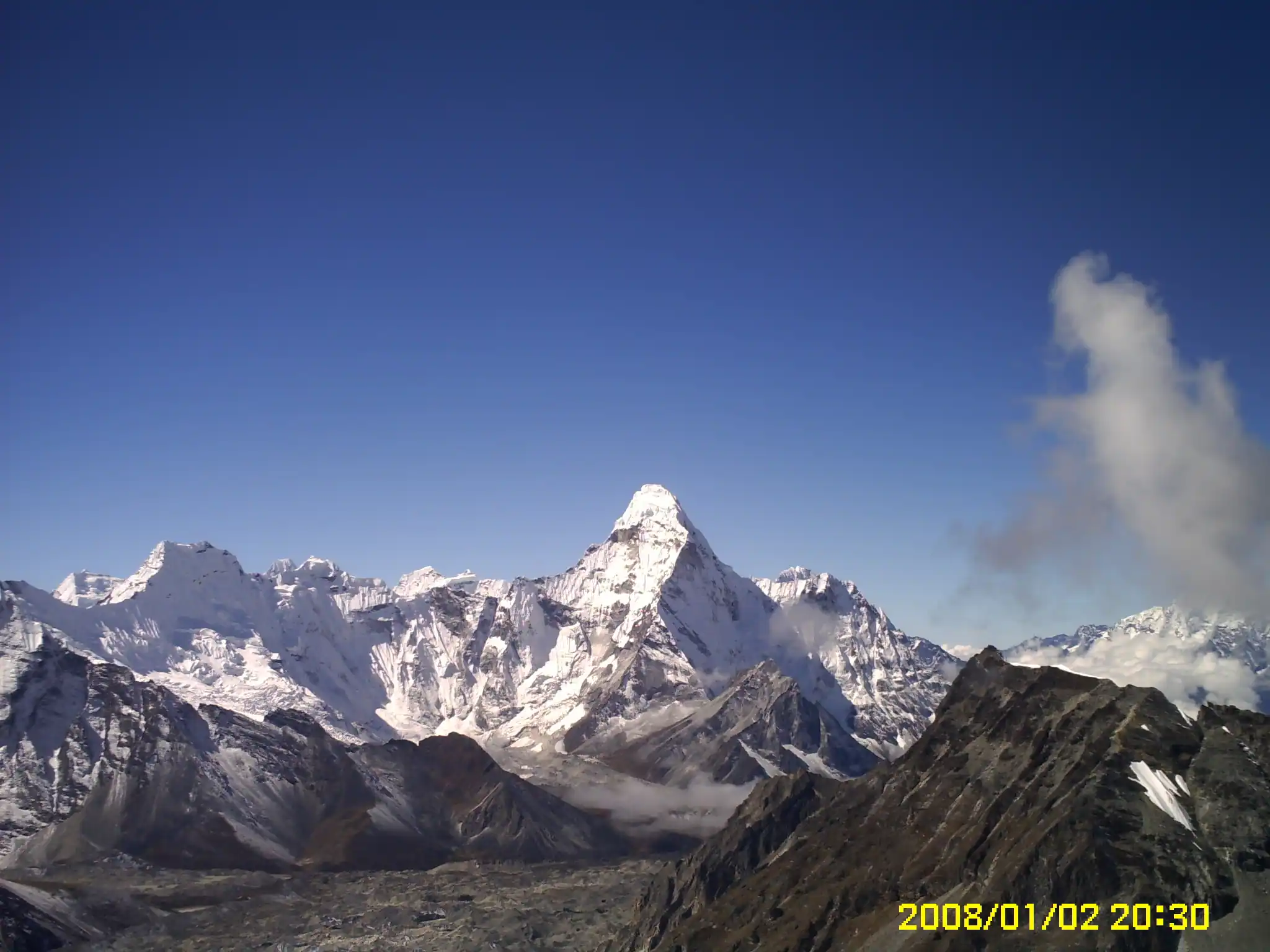
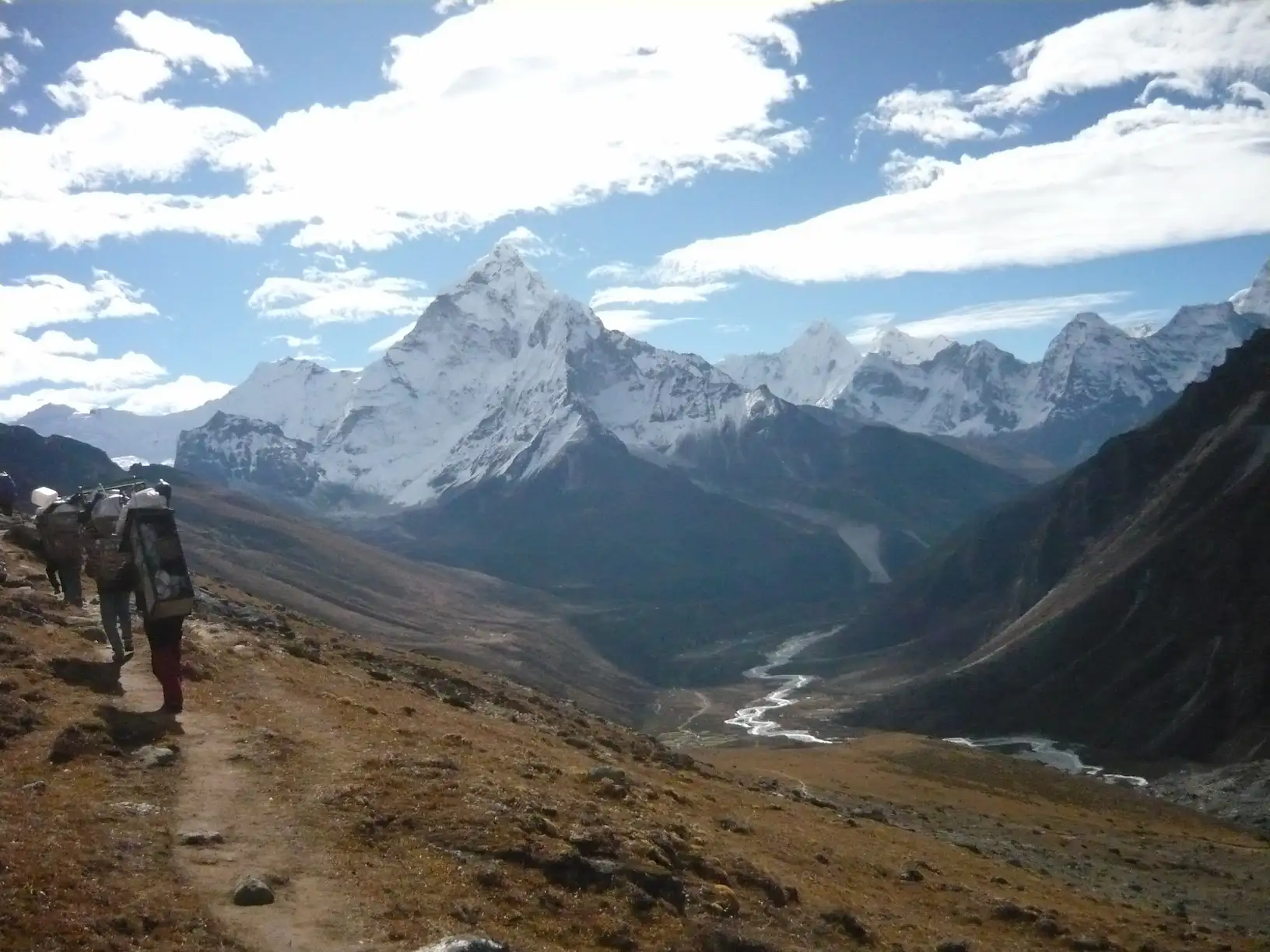
Trip Overview

Trek Region
Everest

Difficulty Level
Hard

Trek Starts at
Kathmandu

Transport
Flight

Trek Ends at
Kathmandu

Total Trip Duration
18 Days

Max Elevation
5,545m
Trip Highlights
- Walk alongside the Ngozumpa Glacier — the longest glacier in Nepal
- Explore the sacred Gokyo Lakes, a stunning chain of six high-altitude turquoise lakes
- Summit Gokyo Ri (5,357m) for a 360-degree panorama of four 8,000m peaks: Everest, Lhotse, Makalu, and Cho Oyu
- Cross the formidable Cho La Pass (5,420m) — a challenging glaciated high mountain pass
- Stand at the legendary Everest Base Camp (5,364m) and witness the Khumbu Icefall
- Watch sunrise over Everest from Kala Patthar (5,545m) — the most iconic viewpoint in the Himalayas
- Trek through Sagarmatha National Park, a UNESCO World Heritage Site
- Experience warm Sherpa culture and hospitality in remote mountain villages
- Visit the revered Tengboche Monastery, the spiritual heart of the Khumbu
- Enjoy a quieter, more peaceful trail compared to the crowded Everest Base Camp route
Trip Summary
Most people who dream about trekking in the Everest region picture one route Everest Base Camp. But tucked away to the northwest of Namche Bazaar lies a valley that many seasoned trekkers quietly consider even more beautiful. The Gokyo Valley Trek takes you into one of the most serene and visually stunning corners of the Khumbu Himalayas, where a chain of sacred turquoise lakes mirrors the faces of some of the world’s tallest peaks.
This 18-day itinerary is the most complete version of the Gokyo Valley experience. It includes the classic Gokyo Lakes route, the legendary hike to Gokyo Ri (5,357m), the dramatic crossing of Cho La Pass (5,420m), a full visit to Everest Base Camp (5,364m), and a sunrise at Kala Patthar (5,545m). You also get buffer days in Kathmandu for flight flexibility, making this itinerary both thorough and stress-free.
If you want to experience the very best of the Everest region the lakes, the glacier, the passes, and the base camp all in one beautifully paced journey, this is your trek.
When To Visit
The Gokyo Valley Trek is at its best during the two main trekking seasons in Nepal.
- Spring (March to May) is one of the most popular windows. The lower valleys burst with blooming rhododendron forests, pink, red, and white, while the high trails offer stable weather and clear skies. This is also Everest climbing season, so you will see expedition teams moving through the Khumbu.
- Autumn (September to November) is equally excellent and preferred by many for its crisp, dry air and exceptional visibility. After the monsoon clears, the mountains emerge in sharp detail and the light for photography is spectacular. October is the peak month, but early November is equally good with noticeably fewer crowds.
- Winter (December to February) is cold and quiet. The Cho La Pass can be icy and dangerous, and some teahouses at higher elevations close. Only for trekkers with cold-weather experience.
- Monsoon (June to August) is not recommended. Rain, leeches, slippery trails, and thick cloud cover over the mountains make this season a poor choice for the Gokyo Valley.
Itinerary
Welcome to Nepal a country that changes you. Our team greets you at Tribhuvan International Airport and transfers you to your hotel in the heart of Kathmandu. In the evening, your trekking guide will sit down with you for a full pre-trek briefing covering the route, gear check, permits, and safety information. If you arrive with energy to spare, a short walk through the colorful lanes of Thamel gives you a great first taste of Nepal. Overnight in Kathmandu.
Your adventure kicks off with one of the most spectacular short flights in the world a 35-minute mountain flight from Kathmandu to Tenzing-Hillary Airport in Lukla. As the small plane descends between the mountain walls and lands on the famously short runway, the excitement is immediate and real. From Lukla, the trail drops gently through pine forests and small Sherpa villages along the roaring Dudh Koshi River to Phakding, where you spend your first night on the trail. Walking time: 3–4 hours.
Today is one of the great walking days of the Khumbu. The trail winds through forests of rhododendron and pine, crosses a series of high suspension bridges decorated with colorful prayer flags, and passes through the Sagarmatha National Park checkpoint at Monjo. The final stretch is a long, steep climb that tests your legs but at the top, Namche Bazaar appears, carved into a natural amphitheater in the mountainside. On a clear afternoon, your first view of Everest peeking above the ridgeline stops you in your tracks. Walking time: 5–6 hours.
Namche Bazaar is the beating heart of the Sherpa world and the perfect place to spend your first acclimatization day. The classic hike up to the Everest View Hotel (3,880m) gives you a direct view of Everest, Ama Dablam, Thamserku, Lhotse, and Kongde all at once — a powerful early introduction to the scale of the mountains you are walking into.
Back in Namche, explore the weekend market where Tibetan traders sell everything from dried yak meat to handwoven fabrics. Browse the trekking gear shops, visit the Sherpa Culture Museum, and enjoy a proper coffee and a slice of pie at one of the famous Namche bakeries. This day is about letting your body catch up with the altitude while your mind absorbs the world around you.
This is where the Gokyo Valley Trek diverges from the Everest Base Camp route and the trail gets noticeably quieter. Instead of heading toward Tengboche, you take the trail northwest along the ridge above the Dudh Koshi Valley. The views are expansive Ama Dablam, Thamserku, and Kongde rise all around you as you climb through yak pastures and sparse forests. The village of Dole is a small, friendly settlement that sees far fewer trekkers than the EBC route. Spend the evening over a warm bowl of dal bhat and enjoy the peace. Walking time: 5–6 hours.
A steady climbing day through increasingly dramatic alpine scenery. The trail passes through the small villages of Lhabarma (4,330m) and Luza (4,360m) before reaching Machhermo. As the altitude increases, the landscape opens up rhododendron forests give way to wide ridgelines, rocky terrain, and expansive views of Cho Oyu (8,188m), the sixth-highest mountain in the world, dominating the skyline to the northwest. Machhermo is also known as the site of a famous 1974 yeti sighting make of that what you will. Walking time: 4–5 hours.
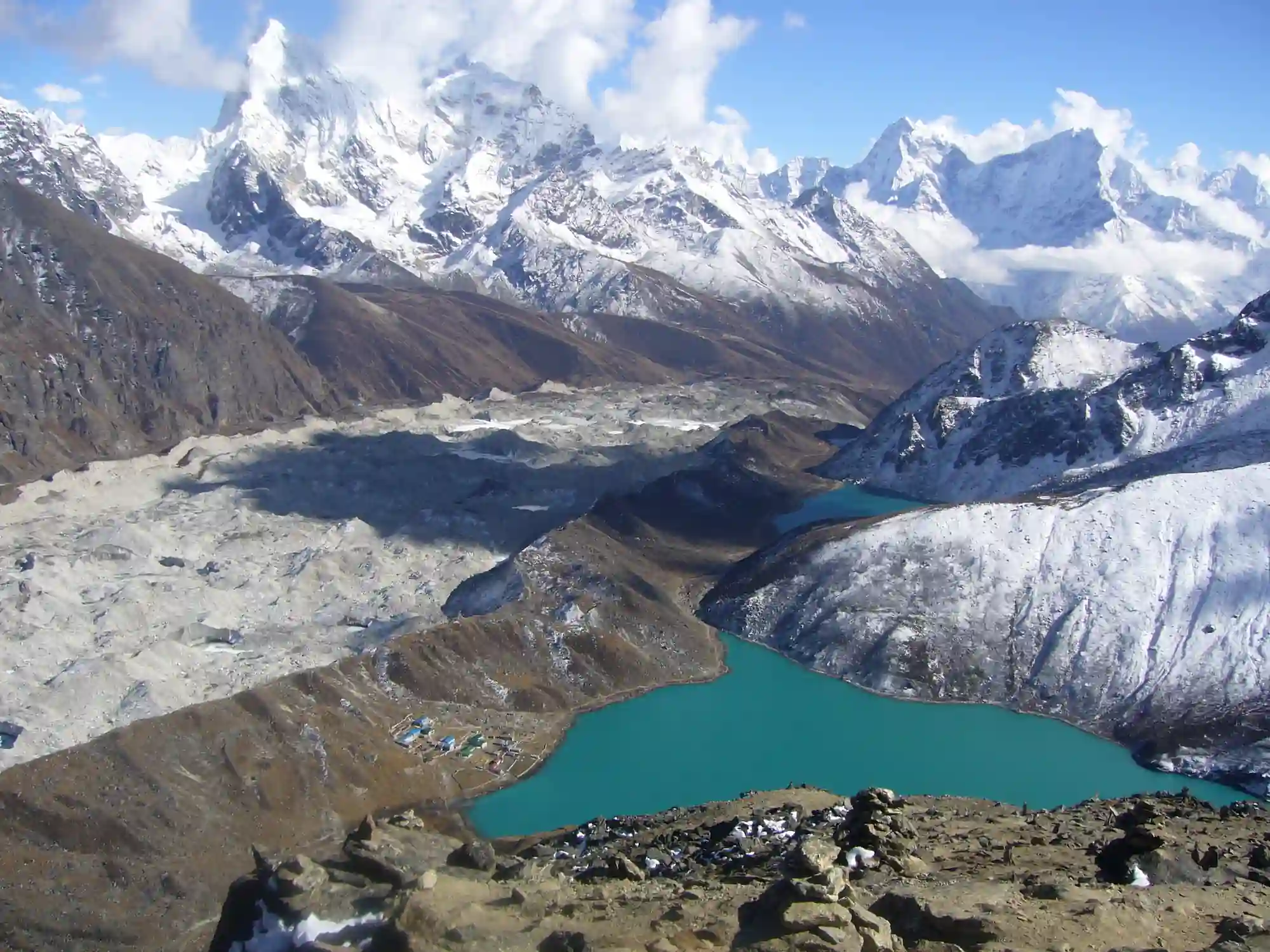
Today you reach the jewel of the entire trek. The trail climbs from Machhermo, crosses a ridge, and then drops into the Gokyo Valley, and when the Gokyo Lakes come into view for the first time, it is genuinely breathtaking. The turquoise-blue water of the lakes against the grey and white of the Ngozumpa Glacier and the surrounding peaks is one of the most beautiful natural scenes in Nepal.
Gokyo village sits right at the edge of the third and most sacred lake, Dudh Pokhari. There are six lakes in total in the valley, and local tradition holds that they are sacred to both Hindus and Buddhists. Settle into your teahouse, walk along the lakeshore, and rest well tomorrow, you climb. Walking time: 4–5 hours.
This is the day most trekkers remember most vividly. Gokyo Ri is not a technical climb, but it is steep from the very first step a consistent uphill grind for about 2 hours from the village. At the top, the view is extraordinary. You stand at 5,357m and look directly at Everest (8,848m), Lhotse (8,516m), Makalu (8,485m), and Cho Oyu (8,188m) four of the world’s six highest mountains all in a single glance. Below you, the Gokyo Lakes shimmer and the Ngozumpa Glacier stretches south like a great grey river.
Many experienced Himalayan trekkers consider this the finest viewpoint in the entire Khumbu arguably better than Kala Patthar for the sheer number of peaks visible. Spend time at the top before descending for the afternoon. Rest and prepare for the Cho La crossing ahead.
Today you begin moving toward Cho La Pass. The trail heads south from Gokyo and follows the edge of the Ngozumpa Glacier Nepal’s largest glacier and a raw, humbling landscape of ice, rock, and moraine. The terrain here is rougher and navigation requires attention, which is one more reason why having an experienced guide matters enormously on this trek.
Thangnak is a tiny, remote settlement used as a base camp before the Cho La crossing. There are a handful of teahouses here. Rest early, eat well, and go to bed with your gear organized for an early morning start. Walking time: 4–5 hours.
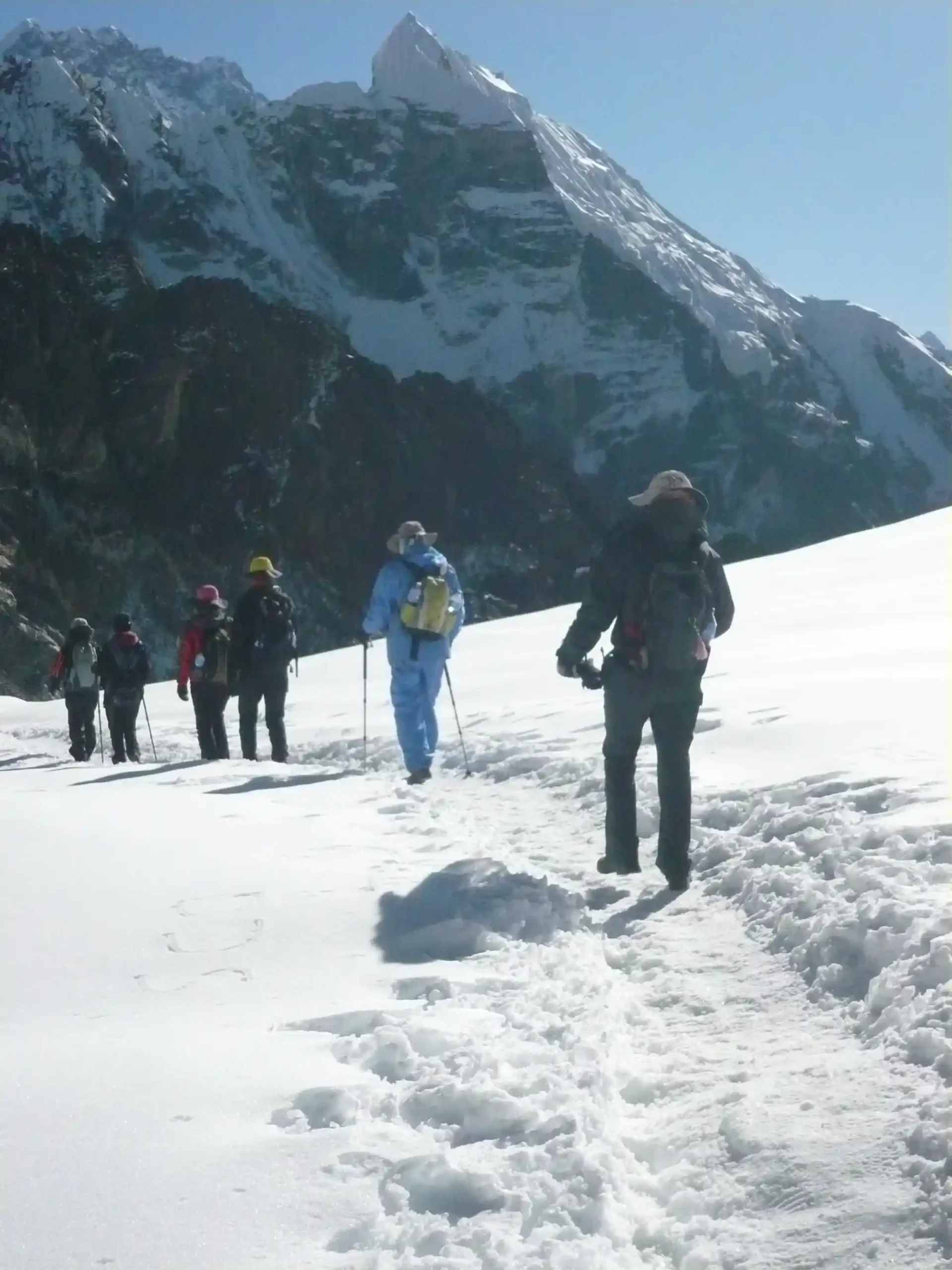
The hardest day of the trek and one of the most rewarding. The climb to Cho La starts in darkness or early morning light. The lower section is rocky and steep, but as you gain elevation a short glaciated section appears near the top of the pass. Careful footing is essential here, and trekking poles are invaluable. Gaiters help on icy days.
At the top of Cho La Pass (5,420m), standing on the prayer flag-draped cairn, you look back over the Gokyo Valley you have come from and ahead into the wild, open Khumbu Valley. The descent to Dzongla is steep and loose underfoot but leads to a wide, peaceful valley surrounded by dramatic ridgelines. After the physical and mental effort of today, Dzongla feels like a well-earned sanctuary. Walking time: 7–8 hours.
From Dzongla, you join the classic Everest Base Camp trail at Lobuche. Pass the moving memorial chortens built in memory of climbers and Sherpas who lost their lives on Everest, a sobering reminder of what these mountains demand.
From Lobuche, the trail pushes on across the lateral moraine of the Khumbu Glacier to Gorakshep, the last and highest settlement on the route. Drop your bags, have a quick lunch, and continue to Everest Base Camp (5,364m). Walking across the rocky Khumbu Glacier to the base of the world’s tallest mountain, hearing the deep creak and crack of the Khumbu Icefall above you, is an experience that words can only partly capture. Return to Gorakshep for the night. Walking time: 7–8 hours.
Wake before dawn and climb to Kala Patthar (5,545m) for sunrise. This is the highest point of the entire 18-day trek and the most iconic viewpoint in the Himalayas. As the first pale light touches the summit pyramid of Everest, the mountain turns gold, then pink, then blazing white against the blue sky. It is a moment that stays with trekkers for the rest of their lives.
After taking in the sunrise, descend all the way down past Lobuche and Dughla to Pheriche — a long but gradual descent that drops over 1,300m in altitude. Your lungs will feel the difference. Walking time: 6–7 hours.
A long but straightforward descent through the heart of the Khumbu. The trail passes through Pangboche — home to one of the oldest monasteries in the region — and then climbs across to Tengboche before dropping steeply to the Dudh Koshi Valley and climbing back up to Namche. By now your body is fit, strong, and acclimatized, and the walking feels genuinely effortless compared to the first few days. Walking time: 6–7 hours.
The final walking day. The trail retraces the Dudh Koshi River valley, crossing the suspension bridges one last time, through the rhododendron forests, and back up to Lukla. There is always a bittersweet feeling on the last day — tired legs and a full heart. Celebrate in Lukla with your guide and porter over a warm dinner and a cup of chang (local barley beer) if you fancy it. Walking time: 6–7 hours.
An early morning flight brings you back to Kathmandu. Mountain flights depend on weather, so flexibility and patience are key. Once back in the city, transfer to your hotel, freshen up, and enjoy the pleasure of a hot shower and a proper meal. The rest of the day is yours to explore Kathmandu’s UNESCO heritage sites, shop for souvenirs, or simply rest.
These two days are built in as buffer time for potential Lukla flight delays due to weather a common situation in the mountains. If your flight returns on schedule, you have two free days in one of Asia’s most fascinating cities.
Use the time to visit Pashupatinath Temple, Boudhanath Stupa, Swayambhunath (Monkey Temple), and the medieval courtyards of Patan Durbar Square. There is also great food, vibrant nightlife in Thamel, and excellent day trip options to Bhaktapur or Nagarkot.
These two days are built in as buffer time for potential Lukla flight delays due to weather a common situation in the mountains. If your flight returns on schedule, you have two free days in one of Asia’s most fascinating cities.
Use the time to visit Pashupatinath Temple, Boudhanath Stupa, Swayambhunath (Monkey Temple), and the medieval courtyards of Patan Durbar Square. There is also great food, vibrant nightlife in Thamel, and excellent day trip options to Bhaktapur or Nagarkot.
Your Gokyo Valley adventure comes to an end. Our team transfers you to Tribhuvan International Airport for your departure. Safe travels, and we already know you’ll be planning your next Himalayan trek before you even land.
Trek Difficulty & Physical Demands
The Gokyo Valley Trek is rated moderate to strenuous a step up from beginner treks but more accessible than the full Everest Three Passes circuit.
- Altitude: You spend several days above 4,500m and reach a maximum of 5,545m at Kala Patthar. Proper acclimatization is built into the itinerary.
- Cho La Pass: The crossing of Cho La (5,420m) involves a short glaciated section requiring careful footing. This is the most technical section of the entire route.
- Daily walking: Expect 4–8 hours of walking per day on rocky, uneven, and sometimes steep terrain.
- Physical fitness: A solid base of cardiovascular fitness is important. Regular hiking, running, or cycling for 2–3 months before the trek is strongly recommended.
- First-time trekkers: This trek is manageable for fit first-timers who have done some prior hiking, though having some high-altitude experience is a genuine advantage.
- Mental preparation: Long days at altitude require patience and a positive mindset as much as physical strength.
Best Time to Trek: Seasonal Comparison
| Season | Months | Weather | Crowds | Views | Recommended |
| Spring | Mar–May | Warm & Stable | Moderate | Excellent | Best |
| Monsoon | Jun–Aug | Wet & Cloudy | Very Low | Poor | Avoid |
| Autumn | Sep–Nov | Cool & Clear | High | Excellent | Best |
| Winter | Dec–Feb | Cold & Dry | Very Low | Good | Experienced Only |
Pro tip: For the best balance of good weather, fewer crowds, and full teahouse availability, aim for early October or the first two weeks of April. These are the sweet spots within the peak seasons.
Booking Your Gokyo Valley Trek – 18 Days
Getting booked is simple and we handle all the logistics so you can focus on getting ready for the mountains.
Step 1 — Reach out. Contact us via our website, email, or WhatsApp with your preferred travel dates and group size. We will send you a full itinerary and detailed cost breakdown within 24 hours.
Step 2 — Confirm your booking. A 20% deposit secures your dates. We begin permit applications and flight bookings as soon as your deposit is received.
Step 3 — Prepare. We send you a complete pre-departure guide covering fitness training, gear recommendations, altitude awareness, and day-by-day expectations.
Step 4 — Arrive in Kathmandu. We pick you up from the airport, provide a detailed briefing, and help with any last-minute gear needs in Thamel.
Step 5 — Trek. Your guide leads you through every step of the journey, supported by our porters and full logistical backup.
Step 6 — Pay the balance. The remaining 80% is due on arrival in Kathmandu before departing for the trek.
Cancellation Policy:
- 30+ days before departure: Full deposit refunded minus bank charges
- 15–29 days before: 50% refund
- Less than 15 days: No refund
Important: Travel insurance covering emergency helicopter evacuation above 5,500m is mandatory for all trekkers. A helicopter rescue from the Gokyo Valley or Cho La area can cost USD 3,000–6,000 or more. Your insurance must cover this.
Cost Details
Cost Includes
- Airport pick-up and drop-off in Kathmandu
- Kathmandu–Lukla–Kathmandu domestic flights (round trip)
- 2 nights’ hotel accommodation in Kathmandu (bed & breakfast, 3-star)
- All teahouse accommodation during the trek
- All meals during the trek (breakfast, lunch, and dinner)
- Experienced, English-speaking, government-licensed trekking guide
- One porter for every two trekkers (max 15 kg per porter load)
- All required trekking permits:
- Sagarmatha National Park Entry Permit
- Khumbu Pasang Lhamu Rural Municipality Permit
- TIMS Card
- Guide and porter wages, meals, accommodation, and insurance
- All government taxes and local fees
- Sleeping bag and duffel bag rental (if needed)
- First Aid Kit carried by your guide
- Emergency evacuation arrangement (cost covered by your travel insurance)
Cost Excludes
- Nepal entry visa (approx. USD 50 for 30 days — obtainable on arrival)
- International flights to and from Kathmandu
- Travel insurance with emergency helicopter evacuation coverage (mandatory)
- Meals and extra beverages in Kathmandu beyond breakfast
- Hot showers, Wi-Fi, device charging, and battery top-ups on the trek
- Personal snacks, bottled water, energy bars, and alcoholic beverages
- Tips and gratuity for guide and porter (recommended)
- Personal trekking gear and clothing
- Any extra nights in Kathmandu beyond the planned itinerary
- Helicopter rescue costs (must be covered by your travel insurance)
- Personal expenses — laundry, souvenirs, phone calls
Money Saving Tips
- Book internal flights to Bagdogra at least 6 to 8 weeks ahead for best fares, especially for spring and autumn departures
- Set a clear souvenir budget before you visit the Cottage Industries Emporium and MG Marg, both are beautiful and easy to overspend in
- Cardamom tea, local honey, and Sikkim teas from the Lal Bazaar are much cheaper than from tourist shops and make excellent gifts
- Pool tips for your guide and driver as a group at the end of the tour to make the amounts comfortable without anyone feeling singled out
- Carry a reusable water bottle from home as bottled water charges add up quickly across 11 days of touring
- Choose the shoulder months of March or November for 15 to 20 percent lower accommodation rates with barely any drop in weather quality
Trip Gallery
Trek Essentials
- Thermal base layer (top and bottom) x 2 sets
- Mid-layer fleece or softshell jacket
- Down jacket or insulated puffy (essential above 4,000m)
- Waterproof hardshell jacket and trousers (windproof and rain-resistant)
- Trekking trousers x 2–3 pairs
- Warm trekking socks (wool or synthetic) x 4–5 pairs
- Thin liner gloves + warm outer gloves or mittens
- Warm beanie / wool hat
- Sun hat or cap with a brim
- Neck gaiter or buff
- Waterproof, ankle-support trekking boots — well broken-in before the trek
- Lightweight camp sandals or flip-flops for teahouse evenings
- Gaiters (recommended for Cho La Pass crossing)
- Trekking poles — collapsible, strongly recommended
- Daypack (20–25 liters) for your daily essentials
- Duffel bag (60 liters) for the porter
- Sleeping bag rated to -15°C or colder
- Headlamp with extra batteries
- Sunglasses with UV400 protection (glacier glasses for Cho La)
- Water bottle (1–2 liters) or hydration bladder
- Water purification tablets or a personal filter
- Diamox (acetazolamide) for altitude sickness — consult your doctor before the trek
- Personal first aid kit: blister pads, ibuprofen, bandages, antiseptic cream
- Sunscreen SPF 50+ and lip balm with SPF
- Hand sanitizer and biodegradable wet wipes
- Diarrhea medication and oral rehydration salts
- Personal prescription medications with enough supply for the full trip
- Valid passport (at least 6 months remaining validity)
- Nepal visa (obtainable on arrival at Kathmandu airport)
- Printed copy of your travel insurance policy
- 2 passport-sized photos (for permits)
- Emergency contact card kept on your person
Final Thoughts:
The Gokyo Valley Trek is one of those journeys that earns its place among the truly great treks of the world not through fame or crowds, but through pure, quiet beauty. The Gokyo Lakes will stop you in your tracks. The view from Gokyo Ri will humble you. The Cho La Pass will test you. And Everest Base Camp will give you a story you tell for the rest of your life.
In 18 days, you get to experience the Khumbu region in a way that goes far beyond the standard trail. You walk quieter paths, sleep in teahouses where the food is warm and the hosts genuinely welcoming, and you earn every single view through your own two legs.
This is not a bucket-list tick. This is the kind of trek that rewires something in you and quietly, you start planning your return before you’ve even left.
Your Adventure to Annapurna Base Camp Trek Starts Here
Start your journey with trusted local experts and discover the beauty, culture, and adventure waiting in the Himalayas and beyond.
Frequently Asked Questions
Everything you need to know about the AASRA ECO TREK
The standard Gokyo route (without Cho La Pass) is manageable for fit beginners with some hiking experience. However, this 18-day version includes the Cho La Pass crossing, which is more technical and demanding. Prior high-altitude trekking experience is an advantage, and a good base level of physical fitness is essential for all trekkers on this itinerary.
The two treks share the same start and end points but diverge after Namche Bazaar. The Gokyo route is generally less crowded, more scenic in terms of lakes and glacial landscapes, and considered slightly more varied than the standard EBC route. This 18-day itinerary combines both experiences by including Cho La Pass, Everest Base Camp, and Gokyo, giving you the best of both trails in one journey.
You will need the Sagarmatha National Park Entry Permit, the Khumbu Pasang Lhamu Rural Municipality Permit, and a TIMS Card. All three are included in our package price and arranged on your behalf.
The risk is real, particularly above 4,000m. This itinerary includes proper acclimatization days at Namche and Gokyo to reduce the risk significantly. Your guide is trained to recognize symptoms of AMS (Acute Mountain Sickness). We strongly recommend consulting your doctor about Diamox before the trek. If symptoms appear, the rule is simple: never go higher until you feel better.
Yes, travel insurance with emergency helicopter evacuation coverage is mandatory. Do not book this trek without it. Make sure your policy explicitly covers helicopter rescue at altitudes above 5,500m.
Cho La Pass (5,420m) is a high mountain pass connecting the Gokyo Valley to the Khumbu Valley. It involves a short glaciated section near the top that requires careful footing. With a good guide, proper gear (trekking poles, gaiters, and warm clothing), and a clear weather window, it is very safe. We do not attempt the crossing in poor visibility or heavy snowfall.
Teahouses along the route serve a good range of local and international dishes dal bhat (rice and lentil curry), noodle soups, pasta, porridge, eggs, momo (dumplings), Tibetan bread, and more. Three meals per day are included in the package. Food quality and variety naturally decrease at higher elevations, so enjoy the fuller menus at Namche before heading up.
Yes. Thamel in Kathmandu has a large selection of trekking gear available for both rent and purchase. Down jackets, sleeping bags, trekking poles, gaiters, and duffel bags are all widely available. If you don’t trek regularly, renting is a practical and cost-effective option.
Start training at least 2–3 months before departure. Focus on cardiovascular fitness, hiking with a loaded backpack is the most effective preparation. Running, cycling, and stair climbing are also great. Include leg-strengthening exercises like squats and lunges, and practice walking downhill, which puts significant strain on the knees.
Absolutely. We can adjust the pace, add or remove days, include optional extensions like Island Peak climbing or the full Everest Three Passes Trek, or switch to a helicopter return if you prefer a faster exit from the mountains. Get in touch and we will design the perfect version for your schedule and fitness level.