 Plan Your Trip
Langtang Gosainkunda Trek 16 Days
Trip Overview

Trek Region
Langtang

Difficulty Level
Hard

Trek Starts at
Kathmandu

Transport
By Road

Trek Ends at
Kathmandu

Total Trip Duration
16 Days
Trip Highlights
- Walk through the heart of Langtang National Park — Nepal’s first Himalayan national park, home to red panda, Himalayan black bear, snow leopard, and over 250 bird species
- Explore Kyanjin Gompa (3,870m) — an ancient Buddhist monastery in a spectacular high alpine setting — and taste fresh yak cheese at the famous Kyanjin Cheese Factory
- Hike to Kyanjin Ri (4,773m) for a face-to-face panorama of Langtang Lirung (7,227m), the Kyanjin Glacier, and the entire upper Langtang Valley
- Trek through Thulo Syabru — a beautifully preserved Tamang village perched on a dramatic ridge with sweeping views of Ganesh Himal and Langtang Himal
- Ascend through ancient forest and alpine meadow to Sing Gompa (3,330m) — a remote monastery surrounded by the largest yak cheese production operation in the Langtang region
- Stand at the sacred Gosainkunda Lake (4,380m) — one of the holiest pilgrimage sites in Nepal for both Hindus and Buddhists, believed to be the abode of Lord Shiva, surrounded by the sacred companion lakes of Saraswatikunda and Bhairavkunda
- Cross the high and wild Lauribina La Pass (4,610m) — one of the finest mountain pass crossings in the Langtang region with panoramic views of Langtang, Ganesh, Manaslu, and the distant Annapurnas
- Descend through the remote high-ridge settlement of Ghopte and reach the Helambu junction at Tharepati (3,690m)
- Walk through the ancestral Hyolmo (Helambu Sherpa) villages of Kutumsang, Gul Bhanjyang, and Chisapani on the final descent to Sundarijal
- Witness one of Nepal’s most extraordinary panoramic ridgeline views at Chisapani (2,165m) — Langtang, Ganesh, Jugal, Manaslu, and Everest all visible on clear days
- Complete a genuine point-to-point circuit — starting at Syabrubesi, ending at Sundarijal, with entirely different scenery in every single stage
Trip Summary
Nepal has a rare gift for trekkers who are willing to look slightly beyond the famous routes — a world of equal beauty, greater solitude, and deeper cultural meaning waiting just off the well-worn trail. The Langtang Gosainkunda Trek is exactly that gift. It combines two of the most rewarding trekking experiences in the Langtang region into a single, beautifully structured 16-day journey that takes you from lush river gorges to sacred high-altitude lakes, across a dramatic mountain pass, and back to Kathmandu through the ancient Hyolmo villages of the Helambu valley.
The first half follows the classic Langtang Valley route through rhododendron forests and Tamang settlements to Kyanjin Gompa (3,870m) with its ancient monastery and cheese factory, with an acclimatization hike up Kyanjin Ri (4,773m) for close-up views of Langtang Lirung and the glacier. The second half is the real extension that sets this trek apart a long and varied traverse from the Langtang Valley through Thulo Syabru and Sing Gompa, climbing steeply through forest and alpine meadow to the holiest high-altitude lake in Nepal, the sacred Gosainkunda Lake (4,380m). From Gosainkunda, the route crosses the wild and dramatic Lauribina La Pass (4,610m), descends through Ghopte and Tharepati, and completes the circuit through the cultural villages of Helambu back to the road at Sundarijal.
This 16-day itinerary includes proper acclimatization days, a generous pace through the most culturally significant stops, buffer time in Kathmandu, and a complete circuit that never retraces its steps making it one of the most satisfying and complete trekking routes anywhere in the Langtang region.
When To Visit
The Langtang Gosainkunda Trek performs best in two main seasonal windows. The addition of Gosainkunda Lake (4,380m) and Lauribina La Pass (4,610m) makes this route more weather-sensitive than the standard Langtang Valley Trek alone — the pass section in particular requires dry, stable conditions for a safe and enjoyable crossing.
Spring (March to May) is outstanding for this trek. March and April bring blooming rhododendron forests from Syabrubesi all the way to the ridge above Thulo Syabru — one of the most spectacular displays of Nepal’s national flower anywhere in the Langtang region. Temperatures are warming at altitude, the Gosainkunda Lake is partially thawing from winter ice, and the mountain views are excellent. The Lauribina La crossing is clear and well-marked in spring. Late May is warmer and slightly hazier but still fully enjoyable.
Autumn (September to November) is the peak season and offers the finest mountain visibility of the year. After the monsoon clears, the air is crystalline and the views from Kyanjin Ri, Lauribina La, and Chisapani are at their absolute sharpest. October is the ideal month — comfortable temperatures at all altitudes, full teahouse availability throughout the route, and clear blue skies almost every day. The Gosainkunda Lake has a particularly dramatic and beautiful quality in October light. November remains excellent but teahouses at the highest sections begin to thin out.
Monsoon (June to August) is not recommended for the full circuit. Lauribina La becomes slippery and dangerous in wet conditions, trails in the lower forest sections become leech-ridden and muddy, and mountain views are obscured for long stretches. The notable exception is the Janai Purnima pilgrimage in August — if witnessing thousands of Hindu and Buddhist pilgrims making the journey to Gosainkunda Lake is of interest to you, this is the only window for that extraordinary spectacle.
Winter (December to February) is possible for the lower sections of the route — the Langtang Valley up to Kyanjin Gompa is accessible in winter and extraordinarily peaceful. However, the Gosainkunda Lake freezes completely and Lauribina La becomes heavily iced and potentially impassable. The full circuit in winter is only recommended for very experienced cold-weather trekkers with proper gear and a guide who knows the pass conditions.
Itinerary
Welcome to Nepal. Our team meets you at Tribhuvan International Airport and transfers you to your hotel in Kathmandu. In the evening your trekking guide joins you for a comprehensive pre-trek briefing covering the full 16-day route section by section, altitude profiles, cultural context on the Tamang and Hyolmo communities you will visit, permit requirements, gear checks, altitude awareness, and the logistics of the road journey to Syabrubesi the next morning.
If you arrive early and energy allows, a walk through the vibrant lanes of Thamel or a visit to the great Boudhanath Stupa, one of the largest Buddhist stupas in the world, gives you a meaningful and beautiful introduction to the culture and spirituality that will accompany you throughout the trek. Overnight in Kathmandu.
The journey to the trailhead begins with a long but genuinely scenic road drive northwest from Kathmandu. Leaving the valley through Balaju, the road climbs into the Nuwakot hills past terraced farmland, small roadside temples, and the first proper views of the Himalayan foothills rising ahead. The route follows the Trishuli River valley for much of the middle section a wide, churning river popular with white-water rafters before turning north into the steeper, more forested gorges of the Rasuwa district.
Syabrubesi (1,550m) is the gateway town of the Langtang region a lively settlement at the confluence of the Trishuli and Langtang rivers with teahouses, gear shops, and the unmistakable energy of a place that sits at the edge of the high mountains. Check in, rest from the road, and prepare mentally for the first day on the trail. Drive time: 7–8 hours.
The first walking day and one of the finest forest walks of the entire trek. From Syabrubesi, the trail crosses the Bhote Koshi River flowing fresh and cold from Tibet, on a suspension bridge and immediately enters the deep forest of Langtang National Park. Within minutes of leaving the road the character of the world changes completely. The forest is dense, cool, and richly alive — oak and rhododendron canopy overhead, bamboo thickets lining the lower trail, the sound of the Langtang Khola River rushing through the gorge below.
The trail climbs steadily through a series of small Tamang settlements Bamboo (1,960m) and Rimche (2,400m) are classic lunch stops where teahouses serve hot noodle soup and sweet milk tea. Yak trains share the trail, bells ringing, and the occasional glimpse of a langur monkey or a Himalayan bird in the canopy above adds to the sense of genuine wilderness.
Lama Hotel (2,380m) is a loose cluster of teahouses at the edge of the tree line where the valley begins to widen. It is named not for any nearby monastery but for an early teahouse owner and is a reliable, well-established overnight stop with good food and clean accommodation. Walking time: 5–6 hours.
The day the mountains arrive. From Lama Hotel the trail climbs steadily through thinning forest rhododendron giving way to fir and pine, and then to open scrubland as the tree line approaches. The first proper views of the Langtang Himalayan range begin to emerge above the ridge, and with each hundred meters of altitude gained the scale of what surrounds you becomes more apparent and more impressive.
You pass through Ghoda Tabela (3,030m) a wide grassy flat that translates as “horse stable” where the national park checkpoint sits and where the landscape opens fully into the wide, dramatic upper valley. The mani walls begin here long rows of flat stones carved with the Tibetan Buddhist prayer Om Mani Padme Hum and they line the trail all the way to Kyanjin. Pass to the left of every mani wall, following the direction of the carved prayers.
Langtang Village (3,430m) carries a story of extraordinary resilience. The village was almost completely destroyed in April 2015 when the earthquake triggered a catastrophic avalanche and debris flow that killed over 350 residents and visitors. The community rebuilt entirely by hand and by choice, choosing to stay in the valley their families have occupied for generations rather than abandon it. Walking into the rebuilt village is one of the most quietly moving experiences of any Nepal trek. Walking time: 6–7 hours.
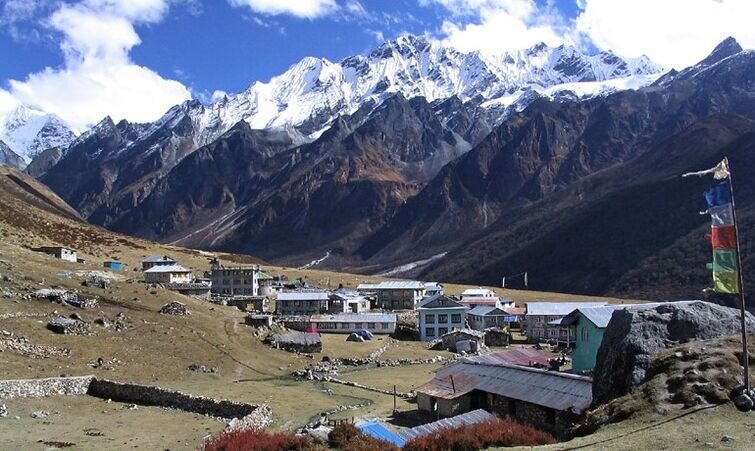
A shorter walking day that earns its keep through scenery and cultural depth. The trail continues east from Langtang Village through the open upper valley along an ancient route marked by mani walls, prayer flags, and a magnificent water-powered prayer wheel spinning ceaselessly beside the path. Yak herds graze across the wide alpine meadows, and the peaks that form the northern wall of the valley, Langtang Lirung (7,227m), Langtang II, Kimshung, and Yansa Tsenji, rise directly ahead, massive and immediate in a way that never loses its power.
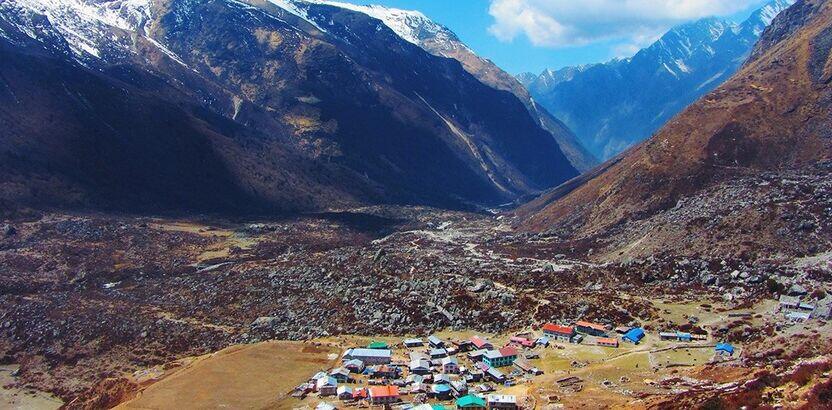
Kyanjin Gompa (3,870m) is the cultural and spiritual centerpiece of the upper Langtang Valley. The settlement clusters around a centuries-old monastery, a Swiss-assisted government yak cheese factory established in the 1950s, and a handful of permanent residents who live at nearly 4,000m year round. Spend the afternoon exploring the monastery interior ancient thangka paintings, butter lamp offerings, and the lingering smell of juniper incense and buy a round of the excellent local yak cheese for the trail tomorrow. Walking time: 3–4 hours.
Your critical acclimatization day before the long descent tomorrow and the high-altitude Gosainkunda section ahead. The hike to Kyanjin Ri (4,773m) begins with a steep climb directly above the village that tests your legs from the first step. Allow about 2 hours to reach the summit the gradient is relentless but the trail is clear.
At the top, the view is extraordinary and deeply personal. You stand face to face with the sheer southern wall of Langtang Lirung (7,227m) one of the most dramatic close-up mountain views in all of Nepal. The Kyanjin Glacier fills the valley directly below you, and the entire upper Langtang Valley fans out in a wide panorama that includes Langtang II, Dorje Lakpa, Naya Kanga, and the distant peaks of the Tibet border range.
Descend to Kyanjin Gompa by midday and spend the afternoon resting, visiting the monastery again, or simply sitting at the edge of the glacier watching the light change on the peaks. Your body is doing important work today even when you are sitting still give it the time it needs before the sustained demands of the Gosainkunda section that begins after tomorrow’s descent. Hike time: 4–5 hours return.
A long descent day the pivot point between the Langtang Valley section and the Gosainkunda section of the trek. The trail retraces the route westward from Kyanjin Gompa, passing back through the mani walls and yak pastures of the upper valley, through Langtang Village, past the memorial chortens, through Ghoda Tabela, and then steeply back down through the forest to Lama Hotel.
The trail covers approximately 21 kilometers and loses almost 1,500 meters of altitude. It is a long day but a manageable one the route is familiar, the gradient is downhill for most of the distance, and the forest sections in the afternoon are a beautiful end to a big walking day. By the time you reach Lama Hotel your legs are tired but your lungs are noticeably happier at the lower altitude. Eat well, rest fully, and prepare for the trail to branch in a completely new direction tomorrow. Walking time: 6–7 hours.
Today the trek leaves the main Langtang Valley route and heads toward the Gosainkunda section. Instead of descending back to Syabrubesi, the trail branches southward from the valley floor and climbs through dense rhododendron forest to the ridge village of Thulo Syabru (2,210m).
The trail passes through Bamboo and continues through the forest before diverging at Rimche toward Thulo Syabru a route that climbs rather than descends and is noticeably less traveled than the main valley floor trail. The gradient is sustained and the forest is beautiful, with the sound of the Langtang River fading below as you gain the ridge.
Thulo Syabru meaning “big Syabru” is one of the most beautifully situated villages in the Langtang region. Perched on a broad south-facing ridge, it looks out across a sweeping panorama of Ganesh Himal (7,429m), Langtang Himal (7,227m), and the hill ranges stretching south toward Kathmandu. The village has preserved its Tamang character well traditional stone houses, Buddhist chortens, a small gompa, and a community that is warm, unhurried, and genuinely welcoming. Spend the evening exploring the village lanes and watching the sun set behind Ganesh Himal. Walking time: 5–6 hours.
From Thulo Syabru, the trail heads east and upward into some of the finest forest of the entire trek. The climb to Sing Gompa gains nearly 1,200 meters of altitude through thick stands of pine, fir, oak, and rhododendron the gradient is steep and sustained in the first half of the day, passing through the settlements of Dursagang (2,660m) and the ridge at Foprang Danda (3,200m) before leveling out as the trail approaches the upper forest zone.
The views that open up along the ridge of Langtang Lirung, Ganesh Himal, and the Tibetan border peaks to the north grow wider and more spectacular with every meter gained. The air gets noticeably crisper and cleaner above 3,000m and the forest itself changes character — the lower deciduous trees giving way to tall conifers draped in old man’s beard lichen.
Sing Gompa (3,330m), also known as Chandanbari, is a small but significant settlement built around a monastery and a working yak cheese factory that produces some of the finest cheese in the Langtang region. The monastery is quiet and atmospheric, and the surrounding meadows of the upper forest give Sing Gompa a peaceful, remote character that is a complete contrast to the busier settlements of the Langtang Valley. It is a beautiful place to spend the night, with good mountain views to the north and the sound of yak bells drifting from the pastures. Walking time: 5–6 hours.
Above Sing Gompa, the forest begins to thin and the landscape opens into wide alpine terrain. The trail climbs gradually through scattered trees, past Cholangpati (3,584m) a collection of simple lodges on a broad ridge with excellent views of the Langtang range and then more steeply up toward the Lauribina Yak (3,920m) area.
The name Lauribina Yak refers to the high yak pastures just below the final climb to Gosainkunda an ancient herding area used by Tamang and Sherpa communities who have brought yaks to these pastures for generations. The teahouses here are basic but functional, positioned on a wide ridge with unobstructed mountain views in three directions. Langtang Lirung, Ganesh Himal, Manaslu, and even the distant peaks of the Annapurna range are visible from the ridge on a clear afternoon.
The air at nearly 4,000m is noticeably thinner and the temperature drops sharply after sunset layer up early and go to bed well-rested. The sacred lakes are just a few hours above you, and the emotional heart of the entire trek is just one more morning away. Walking time: 4–5 hours.
One of the most anticipated days of the entire 16-day journey. From Lauribina Yak, the trail climbs above the tree line completely and enters a raw, rocky, high-altitude landscape where the sky feels enormous and close. The trail passes first through alpine meadow and then across open scree and boulder fields as the gradient steepens toward the sacred lake zone.
Before reaching Gosainkunda itself, the trail passes the two companion lakes — Saraswatikunda and Bhairavkunda each one still, cold, and deeply atmospheric in the high altitude silence. These lakes are venerated in both Hindu and Buddhist traditions, and the sense of approaching something genuinely sacred is palpable as you walk between them.
Gosainkunda Lake (4,380m) is one of the holiest sites in all of Nepal. In Hindu mythology the lake was created by Lord Shiva, who struck his trident into the Himalayan rock and released an underground spring to cool the poison he had swallowed to save the world. Every year during the full moon of Janai Purnima (usually August), thousands of Hindu and Buddhist pilgrims make the demanding journey up to bathe in the sacred water — one of the most extraordinary religious gatherings in the Himalayan world.
Standing at the edge of the lake the water a deep, almost impossibly blue-green, framed by snow-streaked peaks and the wide open sky of nearly 4,400m — you understand immediately why people of faith have been making this journey for centuries. The atmosphere here is unlike anywhere else on the trek. Spend the afternoon walking the lakeshore, visiting the small shrine at the water’s edge, and sitting quietly with the extraordinary setting around you. Overnight at the teahouse by the lake. Walking time: 3–4 hours.
The most physically demanding day of the entire trek and one of its finest. Rise early the pass crossing is best done in the morning before afternoon clouds build. From Gosainkunda the trail climbs steeply along the northern shore of the lake and then continues upward across rocky, open terrain to the Lauribina La Pass (4,610m) the highest point of the entire 16-day trek.
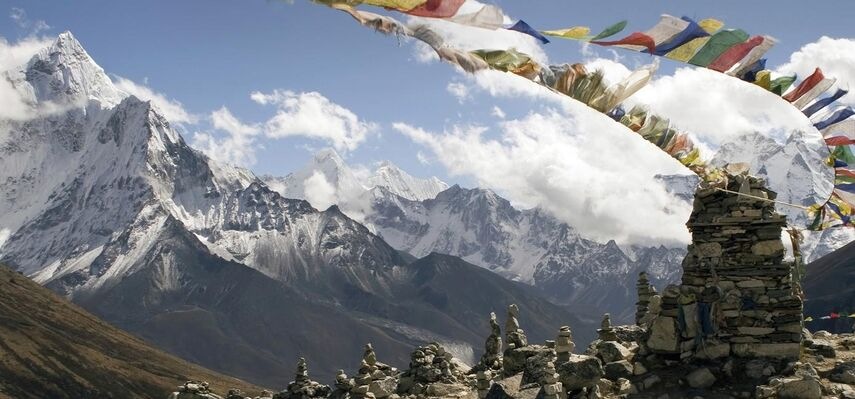
The climb to the pass is steep and sustained, with no shelter from the wind once you are above the lake. The gradient demands a slow, steady pace and deliberate breathing at this altitude. At the top, marked by a cluster of prayer flags snapping in the cold mountain air, the panorama opens in every direction Langtang Lirung, Ganesh Himal, Dorje Lakpa, Manaslu, and on the clearest days the distant outline of the Annapurna range all laid out across the horizon. It is a view that fully repays every step of the climb.
The descent from Lauribina La is steep and requires careful footing — the trail drops sharply onto loose scree and then into the upper rhododendron forest. You pass the small hidden lake of Surya Kunda on the way down before reaching the remote ridge settlement of Ghopte (3,440m) a handful of teahouses in a wild, forested setting that feels wonderfully isolated from the rest of the world. Walking time: 6–7 hours.
From Ghopte, the trail continues southward through dense forest of rhododendron and oak, climbing gradually to the famous ridgeline junction at Tharepati (3,690m) the point where the Gosainkunda and Langtang trails converge with the Helambu Circuit trail and where the panoramic views of Langtang, Ganesh, Jugal, Manaslu, Dorje Lakpa, and Everest spread out across the horizon in a sweeping 180-degree arc.
Tharepati is a significant emotional moment in the trek looking back north from the ridge you can trace the general line of the mountains you have been walking through for the past ten days. The Langtang and Gosainkunda sections are behind you. From here, the trail turns southward and the final stages of the circuit begin.
The descent from Tharepati toward Kutumsang is long and sustained dropping through beautiful forest corridors on a well-worn ridge trail. The trail passes through Magne Goth (3,285m) before continuing the steady descent. Kutumsang (2,470m) is a welcoming, friendly village with good teahouses and the warm, lower-altitude air that your body genuinely appreciates after multiple days above 3,500m. Walking time: 6–7 hours.
A pleasant ridgeline walking day through the Helambu hills the character of the trail distinctly more settled and agricultural compared to the remote alpine terrain of the past several days. The route heads westward along the main Chisapani ridge through the village of Gul Bhanjyang (2,130m), past terraced fields of mustard and millet, and through mixed oak and rhododendron forest corridors that are alive with birdsong.
Mani walls and chortens continue to line the path this is the ancestral territory of the Hyolmo people (Helambu Sherpa), and their Buddhist cultural presence is everywhere in the carved stones, spinning prayer wheels, and the occasional small roadside gompa.
Chisapani (2,165m) is famous among Nepal trekkers for one of the finest Himalayan panoramic viewpoints accessible on foot from Kathmandu. On a clear evening the entire sweep of the Central Himalayan range unfolds in front of you Langtang Lirung, Ganesh Himal, Jugal Himal, Manaslu, Himalchuli, and on an exceptional day even the distant silhouette of Everest to the east. Arriving here after 12 days of deep mountain immersion and seeing the same peaks from this new angle and this lower perspective has a particular and satisfying completeness to it. Walking time: 5–6 hours.
The final trekking day a descent through Shivapuri Nagarjun National Park that brings the circuit to its natural and satisfying end. From Chisapani the trail drops steeply through the national park’s dense forest of pine and oak, past the stone reservoir and waterworks facility, and back down to Sundarijal (1,460m) the same national park entrance you would use for the Helambu Circuit, just 12 kilometers from central Kathmandu.
The forest walk is beautiful in its own right and the birdsong in Shivapuri National Park is extraordinary over 300 bird species have been recorded here and the lower sections of the trail in the early morning are particularly rich with color and calls. Your trekking vehicle meets you at the Sundarijal road.
The short drive back to Kathmandu takes about one hour an almost disorienting transition from 13 days of mountain trail to the noise, color, and smell of the city. Transfer to your hotel, take the longest shower of your life, and let the mountains settle into memory over a proper meal. Walking time: 3–4 hours. Drive time: 1 hour.
Your 16-day Langtang Gosainkunda Trek comes to a close. Our team transfers you to Tribhuvan International Airport for your onward journey. You leave Nepal having walked one of the most complete and varied circuits in the Langtang region through valley and ridge, forest and glacier, sacred lake and mountain pass and carrying with you a version of Nepal that is quiet, deep, and far less visited than the famous Himalayan highways to the east.
Trek Difficulty & Physical Demands
The Langtang Gosainkunda Trek is rated moderate to strenuous — a step above the standard Langtang Valley Trek alone, primarily due to the addition of Gosainkunda Lake, Lauribina La Pass, and the total distance and duration of the circuit.
- Altitude: The trek spends several days between 3,500m and 4,380m, with the Kyanjin Ri hike reaching 4,773m and Lauribina La Pass at 4,610m being the two highest points. The gradual altitude gain and the dedicated acclimatization day at Kyanjin Gompa significantly reduce the risk of altitude sickness, but awareness and communication with your guide remain important throughout.
- Lauribina La Pass: The most demanding section of the entire trek. The climb from Gosainkunda to the pass gains approximately 230m on steep, open terrain with no shelter. The descent to Ghopte is steep and requires careful footing. In good conditions it is challenging but very manageable. In icy or wet conditions it is significantly more demanding.
- Daily walking: Expect 4–7 hours of walking per day across varied terrain. The longest day is Day 7 (Kyanjin Gompa to Lama Hotel at approximately 21 km), which requires an early start. Days 9 and 12 are the most demanding for sustained climbing and pass crossing respectively.
- Physical fitness: A solid foundation of cardiovascular fitness — comfortable multi-hour hiking on uneven terrain — is needed. Regular hiking, running, or cycling for 2–3 months before departure is ideal preparation. Prior high-altitude experience is a genuine advantage but not strictly required if you are fit and the itinerary’s acclimatization structure is followed properly.
- Overall character: This is a long and varied circuit that rewards physical preparation and mental patience in equal measure. It is not technically demanding in the way of Cho La Pass, but its length, sustained altitude, and the demanding Lauribina La crossing make it a serious and committed Himalayan experience.
Best Time to Trek: Seasonal Comparison
| Season | Months | Weather | Pass Conditions | Views | Recommended |
| Spring | Mar–May | Warm & Stable | Excellent | Excellent | Best |
| Monsoon | Jun–Aug | Wet & Unstable | Dangerous / Icy | Poor | Avoid |
| Autumn | Sep–Nov | Cool & Clear | Excellent | Excellent | Best |
| Winter | Dec–Feb | Cold & Snowy | Icy / Blocked | Good (lower sections) | Experienced Only |
Pro tip: For the Gosainkunda and Lauribina La section specifically, October and early April are the two most reliable windows. The pass is clear, the lake is partially open and dramatically beautiful, and the mountain views from the entire high section are at their finest. If you want the extraordinary spectacle of the Janai Purnima pilgrimage, plan for the full moon of August but come prepared for wet trails and the company of thousands of pilgrims.
Booking Your Langtang Gosainkunda Trek 16 Days
Booking is simple and our team takes full responsibility for all logistics so you can focus entirely on preparation.
Step 1 — Contact us. Reach out via our website, email, or WhatsApp with your preferred travel dates and group size. We respond within 24 hours with a complete itinerary and full cost breakdown.
Step 2 — Confirm your booking. A 20% deposit secures your dates. We immediately begin permit processing, transport arrangements, and guide assignment.
Step 3 — Prepare. We send you a comprehensive pre-departure guide — fitness training plan, detailed gear list, cultural notes on Tamang and Hyolmo communities, altitude awareness specific to the Gosainkunda section, and a day-by-day expectations guide.
Step 4 — Arrive in Kathmandu. We collect you from the airport, conduct a full pre-trek briefing, and assist with any last-minute gear sourcing in Thamel. The road drive to Syabrubesi departs the following morning.
Step 5 — Trek. Your licensed guide leads you through every stage of the circuit, supported by experienced porters and our full logistical backing. Your safety and experience are our priority throughout.
Step 6 — Pay the balance. The remaining 80% is due on arrival in Kathmandu before departing for Syabrubesi.
Cancellation Policy:
- 30+ days before departure: Full deposit refunded minus bank transfer charges
- 15–29 days before: 50% refund of deposit
- Less than 15 days: Deposit forfeited, no refund
Important: Travel insurance with emergency helicopter evacuation coverage is mandatory. The Gosainkunda Lake area and Lauribina La Pass are remote and at significant altitude — a helicopter evacuation from this section typically costs USD 3,000–5,000 or more. Ensure your policy explicitly covers activities above 4,500m.
Cost Details
Cost Includes
- Airport pick-up and drop-off in Kathmandu
- Kathmandu–Syabrubesi ground transportation (private jeep or tourist bus)
- Sundarijal–Kathmandu return ground transportation (private vehicle)
- 1 night hotel accommodation in Kathmandu on arrival (bed & breakfast, 3-star)
- All teahouse/lodge accommodation during the trek (13 nights)
- All meals during the trek — breakfast, lunch, and dinner every day
- Experienced, English-speaking, government-licensed trekking guide
- One porter for every two trekkers (maximum 15 kg per porter load)
- All required trekking permits:
- Langtang National Park Entry Permit
- Shivapuri Nagarjun National Park Entry Permit (for the Sundarijal section)
- TIMS Card (Trekkers’ Information Management System)
- Guide and porter wages, meals, accommodation, and full insurance
- All government taxes and local charges
- Sleeping bag and duffel bag rental (if needed)
- First Aid Kit including pulse oximeter carried by guide throughout
- Emergency evacuation arrangement (evacuation cost covered by your travel insurance)
Cost Excludes
- Nepal entry visa fee (approx. USD 50 for 30 days — obtainable on arrival at Kathmandu airport)
- International flights to and from Kathmandu
- Travel insurance with emergency helicopter evacuation coverage (mandatory)
- Meals in Kathmandu beyond breakfast
- Hot showers, Wi-Fi, and device or battery charging along the trek (charged at teahouses)
- Personal snacks, bottled water, energy drinks, and alcoholic beverages
- Tips and gratuity for guide and porter (recommended and greatly appreciated)
- Personal trekking gear and equipment
- Extra nights in Kathmandu beyond the planned itinerary
- Helicopter rescue costs (must be covered by your personal travel insurance)
- Monastery entry donations and personal religious offerings at Gosainkunda
- Personal expenses — laundry, souvenirs, phone calls, and incidentals
Trip Gallery
Trek Essentials
- Thermal base layer top and bottom — 2 sets
- Mid-layer fleece or softshell jacket
- Warm down jacket or insulated puffy — essential from Kyanjin Gompa upward and at Gosainkunda where temperatures drop sharply at night
- Waterproof, windproof hardshell jacket and trousers — critical for the Lauribina La crossing
- Trekking trousers — 2 to 3 pairs
- Warm trekking socks, wool or synthetic — 4 to 5 pairs
- Thin liner gloves and warm outer gloves or mittens
- Warm beanie or wool hat
- Sun hat or cap with brim for lower trail sections
- Neck gaiter or buff — especially important at Lauribina La in cold or windy conditions
- Waterproof, ankle-support trekking boots — broken in thoroughly before departure. The pass crossing and the rocky upper terrain of the Gosainkunda section make ankle support genuinely important.
- Lightweight camp sandals or flip-flops for teahouse evenings
- Gaiters — recommended for the Lauribina La crossing, essential in winter or snowy conditions
- Trekking poles — both collapsible, strongly recommended for the steep descents from Lauribina La and from Tharepati
- Daypack (20–25 liters) for daily essentials
- Duffel bag (60 liters) for your porter
- Sleeping bag rated to -15°C — Gosainkunda Lake nights are genuinely cold
- Headlamp with extra batteries — early morning starts on Lauribina La day require good lighting
- Quality sunglasses with UV400 protection — UV intensity is high at the lake and pass
- Water bottle (1–2 liters) or hydration bladder
- Water purification tablets or personal filter
- Diamox (acetazolamide) — strongly recommended for the Gosainkunda section; consult your doctor before the trek. The jump from Sing Gompa to Gosainkunda involves significant altitude gain and Diamox is a valuable precaution.
- Pulse oximeter — your guide will carry one; a personal one is a useful supplement above 4,000m
- Personal first aid kit — blister pads, ibuprofen, bandages, antiseptic cream
- Sunscreen SPF 50+ and SPF lip balm — UV radiation at 4,380m is intense and reflected off any snow
- Hand sanitizer and biodegradable wet wipes
- Insect repellent for the lower forest sections
- Diarrhea medication and oral rehydration salts
- All personal prescription medications for the full 16-day duration
- Valid passport with at least 6 months remaining validity
- Nepal visa (obtainable on arrival at Kathmandu airport)
- Printed travel insurance policy with emergency evacuation details
- 2 passport-sized photos for permit processing
- Emergency contact card kept on your person throughout the trek
Final Thoughts: Conclusion
The Langtang Gosainkunda Trek is a journey with two completely different personalities joined by one continuous trail. The first half is the Langtang Valley — green, glacial, culturally rich, and anchored by the warmth of Kyanjin Gompa and the unforgettable closeness of Langtang Lirung seen from Kyanjin Ri. The second half is something wilder and more elemental — a long climb through ancient forest to a sacred lake at the edge of the high Himalayas, a dramatic mountain pass in the company of prayer flags and open sky, and a gradual, rewarding descent through the ancestral villages of the Helambu valley.
What makes this trek exceptional is precisely the combination. Neither half diminishes the other. The culture and scenery of the Langtang Valley prepare you fully for the physical and emotional demands of Gosainkunda and Lauribina La. And the spiritual atmosphere of the lake and the pass section gives the subsequent descent through Helambu a thoughtful, reflective quality that a shorter or simpler circuit would not deliver.
The trail is not as famous as the Everest routes. The teahouses are not as polished. The crowds are a fraction of what you find in the Khumbu. These are not shortcomings — they are the very things that make the Langtang Gosainkunda Trek one of the most genuine and unhurried mountain journeys available in Nepal today.
Walk it slowly. Stop at the mani walls. Sit by the lake. Watch the light change on Langtang Lirung from the ridge at Thulo Syabru. The mountains here ask nothing more than your full attention — and they give back something that lasts.
Your Adventure to Annapurna Base Camp Trek Starts Here
Start your journey with trusted local experts and discover the beauty, culture, and adventure waiting in the Himalayas and beyond.
Frequently Asked Questions
Everything you need to know about the AASRA ECO TREK
The standard Langtang Valley Trek goes to Kyanjin Gompa and returns the same way to Syabrubesi — a round trip of approximately 10–12 days. The Langtang Gosainkunda Trek extends the journey by continuing from the valley through Thulo Syabru and Sing Gompa up to the sacred Gosainkunda Lakes at 4,380m, crossing Lauribina La Pass at 4,610m, and descending through the Helambu villages to finish at Sundarijal — completing a full circuit that never retraces its steps and covers two completely different landscapes and cultural zones in a single trek.
Gosainkunda is one of the most sacred pilgrimage sites in Nepal for both Hindus and Buddhists. In Hindu tradition the lake was created by Lord Shiva, who struck his trident into the mountainside to release water to cool the poison he had swallowed to save the world an act of cosmic self-sacrifice celebrated in the great festival of Janai Purnima every August, when thousands of pilgrims make the high-altitude journey to bathe in the sacred water. Buddhist tradition also venerates the lake and its surrounding companion lakes as deeply holy. The atmosphere at Gosainkunda carries a spiritual weight that is palpable even to non-religious visitors.
Prior experience is a significant advantage but not strictly required for fit, well-prepared trekkers. The acclimatization structure of the 16-day itinerary with a dedicated day at Kyanjin Gompa before the high Gosainkunda section is specifically designed to allow the body to adjust. However, spending multiple days above 4,000m and crossing a 4,610m pass requires more physical and mental preparation than a standard moderate trek. Completion of the Langtang Valley Trek or a similar high-altitude route beforehand is ideal preparation.
You need the Langtang National Park Entry Permit (approx. USD 34), the Shivapuri Nagarjun National Park Entry Permit (approx. USD 3 for the Sundarijal final section), and a TIMS Card. All are included in the package price and arranged on your behalf before departure from Kathmandu.
Yes, travel insurance is mandatory and non-negotiable for this trek. Your policy must explicitly cover emergency helicopter evacuation at altitudes above 4,500m and medical treatment in Nepal. The Gosainkunda and Lauribina La sections are remote the nearest road access in a medical emergency is several hours below on foot. An evacuation helicopter from this area costs USD 3,000–5,000 or more.
We strongly recommend consulting your doctor about Diamox (acetazolamide) before this trek particularly for the Gosainkunda section, where the altitude jumps from Sing Gompa at 3,330m to Gosainkunda at 4,380m over one and a half days. The acclimatization day at Kyanjin Gompa provides a solid foundation, but the high Gosainkunda section is the most altitude-intensive part of the route. If you have any prior history of altitude sensitivity, Diamox is a valuable precaution.
Lauribina La Pass (4,610m) is the most demanding section of the entire 16-day trek. The climb from Gosainkunda to the pass is steep and exposed, with no shelter from wind. The descent to Ghopte is steep on loose scree in places. In autumn and spring conditions, with trekking poles and good footwear, it is challenging but very manageable. In winter, icy conditions can make the crossing dangerous. Your guide will always assess conditions and will not attempt the crossing in unsafe weather.
Yes if you time your trek for the full moon of August (typically mid-August), you will witness one of the most extraordinary religious gatherings in the Himalayan world. Thousands of Hindu and Buddhist pilgrims from across Nepal make the journey to Gosainkunda for this festival. Be aware that the monsoon season makes the lower trail sections wet and difficult, and teahouses in the area become extremely busy around the festival dates. Book well in advance if this is your intention.
Langtang National Park is one of Nepal’s richest wildlife habitats. The most sought-after sighting is the red panda, found in the bamboo and rhododendron forest sections between Syabrubesi and Lama Hotel and again in the forests between Thulo Syabru and Sing Gompa. Himalayan black bear, musk deer, Himalayan thar, grey langur monkey, and over 250 bird species are also recorded in the park. Snow leopards live in the park but sightings are extremely rare.
Absolutely. The most popular extension is the addition of Tserko Ri (5,033m) as an alternative or supplementary acclimatization hike from Kyanjin Gompa a more demanding but even more panoramic viewpoint than Kyanjin Ri. We can also extend the circuit to include more time in the Helambu valley — adding overnight stops at Tarkeghyang and Sermathang for a fuller cultural experience of the Hyolmo communities. Contact us and we will customize the perfect version for your schedule, fitness level, and trekking interests.