 Plan Your Trip
Upper Mustang Trek — 18 Days
Trip Overview

Trek Region
Annapurna

Difficulty Level
Moderate

City Accommodation
3 Nights at a 3-Star Hotel

Trek Starts at
July 5

Transport
Drive and Flight
Mountain Accommodation
12 Nights Teahouse / Lodge

Trek Ends at
July 23

Total Trip Duration
18 Days

Max Elevation
4,010 m

Trekking Duration
12 Days on Trail

Meals
B/L/D (Mountain only)
Trip Highlights
- Walk through the ancient walled kingdom of Lo Manthang, the forbidden city of Upper Mustang, a place closed to the outside world until 1992
- Explore one of the most extraordinary landscapes in Asia — a high-altitude Tibetan plateau of eroded canyons, wind-carved cliffs, and vast ochre-coloured desert that looks like nothing else in Nepal
- Visit the sacred Muktinath Temple at 3,800 m, one of the most revered pilgrimage sites for both Hindus and Buddhists across Asia
- Discover ancient cave monasteries, sky caves, and cliff dwellings carved directly into the canyon walls thousands of years ago
- Spend two full days in Lo Manthang, the walled capital of the ancient Lo Kingdom, with its palace, monasteries, and a way of life largely unchanged for centuries
- Trek through remote, rarely visited villages like Chele, Syangboche, Ghami, and Tsarang that preserve a living tradition of Tibetan Buddhist culture found almost nowhere else
- Cross the Nyi La Pass (4,010 m) and enjoy sweeping views over the Mustang plateau and the distant Himalayan range
- Experience the unique geology of Upper Mustang — ancient seabeds lifted to 4,000 metres, carved by wind and water into a landscape of extraordinary beauty
- Fly out of Jomsom on a dramatic short mountain flight with aerial views of the Annapurna and Dhaulagiri ranges
- Explore Kathmandu and Pokhara with licensed guides covering UNESCO World Heritage Sites and the finest viewpoints in both cities
Trip Summary
The Upper Mustang Trek is not like any other trekking experience in Nepal. It is a journey into one of the most isolated, most ancient, and most visually extraordinary places in the entire Himalayan region a high-altitude desert kingdom that was sealed from the outside world for most of the 20th century and only opened to foreign trekkers in 1992. Even today, strict permit controls and quotas mean that Upper Mustang remains far less visited than any other major trekking region in Nepal, and that sense of genuine remoteness is a central part of what makes this trek so special.
The landscape is the first thing that stops you in your tracks. Upper Mustang sits in the rain shadow of the main Himalayan range, which means it receives almost no monsoon rainfall and has developed a terrain that is completely unlike the green, forested hillsides of most of Nepal. What you find instead is an ancient Tibetan plateau of wind-eroded canyons, dramatically layered cliffs in shades of red, orange, and white, flat-topped mesas rising from the valley floor, and a sky that feels bigger and bluer than anywhere else on earth. The closest comparison most trekkers reach for is the American Southwest or the surface of another planet — though neither really captures it.
The culture is equally extraordinary. Upper Mustang is home to a Tibetan Buddhist community whose traditions, art, architecture, and way of life have been preserved almost entirely intact precisely because of the region’s long isolation. The ancient monasteries of Lo Manthang, Tsarang, and Ghami contain wall paintings and religious artifacts that date back five hundred years or more. The Lo-ba people, the inhabitants of Upper Mustang, speak their own dialect of Tibetan, follow their own customs, and maintain a relationship with their landscape and their religion that feels genuinely ancient in the best possible sense.
Your 18-day journey begins in Kathmandu with a day of guided sightseeing before flying to Pokhara and then taking the famous short mountain flight to Jomsom. From Jomsom, a short drive or walk brings you to Kagbeni, the dramatic medieval gateway village where the Upper Mustang Restricted Area begins. From this point north, the landscape changes completely and the real adventure starts.
The trek takes you north through a sequence of increasingly remote and remarkable villages, each with its own monastery, its own story, and its own relationship with the extraordinary landscape around it. The journey culminates in Lo Manthang, the ancient walled capital, where you spend two full days exploring the palace, the monasteries, and the surrounding countryside before beginning the return journey south to Jomsom for your flight back to Pokhara.
This is a trek for people who want more than beautiful mountain views. It is a journey through living history, through one of the most visually dramatic landscapes on earth, and into a culture that has survived the passage of centuries with remarkable grace and integrity. If you are ready for something genuinely different, Upper Mustang will give you an experience that no other trekking route in Nepal or anywhere else can replicate.
When To Visit
Upper Mustang has a very different seasonal pattern from most other trekking regions in Nepal, and this is one of its great advantages. Because the region sits in the rain shadow of the main Himalayan range, it receives very little monsoon rainfall even during the June to August rainy season that closes or severely restricts most other trekking routes in Nepal. This means Upper Mustang is one of the only places in the country where trekking during the monsoon months is not only possible but actually quite enjoyable.
Spring (March to May) is one of the finest times to visit. The temperatures are warming, the skies are mostly clear, the light on the canyon walls and eroded cliffs is rich and warm, and the occasional patches of greenery from melting snow add a beautiful contrast to the predominantly ochre and red landscape. March and April can still be cold at night, particularly above 3,500 m, but the days are long, clear, and comfortable for walking.
Autumn (October to November) is the other peak season and brings the characteristic crystal clarity that makes Nepal’s mountains look their absolute best after the monsoon has washed the air clean. October in particular is an exceptional month for Upper Mustang — the light is golden, the visibility is extraordinary, and the temperatures are ideal for long days of walking on the plateau.
The monsoon months (June to August) are surprisingly viable for Upper Mustang precisely because of the rain shadow effect. While the rest of Nepal is dealing with heavy rain and difficult trails, the Mustang plateau stays largely dry and the landscape takes on a particular quality in the dramatic monsoon cloud formations that build around the surrounding peaks. June, July, and August are increasingly popular with trekkers looking to avoid the spring and autumn crowds.
Winter (December to February) is the most challenging season. Temperatures can drop severely at altitude, high passes may be snowbound, and some teahouses close for the season. January and February are the months to avoid unless you are well-equipped and experienced with cold-weather trekking.
Itinerary
Our representative will be at Tribhuvan International Airport to meet you the moment you arrive. After a smooth transfer to your hotel in Thamel, you will have a full welcome briefing covering the complete itinerary, the Upper Mustang Restricted Area Permit requirements, gear checks, and any questions you have about the journey ahead. Upper Mustang has specific regulations that your guide will walk you through in detail during this briefing. The evening is yours to explore Thamel, stock up on any last-minute trekking supplies, or simply rest after your flight.
A full day of guided sightseeing introduces you to the extraordinary depth of Nepal’s cultural and religious heritage. You visit Pashupatinath Temple on the banks of the sacred Bagmati River, the enormous and serene Boudhanath Stupa surrounded by Tibetan Buddhist monasteries, the hilltop Swayambhunath complex with its all-seeing eyes and panoramic valley views, and the medieval Kathmandu Durbar Square. Understanding Tibetan Buddhist art and iconography before you enter Upper Mustang adds enormously to what you will experience in the ancient monasteries of Lo Manthang. In the evening, the team gathers for a group dinner and pre-trek briefing.
After breakfast, you travel to Pokhara by a 30-minute flight or a 6–7 hour scenic drive. Pokhara is Nepal’s adventure capital and a beautiful lakeside city with the Annapurna range as its backdrop. You check into your hotel by Phewa Lake and spend the afternoon exploring the Lakeside district, enjoying the mountain reflections on the water, and preparing mentally for the extraordinary journey that starts the following morning.
- Accommodation: 3-Star Hotel
Meals: Breakfast
The short mountain flight from Pokhara to Jomsom is one of the most dramatic 20 minutes in aviation. You fly low through the Himalayan valleys with the Annapurna and Dhaulagiri ranges filling the windows on both sides. From Jomsom, a short drive or pleasant 2-hour walk north along the Kali Gandaki riverbed brings you to Kagbeni, the medieval walled village that marks the entrance to the Upper Mustang Restricted Area. Here you complete the final permit formalities and step through the checkpoint into one of the most extraordinary places on earth. Kagbeni itself is remarkable ancient, compact, and full of character.
- Walking time: 2 hours (optional walk from Jomsom)
- Accommodation: Teahouse
- Meals: Breakfast, Lunch, Dinner
This is your first full day inside Upper Mustang and the landscape transformation is immediate and dramatic. The green fields around Kagbeni give way almost instantly to bare, eroded canyon walls and wide, windswept valleys as the trail heads north. You pass through Tangbe, a small village of whitewashed houses surrounded by buckwheat fields and apple orchards, and Chhusang, where ancient cave dwellings are carved into the clifftops above the village. The trail crosses the Kali Gandaki and climbs to Chele, your first Upper Mustang overnight stop, with extraordinary views back down the valley.
- Walking time: 5–6 hours
- Accommodation: Teahouse
Meals: Breakfast, Lunch, Dinner
Today’s walk takes you deeper into the heart of the Mustang plateau and involves crossing your first significant pass of the trek the Taklam La (3,624 m). The trail climbs through eroded red and white canyon country before cresting the pass and descending into the wide, flat valley below. You pass through the village of Samar, which has one of the finest chortens on the entire route, before continuing to Shyangmochen and climbing to Syangboche — a high and exposed village where the views across the plateau in all directions begin to give you a real sense of how vast and remote Upper Mustang truly is.
- Walking time: 6–7 hours
- Accommodation: Teahouse
- Meals: Breakfast, Lunch, Dinner
One of the most visually spectacular days of the entire trek. The trail crosses the dramatic Nyi La Pass (4,010 m), the highest point of the Upper Mustang Trek, and the views from the pass are genuinely breathtaking, a vast panorama of the Mustang plateau stretching north toward Tibet, with the eroded canyon landscape of coloured cliffs and flat mesas spread out in every direction below you. The descent from Nyi La brings you to Ghami, one of the most attractive villages in Upper Mustang, with a famous long mani wall stretching along the edge of the settlement and one of the oldest monastery complexes on the route.
- Walking time: 6–7 hours
- Accommodation: Teahouse
- Meals: Breakfast, Lunch, Dinner
The trail from Ghami to Tsarang crosses another high pass before descending into the wide valley that leads to Tsarang. Tsarang is the second largest settlement in Upper Mustang after Lo Manthang and is a fascinating village built on a small hill above a river gorge, with a large dzong (fortress) and a monastery containing some of the finest ancient thangka paintings and religious art anywhere in the region. The monastery here is several hundred years old and the wall murals inside are extraordinarily well-preserved. You spend the afternoon exploring Tsarang at leisure before the final push to Lo Manthang the following morning.
- Walking time: 5–6 hours
- Accommodation: Teahouse
- Meals: Breakfast, Lunch, Dinner
The final approach to Lo Manthang is one of the great moments of any trek in Nepal. The trail crosses a broad plateau and then the ancient walled city suddenly appears ahead — compact, ochre-coloured, and completely surrounded by its medieval walls, sitting in a wide, flat valley with snowy peaks on the horizon behind it. Lo Manthang has been the capital of the Lo Kingdom for over six centuries. You enter through the main gate and check into your lodge inside the walls. Spend the afternoon beginning to explore the narrow alleyways, the royal palace, and the extraordinary monastery courtyards that make this place unlike anywhere else in the world.
- Walking time: 4–5 hours
- Accommodation: Lodge
- Meals: Breakfast, Lunch, Dinner
A full free day to explore Lo Manthang at your own pace, and it is a day that most trekkers find completely absorbing. The main monasteries — Thubchen Gompa, Jampa Gompa, Chodhe Monastery, and Namgyal Gompa — each contain centuries-old wall paintings, thangka collections, and religious artifacts of outstanding historical and artistic significance. The royal palace of the King of Lo is another highlight, and if timing allows, a brief audience with the King is an extraordinary experience that very few visitors to Nepal ever have. The surrounding plateau above Lo Manthang offers a beautiful afternoon walk with sweeping views across the entire valley.
- Walking time: Leisurely exploration at your own pace
- Accommodation: Lodge
- Meals: Breakfast, Lunch, Dinner
A fascinating day trip north of Lo Manthang takes you to Chosar, a remarkable village with ancient sky cave dwellings carved into the canyon cliffs above the settlement. The sky caves of Upper Mustang are among the greatest archaeological mysteries of the Himalayan region — thousands of hand-carved caves cut into vertical cliff faces at inaccessible heights, some of which have been found to contain human remains, manuscripts, and artifacts dating back two to three thousand years. From Chosar you visit Luri Gompa, a cave monastery containing beautiful ancient murals, before returning to Lo Manthang for the evening.
- Walking time: 4–5 hours round trip
- Accommodation: Lodge
- Meals: Breakfast, Lunch, Dinner
You begin the return journey south, but the route back is different enough from the route north to feel like a genuinely new experience. The trail takes an alternative path through the plateau, offering different views of the canyon landscape and passing through villages and terrain you have not yet seen. The light on the canyon walls on the way south in the afternoon is particularly rich and photogenic. You arrive back in Ghami in the late afternoon, where the familiar mani wall and monastery take on a different quality when seen from the opposite direction.
- Walking time: 5–6 hours
- Accommodation: Teahouse
- Meals: Breakfast, Lunch, Dinner
The return crossing of the Nyi La Pass is a different experience from the outward crossing. You see the southern approach of the plateau spreading out below you and the familiar peaks of the Annapurna and Dhaulagiri ranges appearing on the southern horizon. The descent back into Syangboche is comfortable and the afternoon at this high, quiet village gives you time to reflect on everything you have seen over the previous week in the kingdom of Lo.
- Walking time: 5–6 hours
- Accommodation: Teahouse
- Meals: Breakfast, Lunch, Dinner
A long but satisfying descent brings you back south through Samar, over the Taklam La, through Chele, and eventually back down the Kali Gandaki Valley to Kagbeni, the medieval village where the Upper Mustang journey began. Coming back into Kagbeni after days on the remote plateau feels like returning to civilisation, even though by most standards Kagbeni is itself a remote and ancient place. You exit the restricted area through the checkpoint and spend the evening in this extraordinary village that never seems to lose its fascination.
- Walking time: 7–8 hours
- Accommodation: Teahouse
- Meals: Breakfast, Lunch, Dinner
From Kagbeni, the trail climbs steeply north and east to Muktinath, one of the most sacred pilgrimage destinations in all of Asia. The Muktinath Temple complex at 3,800 metres draws Hindu and Buddhist pilgrims from across Nepal, India, and Tibet. The eternal flame burning from the earth, the 108 stone waterspouts, and the surrounding monasteries create an atmosphere of profound spiritual power that affects even the most secular visitor. Spend the afternoon and evening exploring the temple complex and the surrounding area at your own pace.
- Walking time: 4–5 hours
- Accommodation: Teahouse
- Meals: Breakfast, Lunch, Dinner
The descent from Muktinath back to Jomsom follows the trail down through Eklebhatti and along the Kali Gandaki riverbed. The walk is comfortable and unhurried, and stopping again in Kagbeni for a final look around the old town is something most trekkers are very glad they did. Back in Jomsom in the early afternoon, you have time to visit the Mustang Eco Museum, do any last souvenir shopping, and prepare for the flight out the following morning.
- Walking time: 4–5 hours
- Accommodation: Teahouse
- Meals: Breakfast, Lunch, Dinner
The early morning mountain flight from Jomsom to Pokhara is 20 minutes of pure visual drama, flying low through the Himalayan valleys with the entire Annapurna range spread out around you. Back in Pokhara, you check into your lakeside hotel and enjoy a relaxed half-day sightseeing tour covering Davis Falls, Gupteshwor Cave, the Bindhyabasini Temple, the International Mountain Museum, and a peaceful boat ride on Phewa Lake. In the evening, your guide joins the group for a pre-farewell dinner by the lake.
- Accommodation: 3-Star Hotel
- Meals: Breakfast
After a final breakfast in Pokhara, you travel back to Kathmandu by flight or drive. Depending on your international departure time, there may be a few hours for last-minute shopping in Thamel or a final walk through the streets of the old city. Our team will transfer you to Tribhuvan International Airport with plenty of time for your departure. You leave Nepal carrying something that very few travellers ever get to carry: the memory of a place so ancient, so remote, and so extraordinary that it genuinely changes how you think about the world.
Trek Difficulty & Physical Demands
The Upper Mustang Trek is rated Moderate to Challenging, and the challenge comes from a combination of factors that make this route more demanding than its daily walking times might suggest. The remoteness of the region, the altitude of the high passes, the exposed plateau terrain, and the 12 days of continuous trekking all require a solid baseline of physical fitness and genuine mental resilience.
Daily walking hours range from 4 to 8 hours depending on the section. The biggest day in terms of altitude is the Nyi La Pass crossing on Day 7, which reaches 4,010 m and involves a full day of ascent and descent on exposed ridgeline terrain. The pass crossing requires good footwear, trekking poles, and the ability to manage a sustained climb at altitude without rushing.
Unlike treks in the southern Annapurna foothills, Upper Mustang has very limited options to turn back or divert if conditions become difficult. Once you are north of Chele, the nearest road access is a full day’s walk away. This remoteness is a large part of what makes the trek so extraordinary, but it also means you need to be physically and mentally prepared for the full commitment.
The plateau environment adds its own physical demands, dust, wind, intense UV radiation, and dry air are all constants on this route. Eye drops, a dust buff or bandana, sunscreen rated 50+, and high-quality UV-protective sunglasses are as important as any other item in your pack.
How to prepare:
- Build cardiovascular fitness over 8 to 10 weeks before the trek through regular walking, hiking, or cycling
- Practice walking at altitude if possible. Any experience above 3,000 m is valuable preparation
- Train your knees specifically for long descents. The return crossing of Nyi La is a sustained downhill
- Break in your trekking boots completely before arriving in Nepal
- Consult your doctor about Diamox and eye care for high-altitude dry environments
- Bring a portable battery pack power availability in remote Upper Mustang lodges is unreliable
Prior trekking experience at altitude is strongly recommended. If you have not yet trekked in Nepal, starting with a shorter Annapurna route before attempting Upper Mustang will make the experience significantly more enjoyable.
Best Time to Trek: Seasonal Comparison
Upper Mustang’s rain shadow location gives it a unique seasonal profile that sets it apart from every other trekking region in Nepal. Here is what each season actually looks and feels like on the trail.
Spring (March to May) — Rich Light, Clear Skies, Some Cold
March and April bring some of the finest trekking conditions of the year to the Mustang plateau. The canyon landscape is at its most photogenic as the low-angle spring sun throws the layered cliff faces into sharp relief. Days are long and mostly clear. Nights are cold above 3,500 m, particularly in March, but manageable with the right gear. Some snow on the northern approaches to Nyi La is possible in early March, but rarely blocks the route. By May the temperatures warm considerably, and the light quality will shift to still be beautiful but different.
Autumn (October to November) — Best Visibility, Ideal Temperatures
Post-monsoon air brings extraordinary clarity to the Mustang plateau. The mountains on the southern horizon look impossibly sharp and the plateau itself has a clean, washed quality that makes every photograph look like it was taken through a filter. October is widely considered the single best month to trek anywhere in Nepal, and Upper Mustang in October combines ideal conditions with the added advantage of a quieter, more exclusive trail than the southern Annapurna routes.
Monsoon (June to August) — Dry Plateau, Cloud Drama, No Crowds
This is Upper Mustang’s secret season and an increasingly attractive option for trekkers who know about it. While the rest of Nepal is closed or difficult in summer, the rain shadow keeps the Mustang plateau dry. The surrounding peaks are often dramatically framed by monsoon cloud formations, and the plateau takes on a rich, moody quality that is very different from the sharp clarity of spring and autumn. Trails are quiet, teahouses have availability, and the entire experience has a more personal, less structured feel.
Winter (December to February) — Serious Cold, Some Closures
The Upper Mustang plateau in winter is genuinely harsh. Temperatures above 3,500 m can drop to -20°C or below overnight, high passes accumulate deep snow, and a number of teahouses and lodges close entirely for the season. For well-equipped, experienced cold-weather trekkers, the winter plateau has a stark, silent beauty that is unlike any other season. For everyone else, January and February are best avoided.
Booking Your Upper Mustang Trek — 18 Days
The Upper Mustang Trek requires more advance planning than most other routes in Nepal, primarily because of the Restricted Area Permit process. Here is everything you need to know about getting your booking organised.
How to book:
Reach out via the enquiry form on our website or send us a message on WhatsApp. Because the Upper Mustang permit is applied for through a registered trekking agency, all bookings must go through us; you cannot arrange this permit independently. Once we confirm your dates and availability, we will send a full booking form and payment instructions. A deposit secures your place with the balance due before departure.
Permit process:
The Upper Mustang Restricted Area Permit (USD 500 for 10 days) is included in the package price and arranged entirely by our team before you leave Kathmandu. You will also need the standard Annapurna Conservation Area Permit (ACAP) and TIMS card. Bring six passport-sized photos for the multiple permit requirements. If you want to extend your time inside the restricted area beyond 10 days, let us know when booking, and we will arrange the extension permit (USD 50 per additional day) in advance.
Travel insurance:
Travel and medical insurance that includes emergency evacuation cover is absolutely mandatory for this trek. Upper Mustang is remote, and helicopter evacuations, while rare, are the only rapid exit option in a medical emergency. Make sure your policy specifically covers high-altitude trekking and helicopter evacuation, and arrange it before leaving your home country.
Jomsom flight buffer:
We strongly recommend building at least one buffer day into your international departure schedule from Kathmandu to account for potential Jomsom flight cancellations due to weather. The Jomsom airstrip is one of the most weather-dependent in Nepal and delays are a regular occurrence.
Customisation:
Want to spend extra time in Lo Manthang, add a photography-focused itinerary, combine Upper Mustang with the Annapurna Circuit or Jomsom Muktinath route, or extend into a cultural study trip? We can build any variation you have in mind into a custom itinerary and quote.
Cost Details
Cost Includes
- All airport transfers in Kathmandu and Pokhara
- 2 nights at a 3-star hotel in Kathmandu (BB)
- 1 night at a 3-star hotel in Pokhara before trek (BB)
- 1 night at a 3-star hotel in Pokhara after trek (BB)
- Kathmandu guided sightseeing with private vehicle
- Pokhara guided sightseeing with private vehicle
- Pokhara to Jomsom flight ticket (both ways or one way depending on itinerary)
- Drive or walk transfer from Jomsom to Kagbeni
- All meals on the trail (breakfast, lunch, and dinner)
- Teahouse and lodge accommodation during the trek (12 nights)
- Licensed, experienced English-speaking trekking guide
- Porter service (1 porter per 2 trekkers)
- Upper Mustang Restricted Area Permit (USD 500 for 10 days)
- Annapurna Conservation Area Permit (ACAP)
- TIMS card (Trekkers’ Information Management System)
- First aid kit and emergency oxygen
- All government and local taxes
- Company service charge
Cost Excludes
- International airfare to and from Kathmandu
- Nepal visa fee (approx. USD 30–50 depending on duration)
- Travel and medical insurance (mandatory)
- Lunch and dinner in Kathmandu and Pokhara
- Personal trekking gear and equipment
- Hot showers, battery charging, and WiFi on the trail (small extra fee)
- Tips and gratuities for guide and porter
- Personal expenses (snacks, drinks, souvenirs, local purchases)
- Emergency evacuation or helicopter rescue costs
- Any costs from Jomsom flight delays or cancellations due to weather
- Upper Mustang Restricted Area Permit extension fee beyond 10 days (USD 50 per day)
- Entry fees to monasteries and cultural sites in Lo Manthang
Money Saving Tips
Cost and Pricing Details
The Upper Mustang Trek sits at a higher price point than other treks in the Annapurna region, and the primary reason is the Upper Mustang Restricted Area Permit — a government-set fee of USD 500 per person for the first 10 days inside the restricted area. This permit is deliberately priced to limit visitor numbers and protect the extraordinary cultural and ecological heritage of the Lo Kingdom. It is one of the most significant conservation measures in Nepal’s trekking industry, and the result is a trail and a destination that feels genuinely exclusive and uncrowded.
Beyond the permit cost, the package covers everything from your airport arrival in Kathmandu to your final departure, including city hotels, guided sightseeing in Kathmandu and Pokhara, 12 nights of teahouse and lodge accommodation, all trail meals, a licensed guide and porter throughout, the domestic flights to and from Jomsom, and all standard permits. For an 18-day journey into one of the most remote and remarkable places in the world, the overall value is exceptional.
What affects the overall price?
- Group size: Fixed costs like the guide, vehicle transfers, and permits are shared across the group. Solo trekkers pay a higher per-person rate for the same reason.
- Permit duration: The standard permit covers 10 days inside the restricted area. If you want to spend additional time exploring Lo Manthang or the surrounding plateau, permit extensions cost USD 50 per additional day and must be arranged in advance.
- Season: Domestic flight prices to Jomsom can vary. The trek cost itself is consistent year-round.
- Monastery entry fees: Entry fees to the main monasteries in Lo Manthang are not included in the standard package and are paid directly on site.
Extra costs to budget for on the trail:
- Hot showers: approx. USD 2–3 per shower
- Device charging: approx. USD 1–3 per charge (power is unreliable in remote lodges — a portable battery pack is highly recommended)
- WiFi: limited or unavailable in most of Upper Mustang — do not rely on connectivity north of Kagbeni
- Monastery and cultural site entry fees in Lo Manthang
- Snacks and personal drinks throughout the trek
- Tips for your guide and porter (USD 10–15 per day for guide, USD 6–8 per day for porter)
Important: There are no ATMs anywhere in Upper Mustang. The last reliable ATM is in Pokhara. Bring enough USD cash to cover all personal expenses for the full duration of the trek before leaving Pokhara.
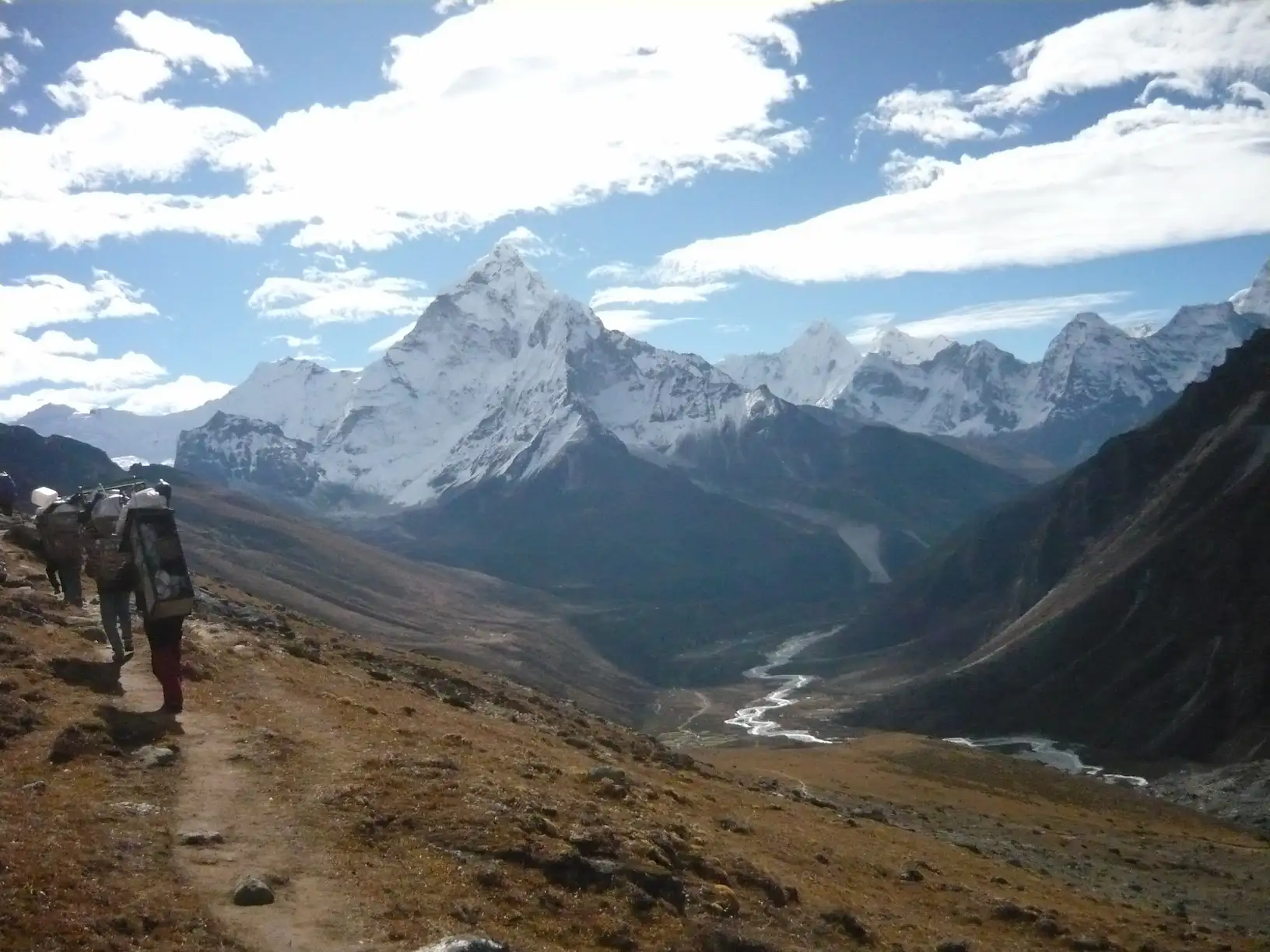
Trip Gallery
Trek Essentials
Gear tip: A portable battery pack is not optional on this trek. Power availability in the remote lodges of Upper Mustang is unreliable, and going three or four days without being able to charge your phone or camera is a real possibility north of Syangboche. Bring a good-capacity power bank and charge it whenever you have the opportunity. A dust buff or bandana is equally important. The Mustang plateau is dry and extremely windy, and walking through dust storms without face protection is miserable.
- Moisture-wicking base layer (top and bottom)
- Warm fleece or down mid-layer
- Windproof and waterproof outer jacket (the Kali Gandaki winds are serious)
- Down jacket for evenings and high pass crossings
- Trekking pants (x2)
- Warm hat and insulated gloves
- Balaclava or neck gaiter for high pass days
- Thermal underwear (essential for nights above 3,500 m)
- Sun hat or cap (UV radiation is intense on the plateau)
- Light comfortable clothes for lodge evenings
- Waterproof, well broken-in trekking boots
- Camp sandals or flip-flops for lodge evenings
- Wool or synthetic trekking socks (x5 pairs)
- Gaiters (recommended for high pass crossings and winter months)
- 40–55L trekking backpack
- Trekking poles (essential for high pass crossings)
- Sleeping bag rated to -15°C (nights at high altitude lodges can be very cold)
- Headlamp with spare batteries
- High-quality sunglasses with strong UV and wind protection
- Dust buff or bandana (the plateau can be very dusty)
- Water bottles (x2) or hydration bladder
- Water purification tablets or portable filter
- Daypack rain cover
- Portable battery pack for charging devices (power can be unreliable in remote lodges)
- High-SPF sunscreen (50+ strongly recommended — plateau sun is intense)
- Lip balm with high SPF
- Personal first aid kit
- Altitude sickness medication — Diamox (consult your doctor before departure)
- Eye drops (the plateau is very dry and dusty)
- Insect repellent (for lower sections near Jomsom and Kagbeni)
- Hand sanitiser
- Wet wipes
- All personal medications and prescriptions
- Valid passport (minimum 6-month validity beyond travel dates)
- Nepal visa
- Upper Mustang Restricted Area Permit (arranged by us)
- Travel and medical insurance documents
- USD cash for personal expenses (no ATMs anywhere in Upper Mustang — bring enough for the full trek)
- Passport-sized photos (x6, required for multiple permits)
- Emergency contact list
Final Thoughts:
There is a moment on the Upper Mustang Trek that almost every trekker describes in the same way. You have been walking for days through one of the most extraordinary landscapes you have ever seen: the canyon walls, the wind, the enormous sky, the ancient villages — and then you cross a final stretch of plateau and Lo Manthang appears in front of you. A walled medieval city sitting in a wide valley at 3,840 metres, exactly as it has sat for six hundred years. Nothing prepares you for it. Nothing else in Nepal looks or feels remotely like it.
That moment is the heart of this trek. But it is really just one of dozens of moments across 18 days that accumulate into something much larger than a walk through beautiful scenery. The sky caves of Chosar. The wall paintings of Tsarang. The eternal flame at Muktinath. The mani wall at Ghami stretching along the edge of a village that has been there for centuries. The Lo-ba people going about their lives in ways that have barely changed in living memory.
Upper Mustang asks more of you than most treks in Nepal. It asks for more days, more preparation, more physical commitment, and more money than the standard Annapurna routes. What it gives back is completely proportionate. This is not just a trek it is access to one of the most isolated and most extraordinary human landscapes still surviving on earth.
Very few places in Nepal or anywhere in the Himalayan region feel like Upper Mustang. We have been bringing trekkers here for years, and the look on people’s faces when they walk through the gate of Lo Manthang for the first time never gets old. We would love for that experience to be yours.
Your Adventure to Annapurna Base Camp Trek Starts Here
Start your journey with trusted local experts and discover the beauty, culture, and adventure waiting in the Himalayas and beyond.
Frequently Asked Questions
Everything you need to know about the AASRA ECO TREK
Upper Mustang is a restricted area under Nepalese government regulations, put in place to protect the extraordinary cultural heritage and fragile ecosystem of the Lo Kingdom. The permit costs USD 500 per person for the first 10 days inside the restricted area, with an additional USD 50 per day beyond that. This fee is higher than any other trekking permit in Nepal and is deliberately set to limit the number of visitors and preserve what makes Upper Mustang so special. The permit is included in the cost of this package and our team arranges everything before you depart Kathmandu.
The Upper Mustang Trek is rated moderate to challenging and is best suited to trekkers who have some prior trekking experience, ideally at altitude. The daily walking distances are not extreme — most days involve 5 to 7 hours of walking, but the remoteness of the region, the altitude of the high passes (up to 4,010 m at Nyi La), and the limited facilities in the most remote villages mean that this trek requires a solid baseline of physical fitness and mental resilience. If you are a first-time trekker, we recommend starting with a route like Ghorepani Poon Hill before attempting Upper Mustang.
Upper Mustang sits in the rain shadow of the main Himalayan range and receives almost no monsoon rainfall. This has created a landscape unlike anything else in Nepal, a high-altitude desert plateau of wind-eroded canyons, dramatically coloured cliff faces in layers of red, orange, white, and purple, flat-topped mesas, ancient river terraces, and a sky of extraordinary clarity and depth. The entire geological history of the region is written on the canyon walls, which contain ancient seabed sediments lifted to 4,000 metres over millions of years. Most trekkers describe the Upper Mustang landscape as the most visually dramatic they have ever experienced.
Lo Manthang is the ancient walled capital of the Lo Kingdom, a semi-autonomous region of Nepal that maintained its own king, its own laws, and its own cultural traditions until very recently. The city has been continuously inhabited for over six hundred years and the walls, the royal palace, and the four main monasteries are all still intact and in active use. The wall paintings inside Thubchen Gompa and Jampa Gompa are among the finest examples of medieval Tibetan Buddhist art anywhere in the world. Being inside Lo Manthang feels genuinely different from anywhere else it is a living medieval city in a way that very few places on earth can claim.
The sky caves are one of the great archaeological mysteries of the Himalayan region. Thousands of hand-carved caves are cut into the vertical cliff faces throughout Upper Mustang, many at heights of 30 to 50 metres above the valley floor with no apparent means of access. Researchers believe some of these caves were carved and used between 2,000 and 3,000 years ago as burial sites, meditation chambers, and dwellings. Excavations have found human remains, ancient manuscripts, Buddhist murals, and artifacts that are fundamentally changing our understanding of the early history of this region. Visiting Chosar and seeing these caves from below is one of the most thought-provoking experiences on the entire trek.
Jomsom airport is one of the most weather-dependent airstrips in Nepal. Flights operate only in the early morning when the famous Kali Gandaki valley winds are calm, and cancellations or delays due to strong winds or poor visibility are a regular occurrence. If your Jomsom flight is delayed or cancelled, the standard alternative is a jeep or bus along the Mustang highway to Pokhara, which takes approximately 7 to 9 hours. We always build buffer days into the overall itinerary where possible, and we strongly recommend scheduling your international departure from Kathmandu at least one day after your planned Pokhara return to account for potential Jomsom disruptions.
The food in Upper Mustang is simpler and more limited than on the busier Annapurna trails, which is a natural consequence of the region’s remoteness and the difficulty of supplying fresh ingredients to villages at 3,500 to 4,000 metres. Dal bhat is the staple and is reliable and filling everywhere on the route. Thakali cuisine is available in the villages around Jomsom and Kagbeni. In Lo Manthang itself, the lodge menus are limited, but the food is wholesome and adequate. Tsampa (roasted barley flour), buckwheat dishes, and Tibetan butter tea are local specialties worth trying. Bring some of your own snacks and energy supplements for the longer days on the plateau.
Yes. The standard Upper Mustang Restricted Area Permit covers 10 days inside the restricted area. If you want to spend additional time exploring Lo Manthang and the surrounding plateau in more depth, the permit can be extended at a cost of USD 50 per additional day. Extensions need to be arranged in advance through a registered trekking agency they cannot be obtained on the trail. If you are interested in spending more time in Upper Mustang or combining the trek with a cultural study or photography trip, please let us know when you book and we will arrange the extended permit and adjust the itinerary accordingly.