 Plan Your Trip
Jomsom Muktinath Trek — 15 Days
Trip Overview

Trek Region
Mustang & Annapurna

Difficulty Level
Moderate

City Accommodation
3 Nights at 3-Star Hotel

Trek Starts at
Nayapul (1,070 m)

Transport
Drive & Flight
Mountain Accommodation
10 Nights Teahouse

Trek Ends at
Jomsom (2,720 m)

Total Trip Duration
15 Days

Max Elevation
3,800 m

Trekking Duration
10 Days on Trail

Meals
B/L/D (Mountain only)
Trip Highlights
- Visit the sacred Muktinath Temple at 3,800 m, one of the most important pilgrimage sites for both Hindus and Buddhists in the world
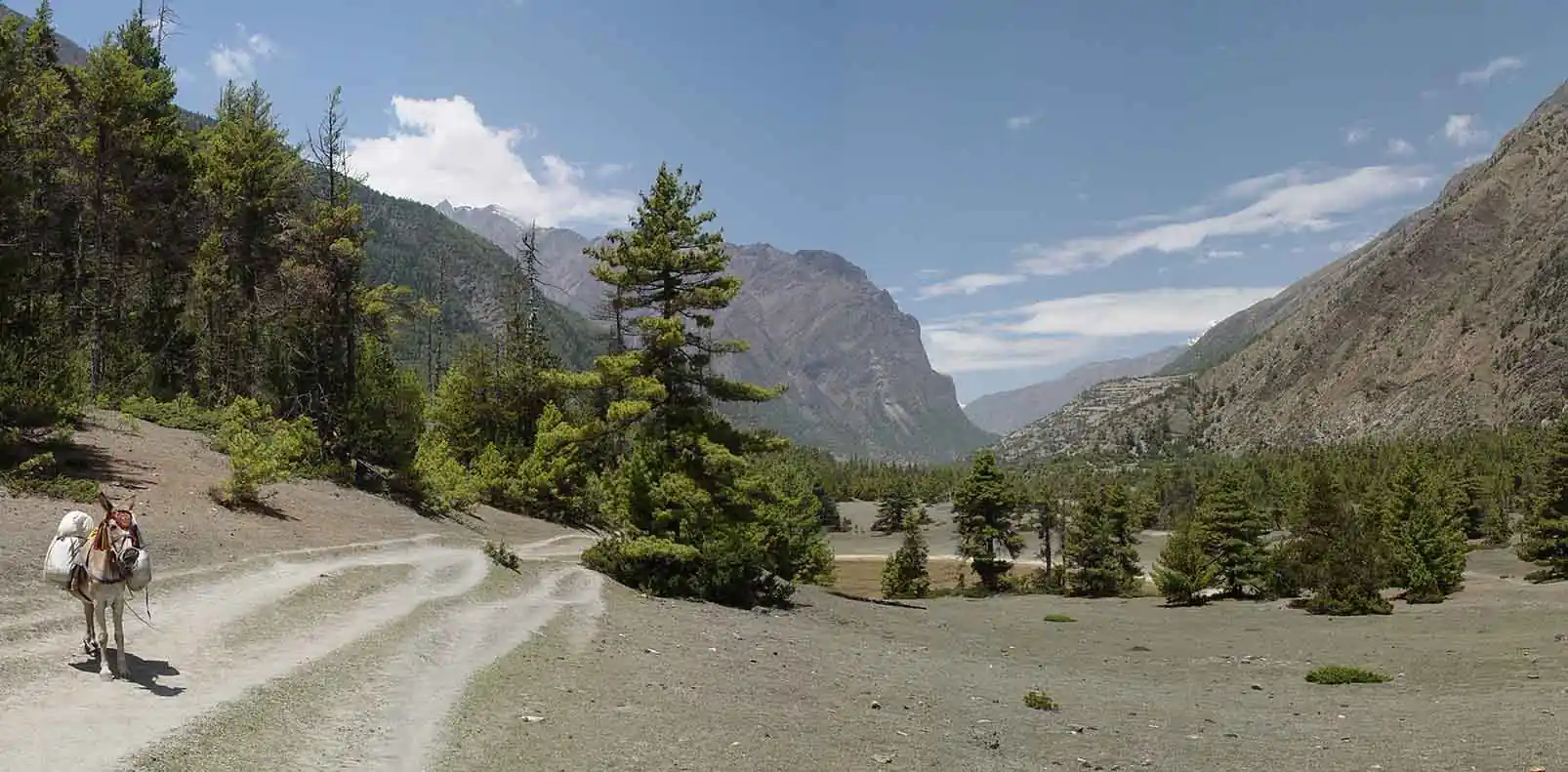
- Walk through the dramatic Kali Gandaki Gorge, the deepest river gorge on earth, flanked by Dhaulagiri and Annapurna on either side
- Stand face-to-face with the massive, flat-topped peak of Nilgiri North (7,061 m) — one of the most striking mountain profiles in Nepal
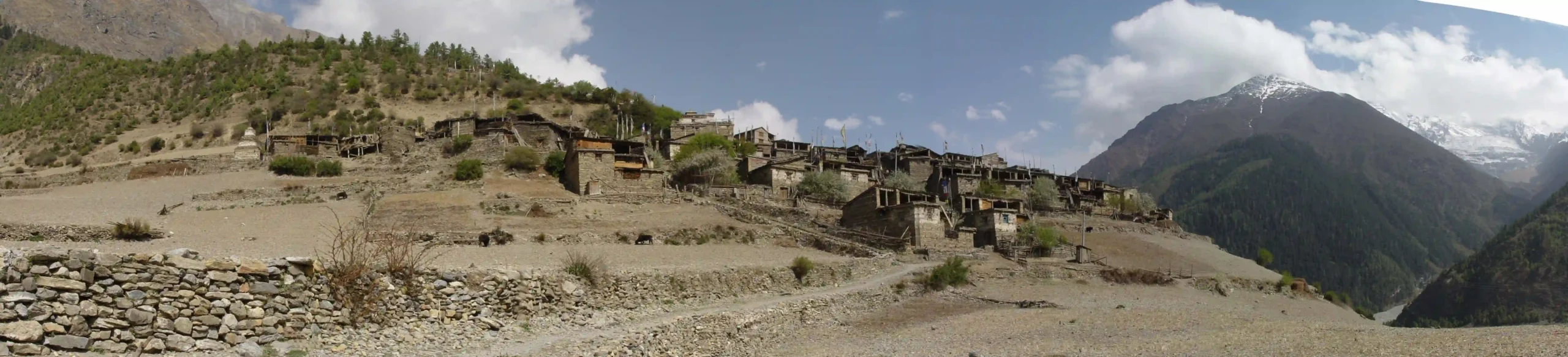
- Experience the unique high-altitude desert landscape of the Mustang region, a world completely different from the lush green hills of lower Nepal
- Cross the famous Thorong La Pass viewpoint trail and explore the ancient cave settlements carved into the cliffs around Kagbeni
- Spend time in Kagbeni, a medieval walled village at the gateway to Upper Mustang, full of history and mystery
- Fly out of Jomsom on a short but spectacular mountain flight back to Pokhara, with aerial views of the Annapurna range
- Walk through the apple orchard villages of Marpha and Tukuche, famous across Nepal for their apple brandy and fresh fruit
- Experience the strong Thakali culture in villages like Marpha, Tukuche, and Kobang, a community known for their legendary hospitality and food
- Explore Pokhara and Kathmandu with a guided sightseeing tour covering UNESCO World Heritage Sites
Trip Summary
The Jomsom Muktinath Trek is one of the most culturally rich and scenically diverse trekking routes in all of Nepal. In 15 days, you travel through landscapes that shift from subtropical river valleys and rhododendron forests to high-altitude desert plateaus that look more like the surface of Mars than anything you would expect to find in South Asia.
Your journey begins in Kathmandu, Nepal’s vibrant capital, where you spend a day exploring the city’s UNESCO-listed heritage sites before flying to Pokhara. From Pokhara, a short drive brings you to Nayapul, where your feet hit the trail for the first time. The early days of the trek follow the famous Annapurna Circuit route, taking you through lush forests, terraced farmland, and friendly Gurung villages.
As you gain altitude and head north through the Kali Gandaki Valley, everything changes. The air gets drier, the landscape turns rockier, and the wind picks up a constant companion in this part of Nepal. The Kali Gandaki Gorge, carved between the two giants of Dhaulagiri and Annapurna, is a place that genuinely makes you feel small in the best possible way.
Jomsom, the regional headquarters of Mustang, is your base for exploring the surrounding area. From here you trek to the holy Muktinath Temple, a site of enormous spiritual significance where a flame burns eternally from the earth and water flows from 108 stone waterspouts. Whether you are religious or not, there is something deeply moving about arriving at Muktinath after days of walking through the mountains.
The trek back through Marpha and the apple village trail is one of the most pleasant stretches of the entire route, flat, comfortable, and full of character. You fly out of Jomsom on a short mountain flight, land in Pokhara for a rest day, and then return to Kathmandu before your international departure. This is a trek that gives you everything Nepal has to offer: culture, nature, history, spirituality, and some of the finest mountain scenery anywhere on earth.
When To Visit
Spring (March–May) and autumn (October–November) are the two best windows for the Jomsom Muktinath Trek. In spring, the lower forests are alive with blooming rhododendrons, and the higher trails are clear and warm enough for comfortable trekking. The views of Dhaulagiri, Nilgiri, and the Annapurna range are spectacular in the pre-monsoon clarity.
Autumn is arguably the most enjoyable season. The monsoon has ended, the skies are crystal clear, and temperatures at altitude are cool but very comfortable during the day. October in particular is considered the golden month for trekking in Nepal — the trails are busy but the conditions are near perfect.
One important thing to note about this trek is that the Kali Gandaki Valley is famous for its strong afternoon winds. These winds are a daily occurrence regardless of season, so most trekkers aim to walk in the morning and reach their teahouse before the wind picks up in the early afternoon. Your guide will manage the daily schedule with this in mind.
Winter (December–February) is cold but doable, especially in the rain shadow area of Mustang where snowfall is less common than on the southern slopes. The monsoon months (June–August) are the least recommended, as the lower trail sections become muddy and leechy, though the Mustang region itself stays relatively dry due to its location beyond the main Himalayan range.
Itinerary
Our representative will be waiting for you at Tribhuvan International Airport the moment you land. After a comfortable transfer to your hotel in Thamel, you will have a full welcome briefing covering the itinerary, gear check, permits, and any questions you have. The evening is yours to explore Thamel, pick up any last-minute trekking supplies, or simply settle in and rest after your flight.
A full day of guided sightseeing takes you through Kathmandu’s most iconic landmarks. You will visit Pashupatinath Temple, one of the most sacred Hindu temples in Asia, the magnificent Boudhanath Stupa, the hilltop Swayambhunath complex, and Kathmandu Durbar Square with its centuries-old palaces and courtyards. Your guide will bring the history and stories of each place to life. In the evening, the group gathers for a team dinner and final briefing before heading to Pokhara the next morning.
After breakfast, you travel to Pokhara either by a quick 30-minute flight or a scenic 6–7 hour drive along the Prithvi Highway. Pokhara sits at the foot of the Annapurna range and is one of the most beautiful cities in Nepal. You check into your lakeside hotel, explore the Lakeside district in the afternoon, and enjoy the reflection of the mountains on Phewa Lake as the sun goes down.
An early morning drive from Pokhara takes you to Nayapul, the official start of the trek. The trail begins gently, following the Modi Khola river through warm, flat terrain and small farming villages. Birethanti, a charming village at the confluence of two rivers, is your first proper stop. From there the trail starts to climb toward Tikhedhunga, where you spend your first night in a teahouse and get your first real taste of life on the trail.
- Walking time: 3–4 hours
- Accommodation: Teahouse
- Meals: Breakfast, Lunch, Dinne
Today brings the most physically demanding stretch of the early trek — the long stone staircase climb from Tikhedhunga to Ulleri. Around 3,000 steps carved into the hillside take you up through terraced farms and into the first of the great rhododendron forests of this route. In spring, the trees above Ulleri are absolutely spectacular. The trail continues through Banthanti and Nangethanti before arriving at Ghorepani, a large and lively village with great mountain views.
- Walking time: 6–7 hours
- Accommodation: Teahouse
- Meals: Breakfast, Lunch, Dinner
The pre-dawn walk up to Poon Hill is one of the great experiences of any Nepal trek. You leave at around 4:30 AM and reach the viewpoint just as the horizon starts to turn orange. Dhaulagiri, Annapurna I, Annapurna South, Hiunchuli, and Machhapuchhre line up in front of you in the morning light. After breakfast back in Ghorepani, you begin a long descent down to Tatopani, famous for its natural hot spring baths. A long soak after a big day of trekking is one of life’s great pleasures.
- Walking time: 6–7 hours
- Accommodation: Teahouse
- Meals: Breakfast, Lunch, Dinner
From Tatopani, the trail enters the Kali Gandaki Valley and begins heading north. The landscape starts to shift noticeably here, the vegetation thins out, the valley walls grow taller, and you get your first real sense of the immense scale of the gorge you are walking into. The trail passes through Dana, crosses several suspension bridges, and climbs steadily to Ghasa, a quiet village where the transition from green Nepal to arid Mustang really begins.
- Walking time: 5–6 hours
- Accommodation: Teahouse
- Meals: Breakfast, Lunch, Dinner
Today the trail continues north through the deepening Kali Gandaki Gorge, with Dhaulagiri dominating the skyline to the west and the Nilgiri massif appearing dramatically ahead. You pass through Lete and Kokhethanti before arriving in Tukuche, one of the historically important Thakali trading villages of the Mustang region. Tukuche is known for its apple orchards, traditional stone architecture, and Tukuche Peak (6,920 m) that rises directly above the village.
- Walking time: 5–6 hours
- Accommodation: Teahouse
- Meals: Breakfast, Lunch, Dinner
A short but beautiful morning walk brings you to Marpha, arguably the most charming village on the entire Jomsom Muktinath Trek. Marpha is famous across Nepal for its apple orchards — the teahouse menus here are full of apple pie, apple juice, apple jam, and apple brandy. The village itself is a delight, with narrow whitewashed cobblestone lanes, flat rooftops connected by walkways, and a centuries-old monastery overlooking the valley. This is one of the best rest stops on the whole route.
- Walking time: 2–3 hours
- Accommodation: Teahouse
- Meals: Breakfast, Lunch, Dinner
The walk to Jomsom is short and relatively easy, following the Kali Gandaki riverbed north through a wide, wind-scoured valley. The famous afternoon winds are strongest in this section, so you aim to arrive in Jomsom before noon. Jomsom is the regional headquarters of Mustang and a proper little town with an airport, government offices, banks, and a good selection of teahouses and lodges. It is a fascinating place that feels like the end of the road because in many ways, it is.
- Walking time: 2–3 hours
- Accommodation: Teahouse
- Meals: Breakfast, Lunch, Dinner
Today is one of the most spiritually and scenically significant days of the entire trek. You leave Jomsom early and follow the trail north through Eklebhatti to Kagbeni, the medieval walled village that marks the entrance to Upper Mustang. Kagbeni has narrow alleys, ancient monasteries, red-painted walls, and a feeling that time has moved differently here. From Kagbeni, the trail climbs steeply up to Muktinath, where the sacred temple complex, the eternal flame, the 108 waterspouts, and the surrounding monasteries make this one of the most powerful places you will visit in Nepal.
- Walking time: 5–6 hours
- Accommodation: Teahouse
- Meals: Breakfast, Lunch, Dinner
You descend from Muktinath back to Jomsom, taking the time to stop again in Kagbeni if you want to explore the old town more. The walk back is comfortable and the views of the surrounding landscape look completely different when seen from the opposite direction. Back in Jomsom, you have the afternoon free to rest, explore the town, or visit the Mustang Eco Museum for a deeper look at the history and culture of this region.
- Walking time: 4–5 hours
- Accommodation: Teahouse
- Meals: Breakfast, Lunch, Dinner
The short mountain flight from Jomsom to Pokhara is an experience in itself — just 20 minutes in a small twin-propeller plane through the heart of the Himalayas, with aerial views that you simply cannot get any other way. Back in Pokhara, you check into your lakeside hotel and enjoy a half-day guided sightseeing tour covering Davis Falls, Gupteshwor Cave, the Bindhyabasini Temple, the International Mountain Museum, and a boat ride on Phewa Lake.
- Accommodation: 3-Star Hotel
- Meals: Breakfast
After a relaxed final morning in Pokhara, you travel back to Kathmandu by flight or drive. The afternoon is free for any remaining shopping in Thamel — pashminas, handmade jewelry, thanka paintings, and trekking gear are all popular buys. In the evening, your guide joins the group for a farewell dinner at one of Kathmandu’s best restaurants. It is a chance to reflect on everything the last two weeks have given you.
- Accommodation: 3-Star Hotel
- Meals: Breakfast
Your Jomsom Muktinath Trek comes to an end this morning. After a final breakfast at the hotel, our team transfers you to Tribhuvan International Airport for your international departure. We recommend scheduling your outbound flight for mid-morning or later to allow a comfortable start to the day. You leave Nepal with a full heart, tired legs, and memories that will stay with you for a very long time.
Trek Difficulty & Physical Demands
The Jomsom Muktinath Trek is rated Moderate, which means it sits a step above beginner routes like the Ghorepani Poon Hill Trek but well below technical high-altitude routes. With 10 days on the trail and a maximum elevation of 3,800 m at Muktinath, it is well within reach for anyone who comes in reasonably fit and prepared.
Daily walking time ranges from 2 to 7 hours depending on the section. The harder days come early in the trek particularly the 3,000-step climb from Tikhedhunga to Ulleri on Day 5. After Ghorepani, the trail descends into the Kali Gandaki Valley and follows a more gradual northward route where the daily mileage is manageable and the pace is more relaxed.
The strongest physical challenge on this route is not the altitude or the distance it is the Kali Gandaki afternoon winds. They are powerful enough on some days to make walking uncomfortable if you are caught out in them. Starting early each morning and reaching your teahouse before noon makes the wind a spectacle rather than a problem.
Mild symptoms of altitude sickness are possible around Muktinath at 3,800 m. The itinerary is designed with a gradual ascent to give your body time to adjust, and your guide is trained to identify and manage any symptoms that arise.
How to prepare:
- Start regular cardio training 6 to 8 weeks before the trek
- Focus on uphill walking, stair climbing, and cardiovascular fitness
- Train your knees for downhill sections descents put real strain on the joints
- Break in your trekking boots well before you arrive in Nepal
- Consider talking to your doctor about Diamox (altitude sickness medication) before departure
You do not need to be a seasoned hiker to complete this trek. But good preparation will make a real difference to how much you enjoy every day of it.
Best Time to Trek: Seasonal Comparison
Picking the right season for the Jomsom Muktinath Trek matters more than on lower-altitude routes, because both the weather and the Kali Gandaki winds vary noticeably across the year. Here is a detailed look at what to expect in each season.
Spring (March to May) — Best for Colour and Scenery
The lower forest sections of the trail burst into bloom from March onwards. Rhododendron trees light up the hillsides between Tikhedhunga and Ghorepani in shades of red, pink, and white. March and April offer the best balance of clear skies, warm temperatures, and stunning floral scenery. By May, cloud and occasional pre-monsoon showers start to roll in, but the trail is still very walkable.
Autumn (October to November) — Best for Visibility and Comfort
Post-monsoon air is the clearest of the year. Mountain views are razor-sharp, temperatures are comfortable during the day, and the trails are dry and firm underfoot. October is widely considered the single best month to trek anywhere in Nepal. November is also excellent but cooler, especially at higher elevations around Muktinath.
Winter (December to February) — Quiet but Cold
Mustang sits in a rain shadow, so the upper sections of this trek see less snowfall than the southern Annapurna slopes. That said, Muktinath nights in winter are genuinely cold, and some lower trail sections can be icy. If you enjoy solitude and do not mind bundling up, winter trekking on this route is a very different but rewarding experience.
Monsoon (June to August) — Wet on the Lower Trail, Dry in Mustang
The lower sections around Tikhedhunga and Ghorepani get hit hard by the monsoon, with muddy paths and leeches in the undergrowth. However, the Mustang region beyond the main Himalayan range stays relatively dry during the monsoon making it one of the few trekking areas in Nepal that works reasonably well in summer. September sits at the tail end of the monsoon, with improving skies and trails that are still lush from the rain.
Booking Your Jomsom Muktinath Trek — 15 Days
Booking the Jomsom Muktinath Trek is simple, and our team will take care of every detail from the moment you get in touch.
How to book:
Reach out via the enquiry form on our website or drop us a message on WhatsApp. Once we confirm dates and availability, we will send a booking form and payment instructions. A deposit secures your place, with the balance due before the trek begins.
After booking:
You will receive a full pre-departure information pack covering gear lists, visa guidance, health recommendations, and a day-by-day overview of what to expect. Our team is available to answer questions right up to your arrival in Kathmandu.
Permits:
Both the Annapurna Conservation Area Permit (ACAP) and the TIMS card are included and arranged by us before you leave Kathmandu. You will also need passport-sized photos (x4) for the permit process. If you plan to extend into Upper Mustang, let us know in advance so we can arrange the additional restricted area permit.
Travel insurance:
Travel and medical insurance with emergency evacuation cover is mandatory. We strongly recommend purchasing this before leaving your home country. Given that Jomsom flights can be delayed or cancelled due to weather, we also recommend building at least one buffer day into your international departure schedule.
Customisation:
Want to add extra days in Kagbeni, extend to Upper Mustang, upgrade your accommodation, or combine this trek with another route? We can put together a custom itinerary and quote for any variation you have in mind.
Cost Details
Cost Includes
- All airport transfers in Kathmandu and Pokhara
- 2 nights at a 3-star hotel in Kathmandu (BB)
- 1 night at a 3-star hotel in Pokhara before trek (BB)
- 1 night at a 3-star hotel in Pokhara after trek (BB)
- Kathmandu sightseeing with private vehicle and guide
- Pokhara sightseeing with private vehicle and guide
- Drive from Pokhara to Nayapul (trek start)
- Jomsom to Pokhara flight ticket
- All meals on the trail (breakfast, lunch, and dinner)
- Teahouse accommodation during the trek (10 nights)
- Licensed, experienced English-speaking trekking guide
- Porter service (1 porter per 2 trekkers)
- Annapurna Conservation Area Permit (ACAP)
- TIMS card (Trekkers’ Information Management System)
- First aid kit and emergency oxygen
- All government and local taxes
- Company service charge
Cost Excludes
- International airfare to and from Kathmandu
- Nepal visa fee (approx. USD 30–50 depending on duration)
- Travel and medical insurance (mandatory)
- Lunch and dinner in Kathmandu and Pokhara
- Personal trekking gear and equipment
- Hot showers, battery charging, and WiFi on the trail
- Tips and gratuities for guide and porter
- Personal expenses (snacks, drinks, apple brandy in Marpha)
- Emergency evacuation or helicopter rescue costs
- Any costs arising from flight delays due to weather (common in Jomsom)
- Upper Mustang Restricted Area Permit (if extending to Lo Manthang)
Trip Gallery
Trek Essentials
Gear tip: A windproof outer layer is non-negotiable for this trek. The Kali Gandaki afternoon winds can be fierce, and no amount of fleece will help if your outer layer does not block the wind. A good sleeping bag rated to -10°C is equally important for cold nights at Muktinath.
- Moisture-wicking base layer (top and bottom)
- Warm fleece or down mid-layer
- Waterproof and windproof outer jacket (essential for Kali Gandaki winds)
- Trekking pants (x2)
- Warm hat and gloves
- Thermal underwear
- Sun hat or cap
- Comfortable camp clothes and light evening wear
- Broken-in waterproof trekking boots
- Camp sandals or flip-flops
- Wool or synthetic trekking socks (x4 pairs)
- Gaiters (optional but useful in winter)
- 40–50L trekking backpack
- Trekking poles (highly recommended for long descents)
- Sleeping bag rated to -10°C (nights at Muktinath can be very cold)
- Headlamp with spare batteries
- Sunglasses with strong UV protection (intense sun at altitude)
- Water bottles (x2) or hydration bladder
- Water purification tablets or filter
- Daypack rain cover
- High-SPF sunscreen (50+ recommended)
- Lip balm with SPF
- Personal first aid kit
- Altitude sickness medication (Diamox — consult your doctor)
- Insect repellent (for lower sections of the trail)
- Hand sanitiser
- Wet wipes
- Personal medications and prescriptions
- Valid passport (minimum 6-month validity)
- Nepal visa
- Travel and medical insurance documents
- USD cash for personal expenses (ATMs are limited after Pokhara)
- Emergency contact list
- Passport-sized photos (x4, for permits)
Final Thoughts:
The Jomsom Muktinath Trek is not just a walk through the mountains. It is a journey through one of the most remarkable and varied landscapes in the entire Himalayan region. In 15 days you move from lush subtropical valleys to windswept desert plateaus, from rhododendron forests to ancient walled villages, from the warm hills of the Annapurna foothills to the spiritual heights of Muktinath at 3,800 metres.
What makes this trek stand out from other routes in Nepal is the sheer variety of what you experience along the way. You get the iconic Poon Hill sunrise. You walk the deepest river gorge on earth. You taste apple brandy in Marpha. You sit in the courtyard of a medieval monastery in Kagbeni. And you stand at a temple where pilgrims have been coming for centuries, where fire burns from the ground and water flows from 108 stone spouts carved into the hillside.
This is a trek for people who want more than just mountain views. It is for those who want to understand Nepal — its culture, its history, its spirit — through the simple act of walking through it.
We have guided trekkers of all ages and backgrounds on this route, and every single one of them says the same thing at the end: that it was more than they expected, in every way.
We would love to help you plan yours.
Your Adventure to Annapurna Base Camp Trek Starts Here
Start your journey with trusted local experts and discover the beauty, culture, and adventure waiting in the Himalayas and beyond.
Frequently Asked Questions
Everything you need to know about the AASRA ECO TREK
The Jomsom Muktinath Trek is rated moderate, which means it is accessible to people without prior trekking experience as long as they have a reasonable level of fitness. The daily walking hours range from 5 to 7 hours, and the maximum altitude of 3,800 m at Muktinath is manageable for most healthy adults. That said, this trek is longer and more demanding than something like the Ghorepani Poonhill Trek, so some physical preparation in the weeks before departure is strongly recommended.
The afternoon winds in the Kali Gandaki Valley are legendary among trekkers in Nepal. They typically pick up between 11 AM and noon and can be very strong, strong enough to make walking difficult and uncomfortable. Your guide will plan each day’s schedule so that you start early and reach your teahouse before the wind arrives. As long as you follow this rhythm, the winds are more of an interesting natural phenomenon than a real problem.
Muktinath is one of the most sacred pilgrimage sites in all of Asia. For Hindus, it is one of the 108 Divya Desams dedicated to Lord Vishnu. For Tibetan Buddhists, it is known as Chumig Gyatsa, meaning “hundred waters,” and is considered a place of great spiritual liberation. The eternal flame that burns from the earth, fed by natural gas seeping through the rock, has been burning for centuries and draws pilgrims from across Nepal, India, and Tibet every year.
The Jomsom Muktinath Trek reaches a maximum altitude of 3,800 m at Muktinath. Mild symptoms of altitude sickness — headache, tiredness, and mild nausea — are possible at this elevation, especially if you ascend too quickly. The itinerary is designed with a gradual ascent profile to give your body time to acclimatize. Your guide is trained in altitude sickness recognition and response, and the group carries supplemental oxygen for emergencies. Drinking plenty of water and avoiding alcohol in the first few days on the trail are the best preventive steps.
Marpha is one of the most charming stops on the entire Jomsom trek route. It is a traditional Thakali village famous throughout Nepal for its apple orchards, which produce apples, apple cider, apple brandy, apple jam, and more. The village architecture is unique narrow stone-paved lanes run between whitewashed houses connected by flat rooftops, and the whole settlement is designed to shelter residents from the valley winds. It is the kind of place that makes you want to stay an extra day.
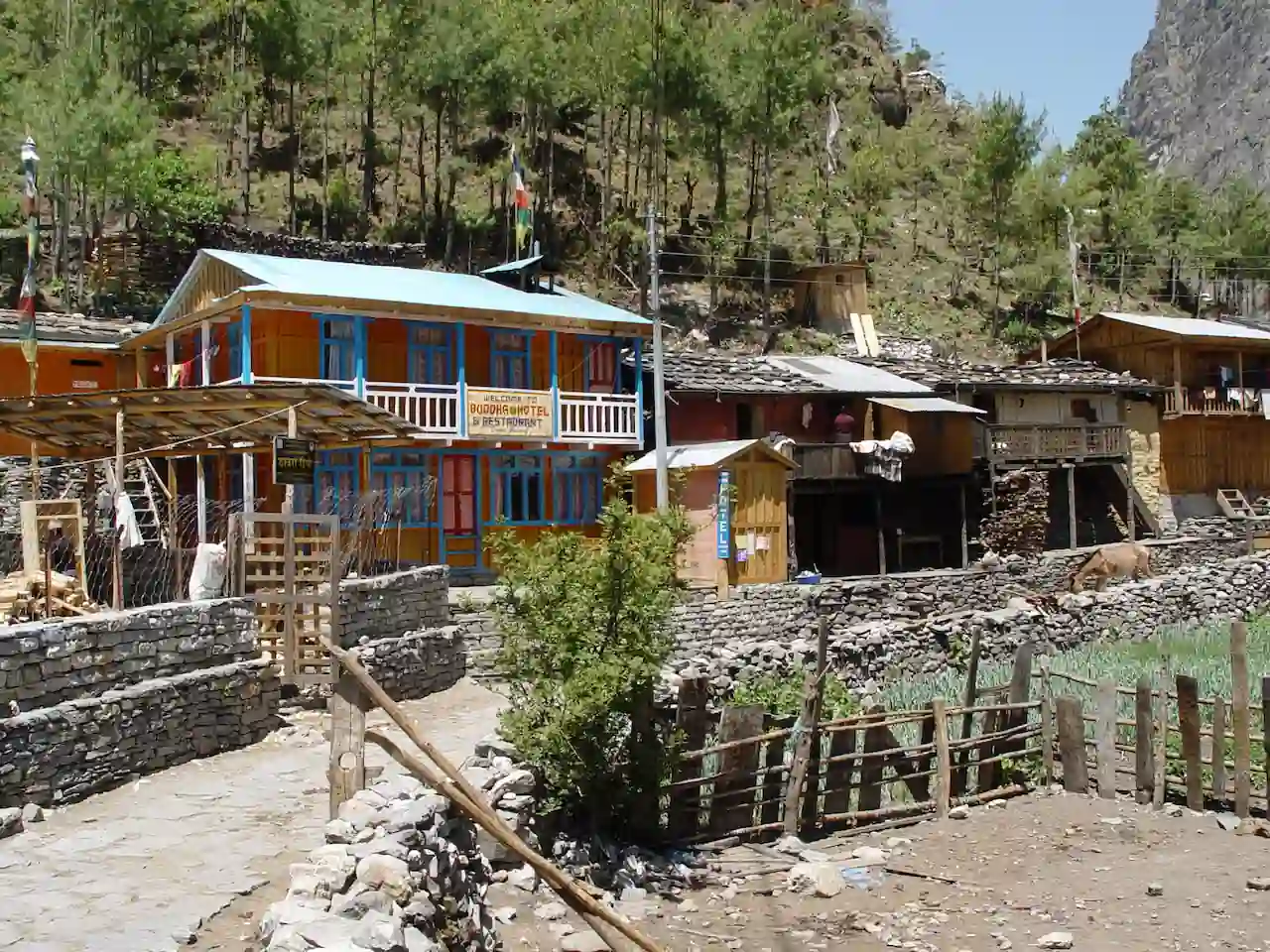
You will be staying in tea-house family-run lodges that provide simple twin or double rooms with beds and blankets. The teahouses on the Jomsom route are generally well-maintained and comfortable. In larger villages like Tukuche, Marpha, and Jomsom, you will find better-quality lodges with more amenities. Hot showers, battery charging, and WiFi are available at most stops for a small extra fee.
Yes. Jomsom and Kagbeni sit at the gateway to Upper Mustang, the ancient walled kingdom of Lo Manthang. If you want to extend your trip into Upper Mustang, you will need an additional restricted area permit which currently costs USD 500 for the first 10 days. This is not included in the standard package but can be arranged with advance notice. Upper Mustang is one of the most extraordinary places in the entire Himalayan region and is well worth the extra time and cost if your schedule allows.
Jomsom airport is one of the most weather-dependent airstrips in Nepal, and flight cancellations or delays due to strong winds or poor visibility are not uncommon. If your flight is cancelled, the standard backup is to take a jeep or bus from Jomsom to Pokhara via the Mustang highway, which takes around 7–9 hours. Your guide will manage the situation and keep you informed. We always recommend building at least one buffer day into your international departure schedule to account for this possibility.