 Plan Your Trip
Ghorepani Poonhill Trek — 11 Days
Trip Overview

Trek Region
Annapurna

Difficulty Level
Moderate

City Accommodation
2 Nights at a 3-Star Hotel

Trek Starts at
Nayapul (1,070 m)

Transport
Drive
Mountain Accommodation
7 Nights Teahouse

Trek Ends at
Nayapul (1,070 m)

Total Trip Duration
11 Days

Max Elevation
3,210 m

Trekking Duration
7 Days on Trail

Meals
B/L/D (Mountain only)
Trip Highlights
- Stand at Poon Hill (3,210 m) and watch the sunrise paint Dhaulagiri, Annapurna South, and Machhapuchhre in brilliant morning gold
- Walk through some of the world’s most beautiful rhododendron and oak forests, especially stunning in spring when the flowers are in full bloom
- Explore the charming hilltop village of Ghorepani, one of the most iconic stops on the Annapurna trail
- Trek to Tadapani and enjoy sweeping, unobstructed views of the Annapurna range at almost every step
- Experience the warmth of Gurung and Magar hospitality at local teahouses along the trail
- Walk through the living museum village of Ghandruk, a beautifully preserved Gurung settlement
- Visit Pokhara, the beautiful lakeside city, and enjoy a guided sightseeing tour before and after the trek
- Ideal for first-time trekkers in Nepal no technical climbing skills needed, just a love for the mountains
Trip Summary
The Ghorepani Poonhill Trek is one of the most popular treks in Nepal, and it is easy to see why. In just 11 days, you get to stand in front of some of the most incredible Himalayan views in the world, walk through forest trails that feel like something out of a fairy tale, and experience the real culture of the Annapurna foothills.
Your trip starts in Kathmandu, where you spend a day getting oriented and exploring the city’s incredible heritage sites. From there, you fly or drive to Pokhara, the gateway to the Annapurna region, where the trek officially begins after a short drive to Nayapul.
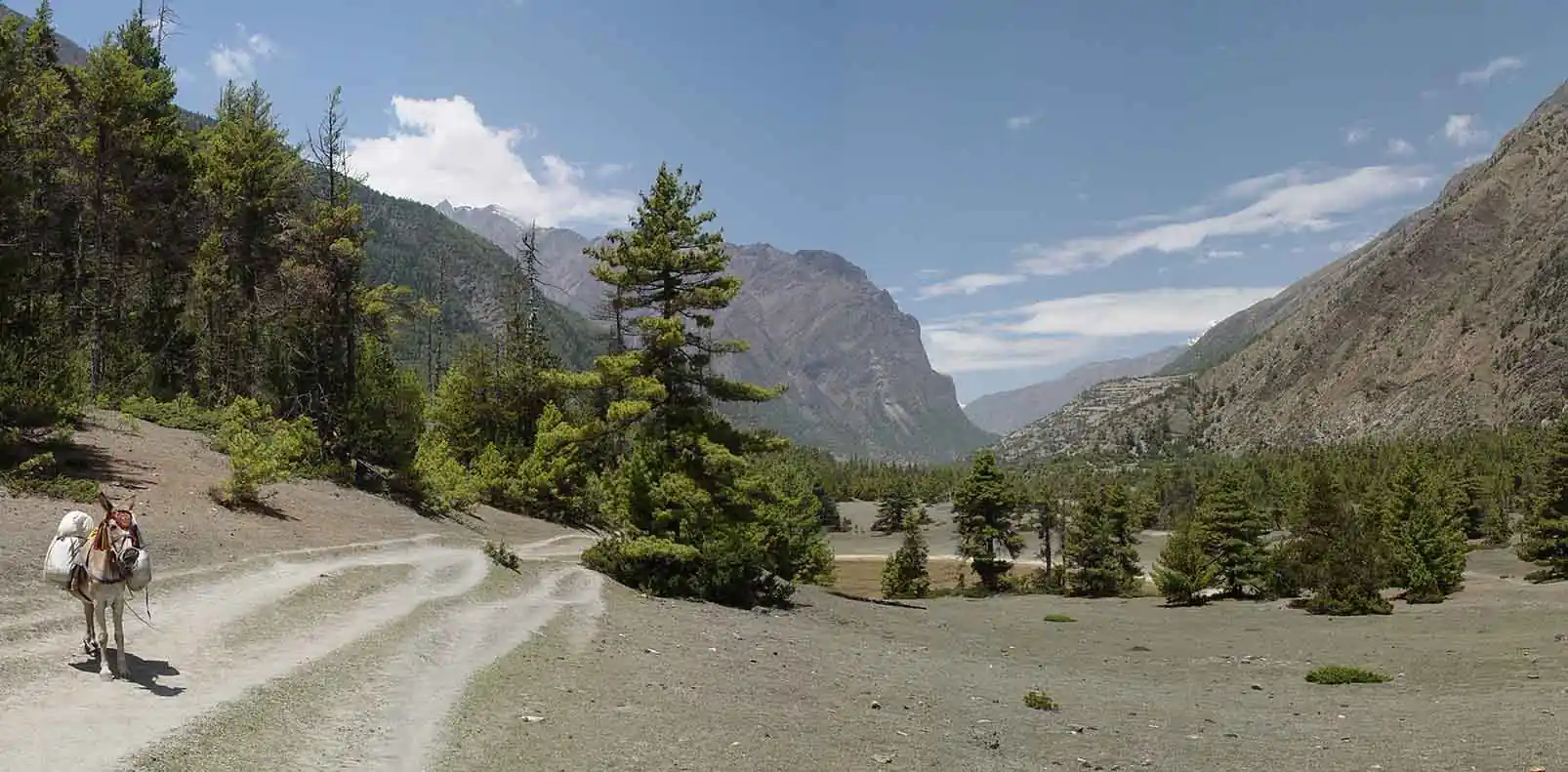
The trail takes you through a landscape that keeps changing as you gain altitude. You start in warm, lush lowlands, then move into thick rhododendron forests that bloom bright red and pink from March to May. The villages you pass through, Tikhedhunga, Ulleri, Ghorepani, Tadapani, and Ghandruk, each have their own personality and charm.
The highlight of the whole trek is the pre-dawn walk up to Poon Hill. You start climbing in the dark, headlamp on, and reach the top just in time for one of the most jaw-dropping sunrises in all of Nepal. The mountains seem almost unreal when the first light hits them.
After the trek, you return to Pokhara for a rest day and some well-deserved downtime by Phewa Lake before heading back to Kathmandu for your international flight home. This trek is perfect for beginners, families, and anyone who wants a genuine Himalayan experience without the extreme altitude or technical difficulty.
When To Visit
Spring (March to May) and autumn (October to November) are the two best seasons for the Ghorepani Poon Hill Trek. Spring brings the most spectacular scenery as the rhododendron forests burst into full bloom with shades of red, pink, and white. The skies are mostly clear and temperatures are comfortable at higher elevations.
Autumn is the most popular season overall. Monsoon rains have washed the air clean, visibility is excellent, and the mountain views are as sharp and clear as you will ever see them. Days are warm, nights are cool, and the trails are busy but manageable.
Winter (December to February) is possible but cold, especially at night around Ghorepani. Snow can occasionally block the trail to Poon Hill. The monsoon months (June to August) bring rain and leeches on the lower trails, though the landscape turns a lush, deep green that some trekkers love.
Itinerary
One of our team members will meet you at Tribhuvan International Airport as soon as you land. After settling into your hotel and freshening up, you will have a welcome briefing where we go over the entire trip, sort out any last-minute gear questions, and answer everything you want to know. The rest of the day is free to explore Thamel, Kathmandu’s famous traveller hub, or just rest up and get ready for the adventure ahead.
Today is a full sightseeing day in Kathmandu. You will visit some of the most iconic UNESCO World Heritage Sites in the city, Pashupatinath Temple, Boudhanath Stupa, Swayambhunath (the Monkey Temple), and Kathmandu Durbar Square. Each site tells a different story about Nepal’s incredible religious and cultural history. Your private guide will be with you throughout the day. In the evening, you can explore the streets around Thamel on your own.
After breakfast, you head to Pokhara, the gateway to the Annapurna region. You can either take a short 30-minute flight or a scenic 6–7 hour drive through the hills and river valleys of central Nepal. Once in Pokhara, you settle into your lakeside hotel and spend the evening exploring the Lakeside area by Phewa Lake. The mountain views from Pokhara are already stunning, a perfect introduction to what is waiting on the trail.
An early morning drive takes you from Pokhara to Nayapul, where your trekking journey officially begins. From Nayapul, you follow the Modi Khola river upstream through flat farmland and small villages before the trail starts to climb toward Tikhedhunga. The walking today is gentle and gives you a chance to warm up your legs. Birethanti, a lovely village with a suspension bridge, is one of the first highlights of the trail.
Today is the longest and most demanding day of the trek. You start with the famous stone staircase climb from Tikhedhunga to Ulleri — around 3,000 steps that test your legs but reward you with amazing views back down the valley. After Ulleri, the trail enters a gorgeous forest of rhododendron and oak trees. In spring, the entire forest turns into a sea of red and pink flowers. You pass through Banthanti and Nangethanti before arriving at Ghorepani.
This is the day everyone talks about. You wake up at 4:30 AM, wrap up warm, and make the 45-minute hike up to Poon Hill in the dark. At the top, you join trekkers from around the world for the same unforgettable moment: sunrise over the Himalayas. Dhaulagiri, Annapurna I, Annapurna South, Hiunchuli, and Machhapuchhre all line up in brilliant morning light. After breakfast back in Ghorepani, you continue through thick forests to Tadapani.
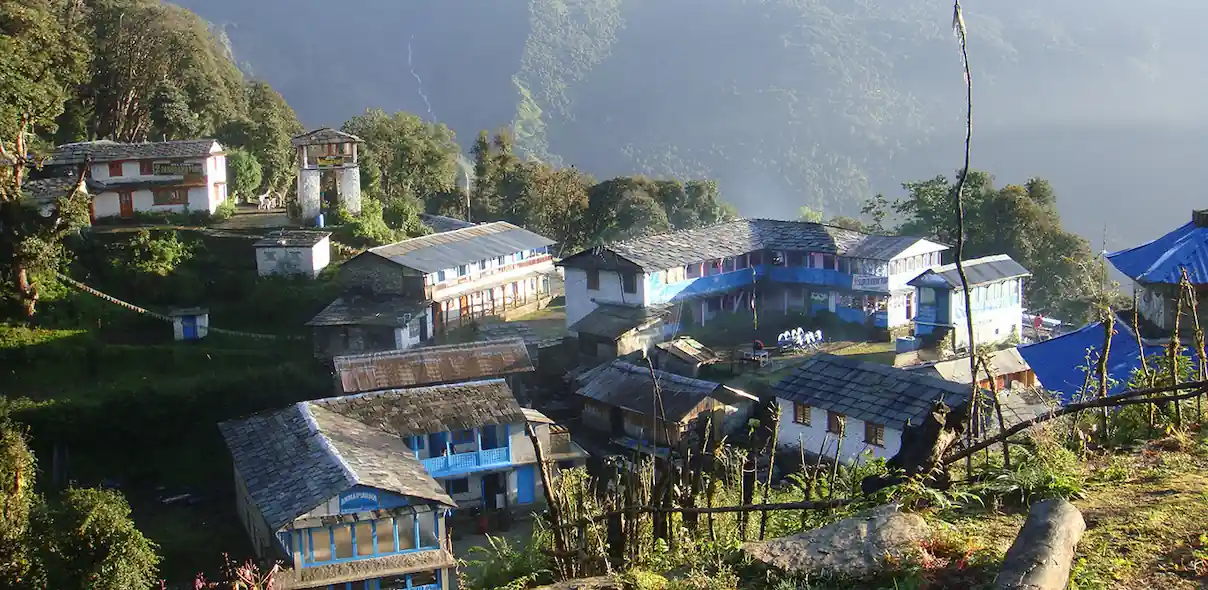
The trail from Tadapani to Ghandruk descends through beautiful oak and rhododendron forest with constant views of the Annapurna range. Ghandruk is the largest Gurung village in Nepal, and the stone-paved streets, traditional houses, and the Gurung Museum make it a fascinating place to explore. You arrive in the early afternoon with plenty of time to walk around the village and enjoy the views of Annapurna South and Machhapuchhre.
Your last day on the trail takes you from Ghandruk back down to the valley floor and out to Nayapul. It is a gradual descent through farms and small settlements. A vehicle meets you at Nayapul for the drive back to Pokhara. Tonight you stay by the lake and celebrate the completion of your trek with a group dinner.
Today is your recovery day in Pokhara. A guided half-day sightseeing tour covers the main highlights the Bindhyabasini Temple, the International Mountain Museum, Davis Falls, Gupteshwor Cave, and a peaceful boat ride on Phewa Lake with Annapurna views reflected in the water. The rest of the afternoon is free for shopping, a massage, or just sitting by the lake with a cup of tea.
After breakfast in Pokhara, you make your way back to Kathmandu by flight or drive. Upon arrival, you check into your hotel and have the afternoon free for last-minute shopping in Thamel. In the evening, your guide joins you for a farewell dinner at one of Kathmandu’s best restaurants.
Your Ghorepani Poonhill Trek adventure comes to an end today. After a final breakfast, our team transfers you to Tribhuvan International Airport in plenty of time for your departure flight. You leave Nepal with incredible memories, stronger legs, and most likely a strong desire to come back for more.
Trek Difficulty & Physical Demands
The Ghorepani Poon Hill Trek is rated Easy to Moderate, making it one of the most accessible treks in the Annapurna region. But accessible does not mean effortless. Here is what to expect on the trail.
The hardest section is Day 5, when you climb roughly 3,000 stone steps from Tikhedhunga up to Ulleri. It is steep, it takes time, and your legs will feel it the next morning. That said, you go at your own pace, and the views make every step worthwhile.
The maximum altitude of 3,210 m at Poon Hill is low enough that serious altitude sickness is uncommon. Most trekkers have no altitude-related issues on this route. Still, it is always good to stay hydrated, listen to your body, and not rush.
A typical trekking day on this route is 5 to 7 hours of walking, covering 8 to 12 km depending on the section. The trails are well-maintained and clearly marked throughout.
Physical preparation tips:
- Start regular cardio exercise 6 to 8 weeks before the trek
- Walking, jogging, cycling, and stair climbing are all great preparation
- Practice walking downhill as well as uphill — descents put stress on your knees
- Break in your trekking boots before arriving in Nepal
You do not need to be an athlete. But the more active you are beforehand, the more you will enjoy the experience on the trail.
Best Time to Trek: Seasonal Comparison
Choosing the right season makes a real difference to your Ghorepani Poon Hill Trek experience. Here is a closer look at what each season offers.
Spring (March to May) — Best for Scenery
This is the season when the Annapurna trails look their most beautiful. Rhododendron forests are in full bloom, painting the hillsides in deep red, soft pink, and crisp white. The days are warm, the skies are mostly clear, and the mountain views are excellent. March and April are the peak spring months. May sees more cloud and occasional pre-monsoon showers.
Autumn (October to November) — Best for Views
This is the most popular trekking season in Nepal. After the monsoon, the air is crystal clear and the visibility is extraordinary. The mountains look impossibly close and sharp. October and November are both excellent, though November starts to get cooler, especially at Ghorepani at night.
Winter (December to February) — Cold but Quiet
The trails are much quieter in winter. Daytime temperatures can still be pleasant at lower elevations, but nights around Ghorepani drop well below freezing. Snow on the trail above Ulleri is possible. If you enjoy a quieter experience and do not mind the cold, winter can be a rewarding time to trek.
Monsoon (June to August) — Lush but Wet
The monsoon brings daily rain to the lower trail sections and leeches in the wet forest undergrowth. Cloud cover often blocks mountain views. However, the landscape is incredibly green and alive during this period, and some trekkers genuinely love it. September sits at the edge of the monsoon trails are still wet but views begin to open up.
Booking Your Ghorepani Poonhill Trek — 11 Days
Booking the Ghorepani Poon Hill Trek is straightforward, and our team is here to guide you through every step.
How to book:
Reach out to us directly via the enquiry form or WhatsApp. Once we confirm availability for your preferred dates, we will send you a detailed booking form. A deposit secures your spot, with the balance due before the trek starts.
What happens after you book:
You will receive a full pre-departure information pack covering gear recommendations, visa guidance, health tips, and a day-by-day checklist. Our team is available to answer any questions you have right up to your arrival in Kathmandu.
Permits and paperwork:
You do not need to arrange any permits yourself. We take care of your ACAP (Annapurna Conservation Area Permit) and TIMS card before you leave Kathmandu. All you need is a valid passport and your Nepal visa.
Travel insurance:
Travel and medical insurance with emergency evacuation cover is mandatory for this trek. We recommend arranging this before you leave your home country. If you need recommendations on providers, our team can point you in the right direction.
Customisation:
If you want to adjust the itinerary, add extra days, upgrade accommodation, include additional sightseeing, or combine this trek with another route, get in touch and we will put together a custom quote.
Cost Details
Cost Includes
- All airport transfers in Kathmandu and Pokhara
- 2 nights at a 3-star hotel in Kathmandu (BB)
- 2 nights at a 3-star hotel in Pokhara (BB)
- Kathmandu sightseeing with private vehicle and guide
- Pokhara sightseeing with private vehicle and guide
- Drive from Pokhara to Nayapul and return
- All meals on the trail (breakfast, lunch, and dinner)
- Teahouse accommodation during the trek (7 nights)
- Licensed, experienced English-speaking trekking guide
- Porter service (1 porter per 2 trekkers)
- Annapurna Conservation Area Permit (ACAP)
- TIMS card (Trekkers’ Information Management System)
- First aid kit and emergency oxygen
- All government and local taxes
- Company service charge
Cost Excludes
- International airfare to and from Kathmandu
- Nepal visa fee (approx. USD 30–50 depending on duration)
- Travel and medical insurance (mandatory)
- Lunch and dinner in Kathmandu and Pokhara
- Personal trekking gear and equipment
- Hot showers, battery charging, and WiFi on the trail
- Tips and gratuities for guide and porter
- Personal expenses (snacks, drinks, souvenirs)
- Emergency evacuation or helicopter rescue costs
- Any costs arising from delays due to weather, strikes, or natural events
Trip Gallery
Trek Essentials
- Moisture-wicking base layer
- Fleece or warm mid-layer
- Waterproof jacket
- Trekking pants (x2)
- Warm hat and gloves
- Thermal underwear
- Sun hat or cap
- Comfortable camp clothes
- Broken-in trekking boots
- Camp sandals or flip-flops
- Wool or synthetic socks (x4)
- Gaiters (optional, for winter)
- 40–50L trekking backpack
- Trekking poles
- Sleeping bag liner
- Headlamp with spare batteries
- Sunglasses (UV protection)
- Water bottles (x2)
- Water purification tablets
- Daypack rain cover
- High-SPF sunscreen
- Lip balm with SPF
- Personal first aid kit
- Altitude sickness pills (Diamox)
- Insect repellent
- Hand sanitiser
- Wet wipes
- Personal medications
- Valid passport (6-month validity)
- Nepal visa
- Travel insurance documents
- USD cash for personal expenses
- Emergency contact list
Final Thoughts:
The Ghorepani Poon Hill Trek is the kind of trip that stays with you long after you are back home. It is not the highest or the longest trek in Nepal. But it has something that many harder treks do not have: a perfect balance of everything. Beautiful forests, iconic mountain views, fascinating villages, warm teahouse hospitality, and that one unforgettable morning at Poon Hill when the sky turns gold and the whole Himalayan range lights up in front of you.
If you have been thinking about trekking in Nepal and wondering where to start, this is the route. It gives you the real experience of the trails, the culture, the people, the mountains without overwhelming you. And for experienced trekkers visiting Nepal, the Ghorepani trail is a classic that deserves its reputation.
We have guided hundreds of trekkers on this route, from complete beginners to seasoned adventurers, and every one of them comes back with the same expression: a big smile and a strong urge to return.
Come see the Himalayas for yourself. We will take care of the rest.

Your Adventure to Annapurna Base Camp Trek Starts Here
Start your journey with trusted local experts and discover the beauty, culture, and adventure waiting in the Himalayas and beyond.
Frequently Asked Questions
Everything you need to know about the AASRA ECO TREK
Yes, absolutely. This is one of the most beginner-friendly treks in Nepal. The trails are well-marked and well-maintained, the altitude is manageable (maximum 3,210 m), and the teahouses provide comfortable lodging and hot meals every night. As long as you are reasonably fit and can walk 5–7 hours a day, you will do just fine.
No prior trekking experience is required. The Ghorepani Poonhill Trek is designed for first-time trekkers and those looking for a moderate mountain experience. Some preparation helps. Getting in regular walks or hikes in the weeks before your trip will make the experience much more enjoyable.
The highest point is Poon Hill at 3,210 metres (10,531 feet). This is the sunrise viewpoint and the most iconic stop on the entire trek. Altitude sickness is uncommon at this elevation, though it is always good to stay hydrated and listen to your body.
You do not need to be an athlete, but a basic level of fitness goes a long way. The hardest day involves climbing roughly 3,000 stone steps from Tikhedhunga to Ulleri. Regular cardiovascular exercise, such as walking, jogging, cycling, or swimming for two to three months before the trek is a good idea.
You need two permits: the Annapurna Conservation Area Permit (ACAP) and the TIMS card. Both are included in the cost of this package. Our team arranges everything before you leave Kathmandu.
You will be staying in teahouses, small family-run lodges that provide basic but comfortable rooms with beds, blankets, and shared bathrooms. Most teahouses along the Ghorepani Poonhill route are well-developed for tourism. Private attached bathrooms are available at an extra cost at some lodges.
As of April 2023, Nepal’s government requires all foreign trekkers to be accompanied by a licensed guide on all trekking routes, including Ghorepani Poonhill. This package includes a licensed, experienced English-speaking guide for the full duration of the trek.
Layered clothing is the most important thing to get right. Mornings and evenings at Ghorepani can be very cold, especially between October and April, while midday walking can be warm and sunny. Good waterproof trekking boots, a warm jacket, a reliable headlamp, and sufficient sunscreen are all essential. A full gear list is included in the Trek Essentials section above.